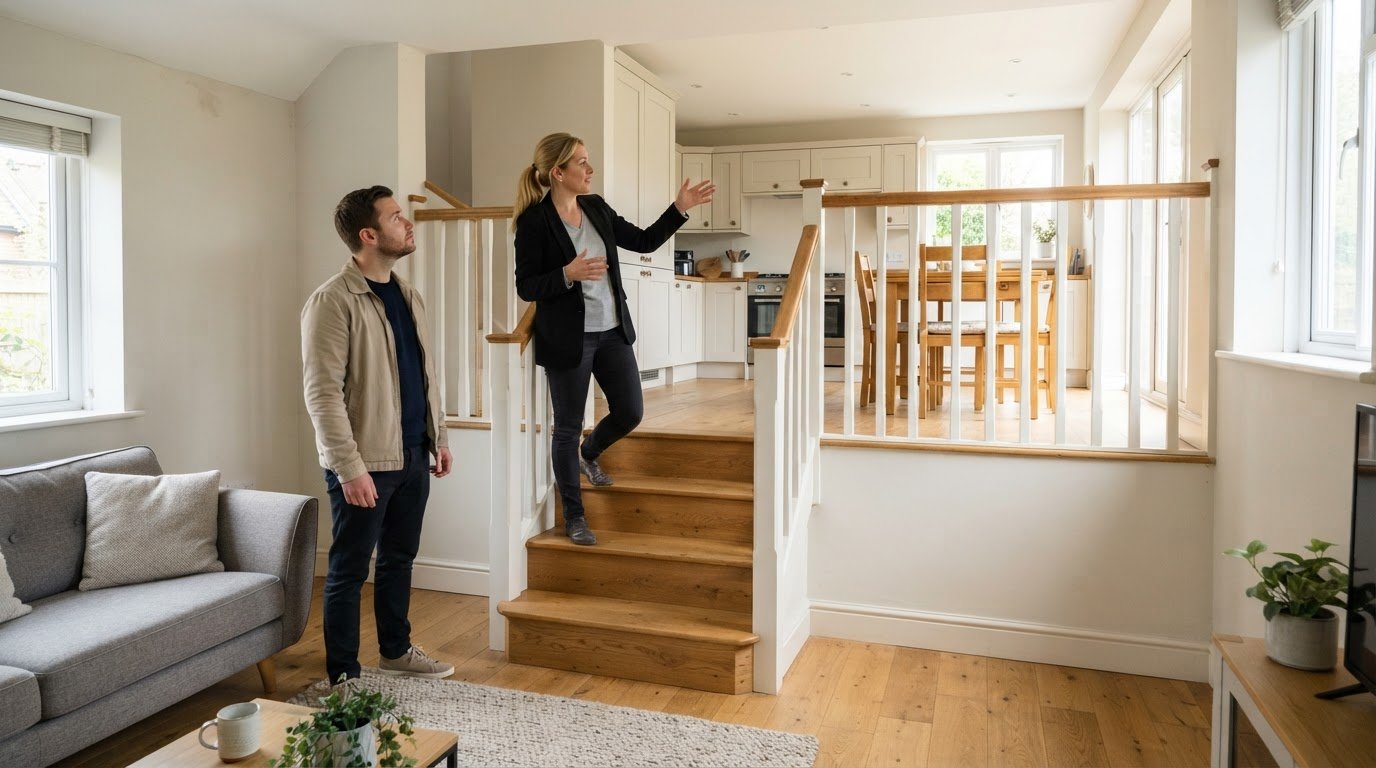
An unconventional layout isn’t automatically a drawback; it needs a clear story. Knowing how to sell a house with an unconventional layout means showing buyers what makes its rooms distinctive, how the space could work for them and why the home deserves a closer look. Strong photography, an informative floor plan and carefully targeted marketing can make that case.
It’s understandable to worry that unusual room arrangements, split levels or awkward transitions could put buyers off. People may hesitate when they can’t picture themselves living in a property, so the listing needs to do more than describe its quirks. It should make the possibilities clear without glossing over practical details.
This guide explains how an estate agent can present standout features, shape a compelling listing and reach buyers through niche platforms suited to the property. You’ll see how thoughtful staging, clear visuals and focused marketing can help the right audience recognise the home’s potential.
Key Takeaways
- Match the property’s unusual features to buyers who will value them, rather than presenting the layout as a drawback.
- Use thoughtful staging and clear visuals to show how distinctive spaces could work in everyday life.
- Focus social media and niche-platform marketing on audiences most likely to connect with the home’s character.
- Make the listing specific: describe standout features, their dimensions and potential uses so buyers can picture the space.
Why are buyers interested in unusual properties?
An estate agent can flag when proposed changes may raise planning or building-regulations questions, but shouldn’t present that as a definitive ruling. Preparation costs depend on the work involved, from neutral paint and decluttering to structural changes or moving plumbing. Look for an agent who can explain relevant sales evidence and how they’ll reach buyers suited to a non-standard home.
- Identify the layout’s practical appeal. The agent should connect specific features to buyer priorities. A split-level home, for example, may suit someone seeking distinct work and living areas; a large open loft could appeal to buyers wanting flexible space. This makes the property’s interest clearer than simply calling it unusual.
- Match features to likely buyer groups. The agent can shape the marketing around the home’s actual character. Original craftsmanship may appeal to buyers drawn to period detail, while adaptable rooms may interest people who need a home office, studio or guest space. The aim is a relevant audience, not a generic claim that the house suits everyone.
- Address concerns with documentation. Buyers may ask how an extension or custom feature was completed. The agent can organise available permits, warranties and upgrade information, then present those records alongside the property details. Clear documentation helps buyers understand what has been changed and what supporting paperwork is available.
- Advise on neutral presentation. Strong colour choices can dominate a room before buyers notice its shape or natural light. An agent may recommend neutral tones where bright paint distracts, while retaining distinctive architectural details. For example, a neutral wall can let an unusual ceiling or exposed beam take centre stage.
- Assess an agent’s experience with distinctive homes. Look for examples of properties with split levels, unusual room arrangements or flexible spaces. Ask how the agent identified their likely audience, presented the layout and assessed comparable sales. Agencies such as County Properties demonstrate how personalised guidance can highlight a home’s unique strengths, proving that a clear explanation is far more useful than a broad claim of specialist knowledge.
How an estate agent markets the features of a unique home
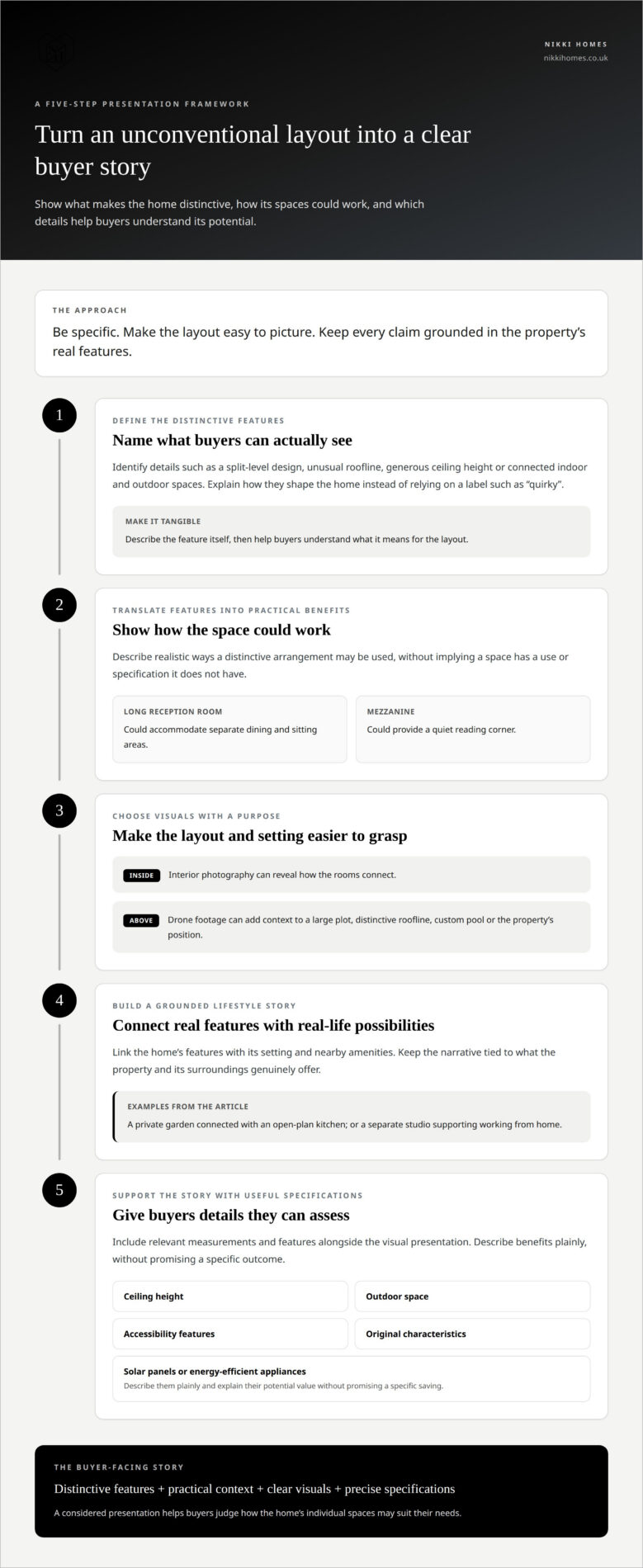
- Define what makes the property distinctive. Pinpoint features buyers can understand, such as a split-level design, unusual roofline, generous ceiling height or connected indoor and outdoor spaces. Dedicated property specialists such as 富盛地產|有巢氏太平中山富盛店 similarly emphasise concrete layout details rather than vague descriptions, ensuring buyers can clearly judge whether a home suits their needs.
- Turn features into clear benefits. Show how the arrangement works in practice. A long reception room might accommodate separate dining and sitting areas; a mezzanine could provide a quiet reading corner. The agent should describe these possibilities accurately, without implying a space has a use or specification it doesn’t have.
- Use professional photography and drone footage with purpose. Interior images can reveal how rooms connect, while a drone view can show outdoor features such as a large plot, distinctive roofline or custom pool. Aerial images work best when they add context, helping buyers understand the grounds and the property’s position.
- Build a lifestyle narrative from real details. Link the home’s features with nearby amenities and its setting. For example, marketing could explain how a private garden connects with an open-plan kitchen, or how a separate studio supports working from home. Keep the story grounded in what the property and its surroundings genuinely offer.
- Present useful specifications alongside the visual story. Include details such as ceiling height, outdoor space, accessibility features and original characteristics where relevant. If the property has solar panels or energy-efficient appliances, describe them plainly and explain their potential value without promising a specific saving. A considered property sale starts with precise, persuasive presentation.
How an estate agent markets a property through social media and niche platforms
An unconventional layout can affect valuation if it changes how the home compares with similar properties or influences buyer demand. Mortgage decisions depend on the lender’s criteria and valuation of the property, not simply on whether its layout is traditional.
- Define the audience before choosing platforms. The agent should identify which features matter most, then build the marketing around those buyers. A converted historic home with original details may appeal to architectural enthusiasts; a flexible studio could interest buyers seeking workspace. Social posts can then lead with relevant points rather than generic claims.
- Choose channels that fit the property. Use broad social platforms to share strong images and direct interested viewers to the full listing. Add niche platforms, such as luxury-home websites or architectural-enthusiast forums, when the property’s character suits their audience. A single post copied everywhere is less persuasive than tailored wording and visuals.
- Make each post easy to understand. Lead with one distinctive feature, then explain its practical value. For example, a split-level layout might create separate zones for work and relaxation. Short captions, a clear floor plan and a virtual tour can help viewers grasp the arrangement before deciding whether to enquire.
- Build pricing from comparable evidence. A comparative market analysis considers nearby sales, property condition, location and the features that make the home different. Where few close comparisons exist, the agent can assess the strongest available evidence and explain how distinctive features affect the asking price. Pricing too high can deter buyers before they view.
- Measure the quality of interest. Enquiries and viewing feedback can show whether the chosen audience understands the property’s appeal. If buyers repeatedly misunderstand a room’s purpose, adjust the description or imagery. If interest comes from people seeking a particular feature, refine the campaign to emphasise that feature across social and niche channels.
Showcasing distinctive features in listing descriptions
A strong listing makes an unusual home easier to understand without diminishing what makes it distinctive. Precise descriptions, clear photographs and considered pricing should work together to reflect the property’s appeal.
-
How an estate agent highlights the distinctive features
Lead with features buyers can assess: room dimensions, materials, ceiling height and original details. Then explain how each space might work in practice. For example, a long reception room could accommodate separate dining and sitting areas. Avoid vague labels such as “quirky” or implying a room has only one purpose. Describe its current layout and possible uses accurately.
-
How an estate agent showcases features in listing photos
Ask the agent to plan photographs around the home’s flow as well as its standout details. A view from the entrance can show how rooms connect, while a carefully framed image can draw attention to an unusual staircase or roofline. Buyers spend 60% of their time looking at listing photos, so each image should clarify the space, not distort its proportions. A floor plan or virtual tour can add context.
-
How an estate agent prices a distinctive home
Set the asking price using comparable local sales, the property’s condition and location, and the features that make it different. If close comparisons are scarce, the agent should explain which available sales offer the most useful evidence and why. A striking feature alone doesn’t justify an inflated price: an asking price above buyer expectations can discourage viewings. Use enquiry and viewing feedback to assess whether the price and presentation are attracting suitable interest.
For a distinctive home, precision matters at every stage. Discuss a residential property sale with an agent who can shape its presentation around the features buyers will value.
Nikki Homes: In house mortgage and financial advice
Nikki Homes provides residential property sales, alongside in-house mortgage and financial advice. If you’re preparing to sell an unusual home, the team can help you consider the sale alongside your financial plans. A clear discussion can bring together the property’s presentation, likely buyer interest and your onward plans.
If you’re weighing a sale against letting or sourcing another property, Nikki Homes also provides lettings services and property sourcing. The right route depends on your plans for the home and what you want to do next. Straight answers matter more than a standard sales pitch.
Contact Nikki Homes to discuss your property and plans.
Make your next move with a clear plan
A distinctive home deserves a purposeful campaign, not a pitch that tries to make it suit everyone. Decide what matters most: achieving a sale, keeping future options open or understanding how the property fits your wider plans. That gives your estate agent a clearer brief and keeps decisions focused.
A considered approach to how to sell a house with an unconventional layout starts with a conversation about your priorities and the home’s strongest qualities. Then agree how to position the property, what information buyers need and how to respond to feedback as the campaign develops. Straight answers and a clear direction make the process easier to navigate.
Speak with Nikki Homes about your sale, and take the next step with confidence. Your home’s individuality can be the starting point for the right conversation.
Frequently Asked Questions
What is considered an unusual or unconventional property?
An unusual property has features or a layout that set it apart from typical homes in its local market. It might be a converted building, a home arranged across several levels or a property with a striking architectural feature. The label describes its distinctiveness, not its quality. In Stratford-upon-Avon, buyers may value character and originality when they suit their plans.
What is an awkward layout?
An awkward layout is one that makes everyday use harder to picture. A bedroom reached through another room, for example, may raise privacy questions, while a narrow entrance opening straight into a busy living area can complicate furniture placement. The challenge is practical, not simply a matter of unusual design. A clear floor plan helps viewers understand how rooms connect and decide whether the arrangement suits them.
What makes a home unique?
A home can stand out through its architecture, history, materials, setting or unusual combination of spaces. A former workshop with retained features, for example, offers a different feel from a conventional new-build, even if both have similar room counts. Uniqueness isn’t automatically a selling advantage: buyers need to understand how the details affect comfort, maintenance and their intended use.
How can an estate agent market a house with an unconventional layout in the UK?
An estate agent can build a campaign around the property’s strongest features and the buyers most likely to appreciate them. In Stratford-upon-Avon, that could mean presenting a character home to people drawn to period details, supported by accurate room information and a clear floor plan. Social media and specialist property platforms can extend the campaign, while viewing feedback helps refine the message.
How should an estate agent price a property with an unconventional layout?
An agent should consider relevant local sales, condition, location and the home’s distinctive features rather than rely on a standard price-per-room assumption. If comparable properties differ, the agent can explain which evidence is most relevant and why. Buyer response also helps inform decisions: limited viewing interest may prompt a review of the asking price or presentation.
What layout changes or home staging can an estate agent recommend to improve buyer appeal without major renovations?
An agent may suggest changes that clarify a room’s purpose without altering the building. For instance, a small spare room could be arranged as a study, while furniture and a rug could define separate uses within a long reception space. Removing surplus items can improve circulation. Keep doorways and routes clear, and don’t use staging to hide awkward proportions or suggest inaccurate room dimensions.