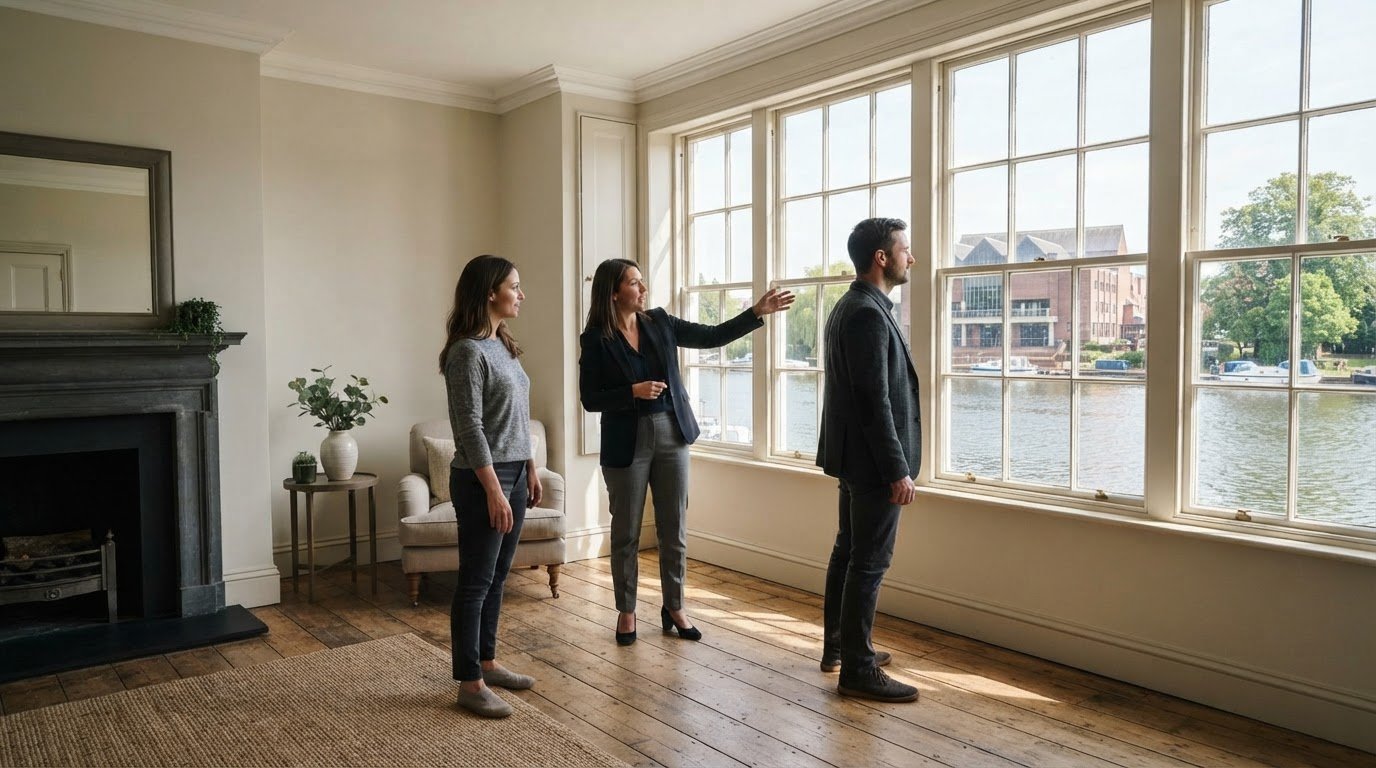
A distinctive home deserves more than a standard listing. Marketing a unique property in Stratford-upon-Avon means identifying the buyers most likely to value its character, setting and particular features, then shaping the presentation around them.
You know what makes your property different. The challenge is making those qualities clear to the right buyers, rather than relying on a broad description that could fit any home. A considered campaign brings the property’s strongest features to the fore and focuses attention on its most relevant audience.
This article explains how tailored marketing can reach likely buyers and what pre-market access involves: introducing a property to selected buyers before it appears on property portals. You’ll learn how the approach works, what makes an effective campaign and where pre-market activity fits into a wider sale, so you can make informed decisions about bringing your property to market.
Key Takeaways
- Shape the campaign around the property’s strongest features and the buyers most likely to value them.
- Understand how selected pre-market introductions can build interest before a listing appears on property portals.
- Pinpoint what sets a Stratford-upon-Avon home apart, from its character and setting to the way it suits a buyer’s needs.
- Use a considered mix of marketing channels so distinctive homes can reach beyond a general portal audience.
Tailoring property marketing to likely buyers
Marketing a unique property in Stratford-upon-Avon works best when the campaign connects its defining qualities with likely buyers. Local context, accurate details and purposeful presentation all matter. The aim is to make the property’s appeal clear, not dress it up with claims it cannot support.
Understanding Local Prices and Selling Times
Local figures provide context, not a guaranteed valuation for an unusual home. Prices fell over the last 12 months but remained largely flat over the past five years.
Average selling times cannot predict how quickly an individual home will sell. A converted mill, period cottage and contemporary home each attract different buyers. An agent should compare relevant features, location and condition. Asking price, presentation and buyer interest also shape progress. Reaching a well-defined audience can matter more than relying on a timetable for a standard property.
Presenting a Property’s Distinctive Features
Effective visuals show how a home works, not just how its rooms look. Professional photography can capture atmosphere and details such as exposed beams or a riverside outlook. Video can connect rooms and show how the house relates to the garden. Clear floor plans help buyers understand the layout before arranging a viewing.
Virtual tours let buyers explore a property remotely. For a period home with several reception rooms, combine a floor plan and photographs with a guided tour. Each format should reinforce the same accurate story. When marketing a unique property in Stratford-upon-Avon, highlight what matters to likely buyers without disguising the home’s scale or condition.
Preparing the Property and Checking Claims
Preparation starts with reviewing the rooms, access and features buyers will see. An agent can identify clutter to remove, presentation issues to address and a clear route for viewings. For a listed home or one in a conservation area, describe its status accurately and prepare records explaining its history or alterations. Never imply a feature or change has approval without evidence.
Claims about a property’s age, provenance, renovations or development potential need care. Saying a barn conversion has scope for further building could mislead buyers without supporting evidence. Keep descriptions precise, distinguish existing features from possibilities, and have relevant records ready for enquiries. Accurate wording protects the property’s appeal without overselling it.
Pre-market access before portals
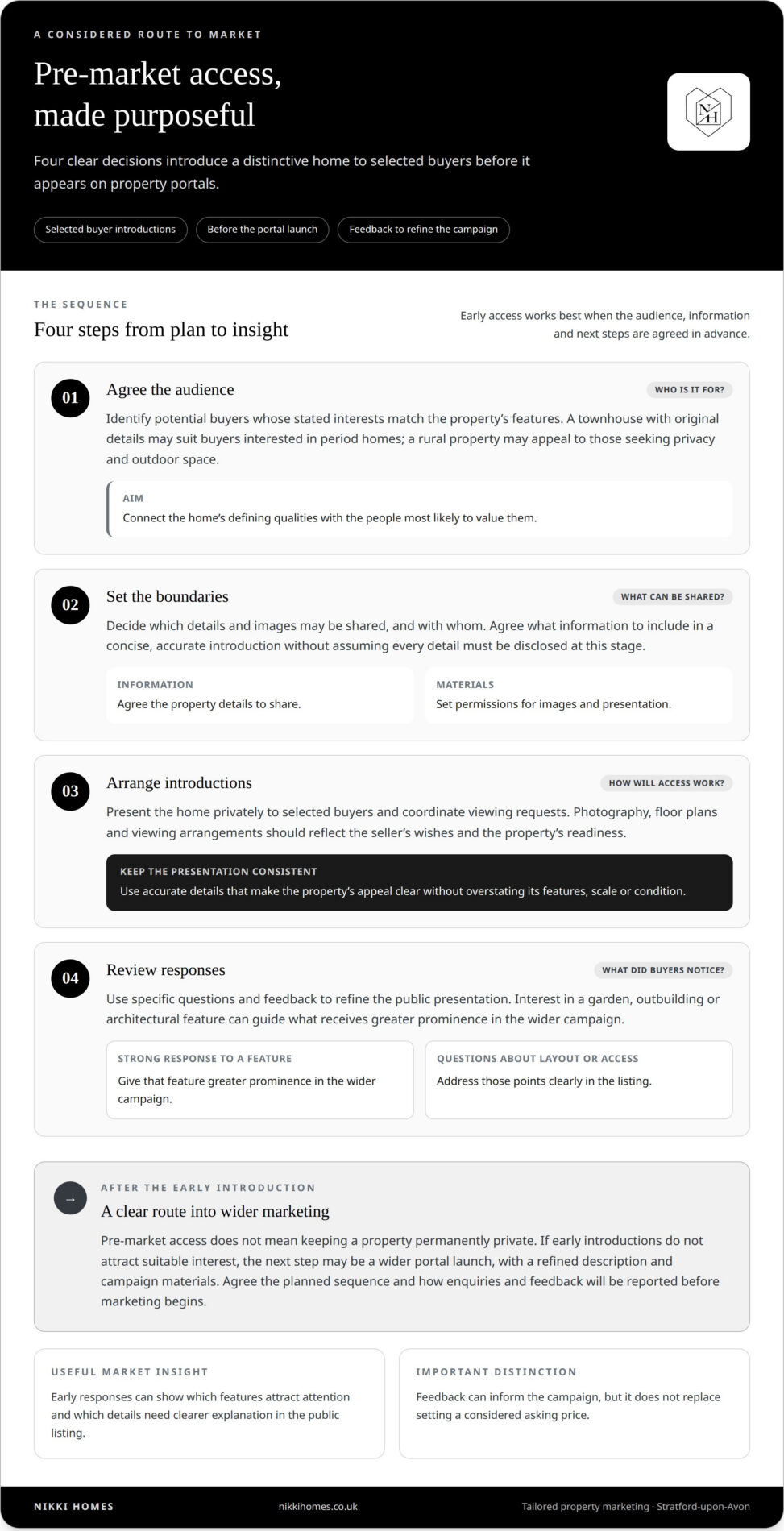
Pre-market access introduces a property to selected potential buyers before its listing appears on property portals. It gives the agent an early opportunity to present the home directly, gather responses and learn which features attract attention. For a Stratford-upon-Avon townhouse with original details, that might mean approaching buyers already interested in period homes. A rural property may suit a different audience, such as buyers seeking privacy and outdoor space.
The process starts with an agreed plan, not a vague promise of exclusivity. The seller and agent decide what information to share, which buyers to approach and how to handle viewings. A concise, accurate property description can introduce the home without sharing every detail. Photography, floor plans and viewing arrangements should reflect the seller’s wishes and the property’s readiness.
A focused approach can provide useful feedback before a public launch. If buyers respond strongly to a garden, outbuilding or architectural feature, the agent can give it greater prominence in the wider campaign. If questions focus on room layout or access, those points can be addressed clearly in the listing. This provides practical market insight, but does not replace setting a considered asking price.
- Agree the audience: identify buyers whose stated interests match the property’s features.
- Set the boundaries: decide what details and images may be shared, and with whom.
- Arrange introductions: present the home privately and coordinate any viewing requests.
- Review responses: use specific questions and feedback to refine the public presentation.
Pre-market access does not mean keeping a property permanently private. If an early introduction fails to attract suitable interest, the next step may be a wider portal launch, with a refined description and campaign materials. Before marketing begins, the seller should understand the planned sequence and how enquiries and feedback will be reported.
For a distinctive home, discuss the audience and launch sequence with a professional handling tailored property marketing. Clear decisions at the outset keep early access purposeful and make the move to public marketing more coherent.
What makes a property unique in Stratford-upon-Avon’s property market?
A property’s distinctive qualities might come from its architecture, setting, layout or a combination of features. In Stratford-upon-Avon, an unusual home could have a striking roofline, a converted interior or a garden that opens directly onto the countryside. The key question is not simply whether it looks different, but which qualities matter to likely buyers and how clearly they can be explained.
Local heritage adds context, but claims need precision. Some commercial properties in Stratford-upon-Avon date back to the 14th century. That fact illustrates the town’s long built history, but it doesn’t establish the age or significance of an individual home. A property’s own story should be grounded in its documented features, such as original detailing, a known conversion or a particular relationship with its surroundings.
Unusual does not automatically mean desirable to every buyer. A large open-plan room may appeal to someone who entertains, while a separate study may matter more to someone working from home. A detached outbuilding could offer storage or workspace, but its current use should be described accurately. Matching the property’s real attributes to buyers’ priorities gives the campaign a sharper focus.
To identify the property’s strongest points, an agent can assess:
- Architecture: identify features such as stonework, unusual proportions or distinctive detailing.
- Setting: explain what makes its street, village or landscape relevant to buyers.
- Layout: show how rooms connect, including any flexible spaces or separate access.
- Practical details: clarify parking, storage, outdoor areas and the condition of notable features.
That assessment turns a collection of details into a coherent story. For example, a house with a converted interior, generous garden and separate workspace may suit buyers seeking both character and flexibility. Lead with the features that genuinely set it apart, then support each point with clear descriptions and evidence. This keeps the presentation specific, credible and relevant to Stratford-upon-Avon buyers.
Which marketing channels reach buyers for distinctive homes in Stratford-upon-Avon?
A strong campaign uses channels for different purposes, not just wider exposure. Property portals give a listing broad visibility, while an agent’s buyer database can reach people whose stated requirements match the home’s features. For example, a Stratford-upon-Avon property with extensive grounds may appeal to buyers seeking outdoor space more than those focused on a central flat.
Social media can showcase a home’s most compelling details through visual storytelling. A short post about a converted barn, riverside outlook or period façade can lead interested viewers to the full listing. Email marketing offers a direct route: an agent can share the property with registered buyers whose preferences match its location, style or layout.
- Property portals: present the full listing, key details and viewing information to a broad audience.
- Buyer databases: match the property’s features with recorded requirements and current enquiries.
- Social media: use concise, accurate posts to highlight a specific feature, such as a walled garden.
- Email campaigns: send relevant details directly to buyers already looking for similar homes.
Local and professional networks can provide another route to buyers. An agent might share details with contacts familiar with Stratford-upon-Avon and nearby villages, including buyers relocating for work or seeking a particular rural setting. Printed property particulars can also support viewings, giving buyers a clear reference to the room arrangements and distinctive details after they leave.
The right mix depends on the property and its intended audience. A central townhouse may benefit from portal visibility and targeted emails, while an unusual country home may need stronger visual storytelling and carefully selected introductions. Every channel should carry consistent, accurate information, and enquiries should be tracked to show which presentation prompts meaningful interest.
Want a focused campaign for your property? Discuss tailored property marketing and how different channels can reach buyers suited to its character and location.
Nikki Homes
Nikki Homes helps you shape a considered plan to present your distinctive property to likely buyers. Turn to the team to identify the home’s strongest appeal, choose suitable marketing channels or decide whether selected pre-market introductions fit your plans.
Nikki Homes’ consultancy-led approach supports your next step, whether you’re selling, exploring a letting, sourcing a property or considering an auction. The aim is to match the approach to your circumstances and the property, rather than force every home into the same campaign.
If you’re deciding how to reach the right audience for your property, contact Nikki Homes to discuss your plans.
Set the next step around your priorities
A distinctive home deserves a campaign that can adapt as buyer interest develops. Before launch, decide what matters most to you: a discreet introduction, broad exposure, a particular type of buyer or flexibility around viewings. These priorities give the marketing plan a clear measure of success beyond simply counting enquiries.
Agree how progress will be reviewed, too. If early responses show buyers are drawn to a different feature than expected, the presentation can be refined. If enquiries raise recurring questions, clearer information can address them. This keeps the campaign purposeful without changing the facts about the property.
Effective marketing for a unique property in Stratford-upon-Avon starts with choices grounded in the home and your plans. You don’t need to have every detail mapped out before beginning the conversation. Contact Nikki Homes about your property to discuss a considered way forward and take the next step with confidence.
Frequently Asked Questions
Which estate agents specialise in marketing distinctive properties in Stratford-upon-Avon?
Nikki Homes is an independent Stratford-upon-Avon estate agency with a consultancy-led approach to residential property. For a distinctive home, consider whether the agent can tailor its presentation and buyer outreach to the property rather than rely on a standard campaign. Nikki Homes handles residential sales and lettings, so you can discuss the route that suits your plans.
Who are the likely buyers for historic, period or unusual properties in Stratford-upon-Avon?
Likely buyers are those whose priorities match the property’s defining qualities. A period home may attract someone who values original architectural details, while a converted property could suit a buyer seeking an unconventional layout. A home with a separate workspace may interest someone who needs room to work from home. Location, condition, practical layout and the buyer’s plans all influence whether it’s a good fit.
What planning, listed-building or conservation-area rules affect marketing and viewings?
For a listed home or one in a conservation area, describe its status accurately and prepare records explaining its history or alterations. Do not imply that a feature or change has approval without evidence.