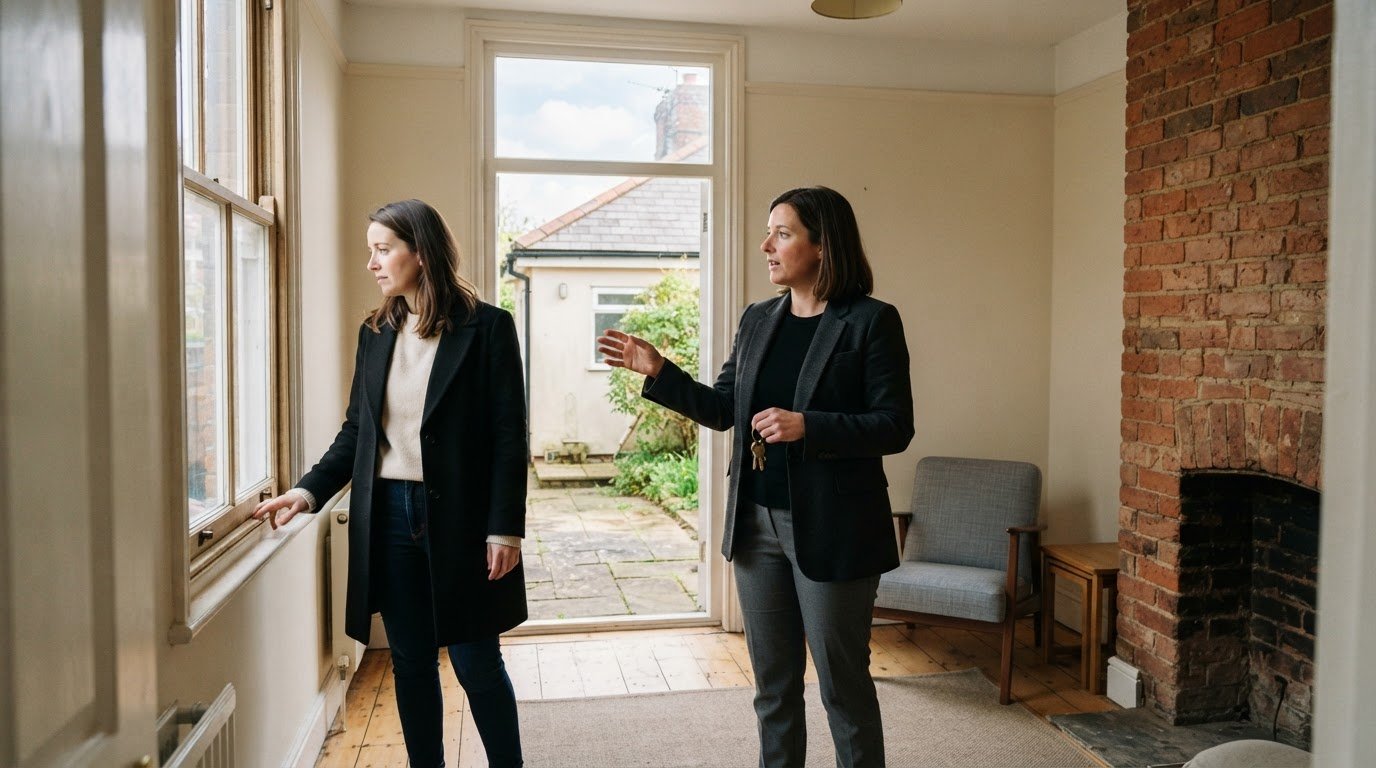
A Warwick mortgage depends on the property as well as your finances. Lenders may assess its construction, condition, valuation, listed status, alterations and marketability, while your borrowing capacity and repayments depend on your circumstances. Porting your current mortgage won’t guarantee approval for extra borrowing, so financial advice for a property purchase in Warwickshire should consider both the home and your borrowing plan.
It’s easy to focus on the asking price and assume the mortgage will follow. In practice, the lender’s assessment of the property and your ability to manage repayments both matter.
This guide explains what may affect a mortgage in Warwick, how lenders assess borrowing capacity and repayments, and how to check an adviser’s authorisation on the Financial Services Register. You’ll have a clearer picture of the decisions to make before committing to a property and the questions worth asking.
Key Takeaways
- Look beyond the asking price: a property’s construction, condition, valuation and alterations can influence a lender’s assessment.
- Assess your deposit alongside the loan-to-value ratio, then weigh mortgage repayments against your income and regular outgoings.
- Compare borrowing options with your wider budget in mind, especially if you’re moving home and considering porting an existing mortgage.
- Use the Financial Services Register to check an adviser’s regulatory status, permitted activities and contact details.
What Could Affect a Mortgage in Warwick?
A lender assesses more than your salary: your deposit, repayment budget and the property itself all matter. Warwick’s property features can influence the mortgage decision alongside your finances.
Affordability, deposits and loan-to-value
Affordability depends on your income, regular commitments and the repayments you can manage. An adviser can help organise these figures before an application, including where income varies through self-employment, bonuses or contract work. Prepare clear evidence of income and outgoings so the lender can assess the full picture.
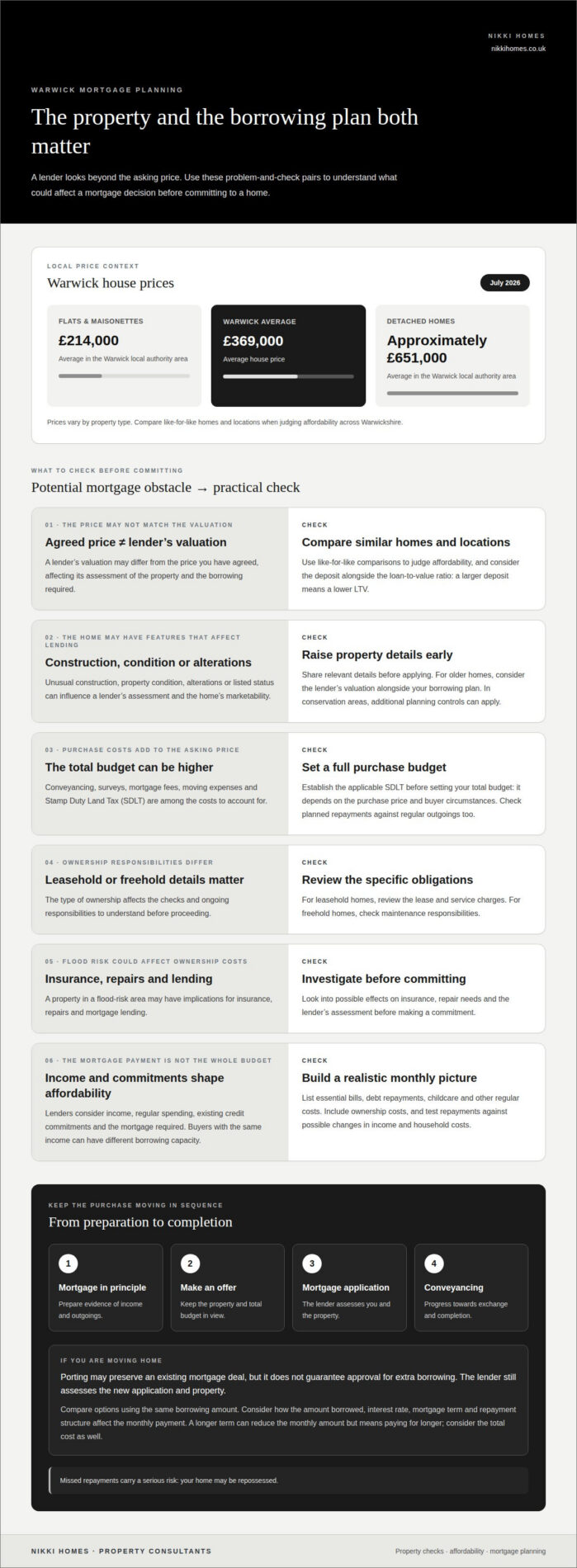
Your deposit affects the loan-to-value ratio, or LTV: the mortgage amount compared with the property’s value. A larger deposit means a lower LTV; a smaller deposit means borrowing a greater proportion. The lender’s valuation also matters, as it may differ from the agreed price. Independent advisers can consider products across the whole market.
For longer-term planning, test repayments against possible changes in income and household costs. Mortgage protection can be part of that discussion. Missed repayments carry a serious risk: your home may be repossessed.
Property costs and purchase checks
Warwick’s average house price was £369,000 in July 2026. Prices also vary by property type: in the Warwick local authority area, July 2026 averages ranged from £214,000 for flats and maisonettes to approximately £651,000 for detached homes. Compare like-for-like homes and locations when judging affordability across Warwickshire.
Budget for purchase costs such as conveyancing, surveys, mortgage fees, moving expenses and Stamp Duty Land Tax (SDLT). SDLT depends on the purchase price and buyer circumstances, so establish the applicable amount before setting your total budget. Check your deposit, income evidence, debts and planned repayments against your regular outgoings.
The buying sequence is practical: arrange a mortgage in principle, make an offer, submit the mortgage application, then progress conveyancing towards exchange and completion. For leasehold homes, review the lease and service charges; for freehold homes, check maintenance responsibilities. Warwick has designated conservation areas, where additional planning controls can apply. If a property is in a flood-risk area, investigate possible effects on insurance, repairs and mortgage lending before committing.
Local financial advice in Warwickshire
Local context helps frame borrowing decisions, but advice should start with your circumstances. Buying in Stratford-upon-Avon means weighing different property types, budgets and priorities within our local area. Financial advice for a property purchase in Warwickshire can help turn those choices into a mortgage brief before you view homes or make an offer.
Ask whether advice is independent or restricted. Independent advisers can recommend products across the market and must consider a wide range of options. Restricted advisers can recommend only certain products, providers or solution types. Most UK financial advisers hold at least a Level 4 diploma in financial planning, but qualifications alone do not explain the scope of advice you will receive.
Clarify how the adviser is paid before proceeding. UK financial advisers may charge a fixed fee, an hourly rate or a percentage of money invested. Ask what work the charge covers and when it becomes payable. This helps you understand the arrangement without confusing advice charges with mortgage interest or lender charges.
Set out your buying plans, expected deposit, income pattern and regular commitments. Then discuss property features that could affect lending, such as unusual construction, alterations or listed status. For example, with an older Stratford-upon-Avon property, consider the lender’s valuation alongside your borrowing plan. Financial advice for a property purchase in Warwickshire can help connect the home you want with the financing required.
Before viewing, ask what information is needed for a mortgage in principle and how the adviser supports your application through to completion. Discuss how repayments fit your longer-term plans, including possible changes to income or household costs. If you are ready to shape those decisions into a clear buying plan, map out your property purchase with Nikki Homes using advice that considers location and borrowing.
Borrowing capacity and monthly repayments
Borrowing capacity is not simply a salary multiple. A lender considers your income alongside regular spending, existing credit commitments and the mortgage required. For variable or self-employed income, clear records help show how earnings behave over time. An adviser can organise the figures and explain which parts of your budget shape the application.
Start with a realistic monthly budget. List essential bills, debt repayments, childcare and other regular costs, then work out what remains for housing. For example, two buyers with the same income may have different borrowing capacity if one has higher commitments. Include ownership costs in your calculation, not just the mortgage payment.
Your monthly repayment depends on the amount borrowed, interest rate, mortgage term and repayment structure. Compare options using the same borrowing amount, then assess how each payment fits your budget. A longer term can reduce the monthly amount but means paying for longer. Ask the adviser to explain the total cost as well as the monthly figure.
Porting can preserve an existing mortgage deal when you move, but it doesn’t guarantee approval for additional borrowing on the next property. The lender still assesses the new application and the property. If the purchase price exceeds the amount you can port, discuss how extra borrowing would affect the overall repayment and whether the combined terms suit your plans.
Build in room for change. Review your budget against possible shifts in income, household costs and mortgage payments, rather than relying on today’s best-case figures. Consider mortgage protection as part of longer-term planning, and ask what it covers before choosing any policy. According to PKS Associates, your home may be repossessed if you don’t maintain mortgage repayments. That risk makes a sustainable payment essential.
Bring income evidence, a list of regular commitments and your expected deposit to an advice discussion. This gives the adviser a clearer picture of affordability and helps turn your financial information into a borrowing plan based on your circumstances.
A lifetime mortgage is secured against the borrower’s home and will normally reduce the value of their estate.
Checking FCA authorisation and regulation
In the UK, buyers can get regulated mortgage or financial advice from an adviser or firm authorised and regulated by the Financial Conduct Authority (FCA). Use the FCA’s Financial Services Register to confirm regulatory status, permitted advice activities and contact details. Check before relying on advice or sharing personal financial information.
Search the register using the adviser’s or firm’s name. Match the result against the details provided, then read the entry carefully. A familiar name alone isn’t enough: the record helps establish whether the firm has permission for the advice you need. For example, check that mortgage advice falls within its permitted activities.
- Find the record: search the Financial Services Register for the adviser or firm.
- Read its status: confirm the record shows the regulatory position.
- Check permissions: make sure the listed activities cover the advice being discussed.
- Compare contact details: use the register entry to match the firm’s details.
Keep the distinction clear between regulatory status and professional qualifications. Most UK financial advisers hold at least a Level 4 diploma in financial planning. That qualification can inform your questions, but it doesn’t replace checking the FCA register and the firm’s permitted advice activities.
Before proceeding, ask the adviser to explain the service, the scope of the recommendation and how it relates to your property purchase. Clear answers should identify what advice is covered and which decisions remain yours. Record the adviser’s name and firm so you can compare them with the register entry.
Take this step before discussing mortgage options in detail. For help connecting borrowing decisions with your property plans, discuss mortgage and financial advice.
Local property prices can also help frame questions about the advice you need. Semi-detached homes in the Warwick local authority area averaged approximately 389,000 in July 2026, while terraced homes in the Warwick local authority area averaged approximately 324,000 in July 2026. Warwick had the second-highest average house price among West Midlands local authorities in July 2026. These figures provide context, not a personal affordability assessment, so ask an authorised adviser how your own circumstances affect the borrowing options and recommendations discussed.
Nikki Homes: In house mortgage and financial advice
Nikki Homes provides in-house mortgage and financial advice for buyers weighing borrowing options alongside a property purchase. This can help when you’re setting a budget, considering a mortgage or deciding what kind of home suits your plans. Clear advice helps you understand the financial decisions involved before moving ahead.
That support sits alongside Nikki Homes’ residential property sales and property sourcing. If you’re still looking for the right home, these services can bring your property search and financial planning into the same conversation. The aim is a joined-up view of the purchase that takes affordability and the lender’s assessment into account.
If you’re preparing to buy in Warwickshire and want to discuss your next steps, contact Nikki Homes.
Make your next property move with clarity
A mortgage decision should serve the life you’re building, not just secure your next property. Before taking the next step, be clear about what you need from the home, the repayments you can manage and how your plans might change. Good financial advice for a property purchase in Warwickshire should connect those decisions without pushing you towards a commitment that doesn’t fit.
Nikki Homes brings in-house mortgage and financial advice together with property services, including residential sales, lettings and property sourcing. This can help you consider your borrowing alongside the type of property you’re seeking, whether you’re buying, selling or exploring your options. Start with an open conversation about your plans and priorities.
Contact Nikki Homes for advice and take your next step with a clearer plan.
Frequently Asked Questions
What mortgage options and deposit sizes are available to first-time buyers in the UK?
First-time buyers may consider fixed-rate or variable-rate mortgages, with the deposit required depending on the property price and lender’s criteria. A larger deposit generally means borrowing a smaller share of the purchase price, but the right balance also depends on keeping enough savings for moving and other costs. For example, compare the deposit you could put down with the repayments and cash reserve you’d have left.
What are the financial risks of buying a property in a flood-risk area in Warwickshire?
Flood risk may affect insurance, repair costs and mortgage lending. Investigate these potential effects before committing to the property.