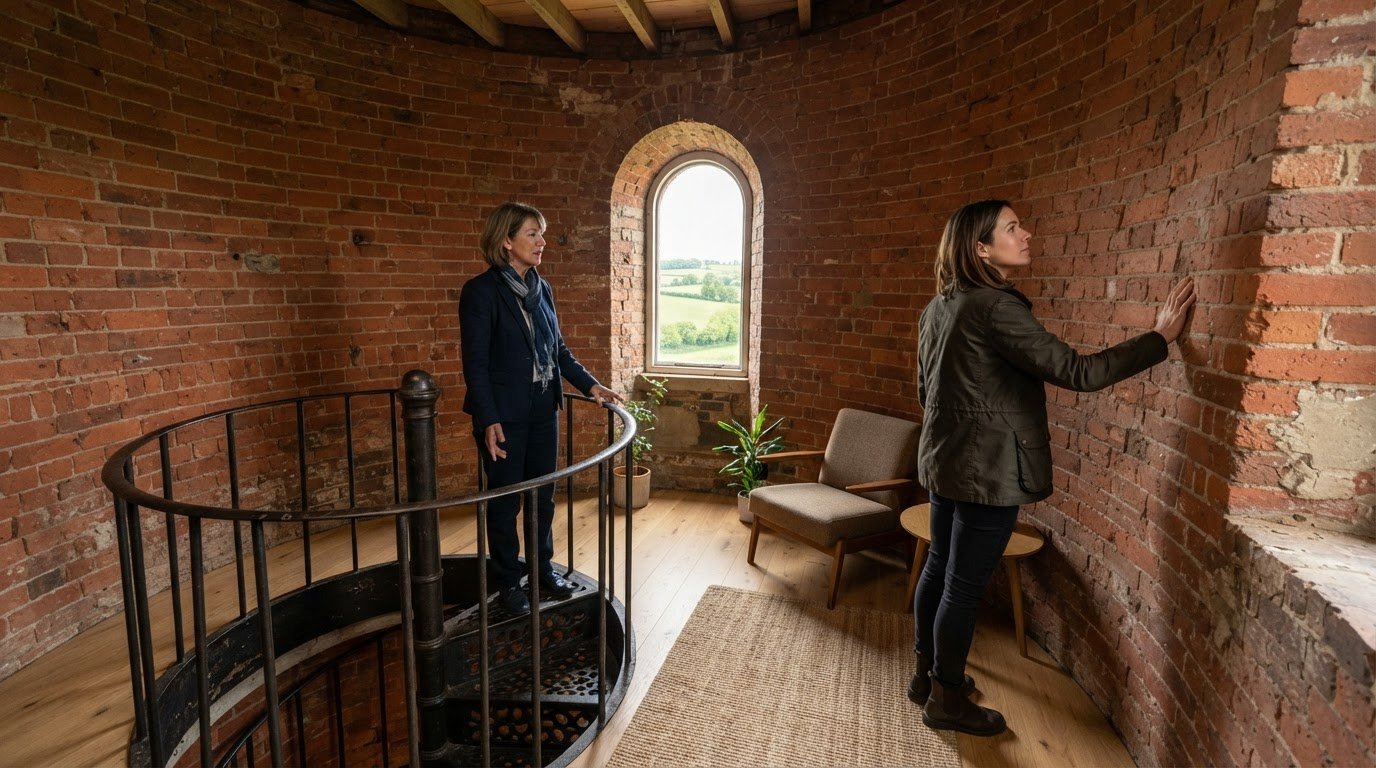
A quirky home needs more than broad exposure. Finding the right buyer for a quirky Warwickshire home means presenting its distinctive features clearly, reaching people who value them and weighing offers on more than price alone.
It’s natural to wonder whether an unusual layout, bold design or unconventional setting will narrow the field. The right approach doesn’t disguise what makes the property different. It helps potential buyers see how those features could suit the way they want to live.
This article explains how to position an unusual Warwickshire home for buyers, use viewings and honest feedback to shape the campaign, and compare offers in light of each buyer’s circumstances. From launch through negotiation, you’ll see what matters so you can assess both the offer and the person behind it more clearly.
Key Takeaways
- Position an unusual home around the features that make it distinctive, then shape the listing to speak to buyers who value them.
- Start reaching suitable buyers as soon as the property goes live, when early interest can help build competition.
- Use prompt follow-up and candid viewing feedback to understand what is attracting buyers and what may be holding them back.
- Compare offers by price and by each buyer’s readiness to proceed, including their finances and sale position.
Quirky and unusual property listings in Warwickshire
A distinctive home needs a listing that makes its differences clear, not one that smooths them away. That’s why its presentation should reflect the property’s character, location and likely buyer.
Listed-building status and planning restrictions can limit alterations, including changes that affect a property’s character. What’s permitted depends on the building’s status and the proposed work, so clarify these constraints before promoting future improvements as a selling point.
A single average house price for Warwickshire is a blunt benchmark for unusual homes. A credible assessment considers relevant local comparisons rather than treating a countywide figure as a promise.
Buyers seeking character may consider Stratford-upon-Avon, Warwick, Royal Leamington Spa and Henley-in-Arden. Warwickshire’s villages matter too. Long Compton, on the northern edge of the Cotswolds, may appeal to someone who prioritises a village setting over town-centre living.
Understanding the local market means recognising how each place shapes a buyer’s search. Someone drawn to Regency architecture in Royal Leamington Spa may want something different from a buyer looking for a village property. A focused search can consider homes already listed and suitable properties not yet on the market, with the brief shaped around location, character and practical needs.
A track record means more than a polished claim. Review comparable sales, the buyer groups reached and how the campaign presented the property’s specific features. Before launch, prepare accurate descriptions, photography and floorplans, and explain unusual layouts or outbuildings plainly. That gives buyers a clear picture before they arrange a viewing.
For buyers considering an unusual home, a survey should examine its structure, roof, services, distinctive features and any alterations. The findings can identify repairs and help clarify their likely scope before the purchase proceeds.
Arranging viewings and collecting feedback
A viewing is more than a walk around the rooms. For a home with an unconventional layout, unusual materials or a striking feature, the visit should help buyers understand how the property works in practice. Clear arrangements give each visitor time to consider its character rather than rushing through a standard tour.
Interest can begin before a buyer registers with an estate agent. Some Warwickshire buyers browse for months, so the campaign should turn early curiosity into viewings when the listing appears. Reaching enough of the right people early can help build buyer competition. Contacting registered prospective buyers personally before or on launch day can bring relevant interest into focus.
Organise each viewing around the home and the visitor. A converted outbuilding, unusual room arrangement or distinctive architectural detail may need context. Explain what makes the feature useful or significant without glossing over practical limitations, so buyers can assess the property on its real merits.
Follow-up matters as much as the viewing itself. Call each viewer promptly, ideally within about a day, to find out which features appealed, what caused hesitation and whether they’re seriously reconsidering the property. Pass feedback to the seller word for word, including praise and criticism. Honest comments are more useful than softened summaries.
Patterns in the responses can guide the next step. If several viewers misunderstand an unusual layout, the listing description or viewing explanation may need clarification. If buyers like the character but raise the same practical concern, that issue deserves a direct response. A disciplined property viewing campaign turns individual reactions into clearer decisions about presentation and follow-up.
Comparing offers and buyer circumstances
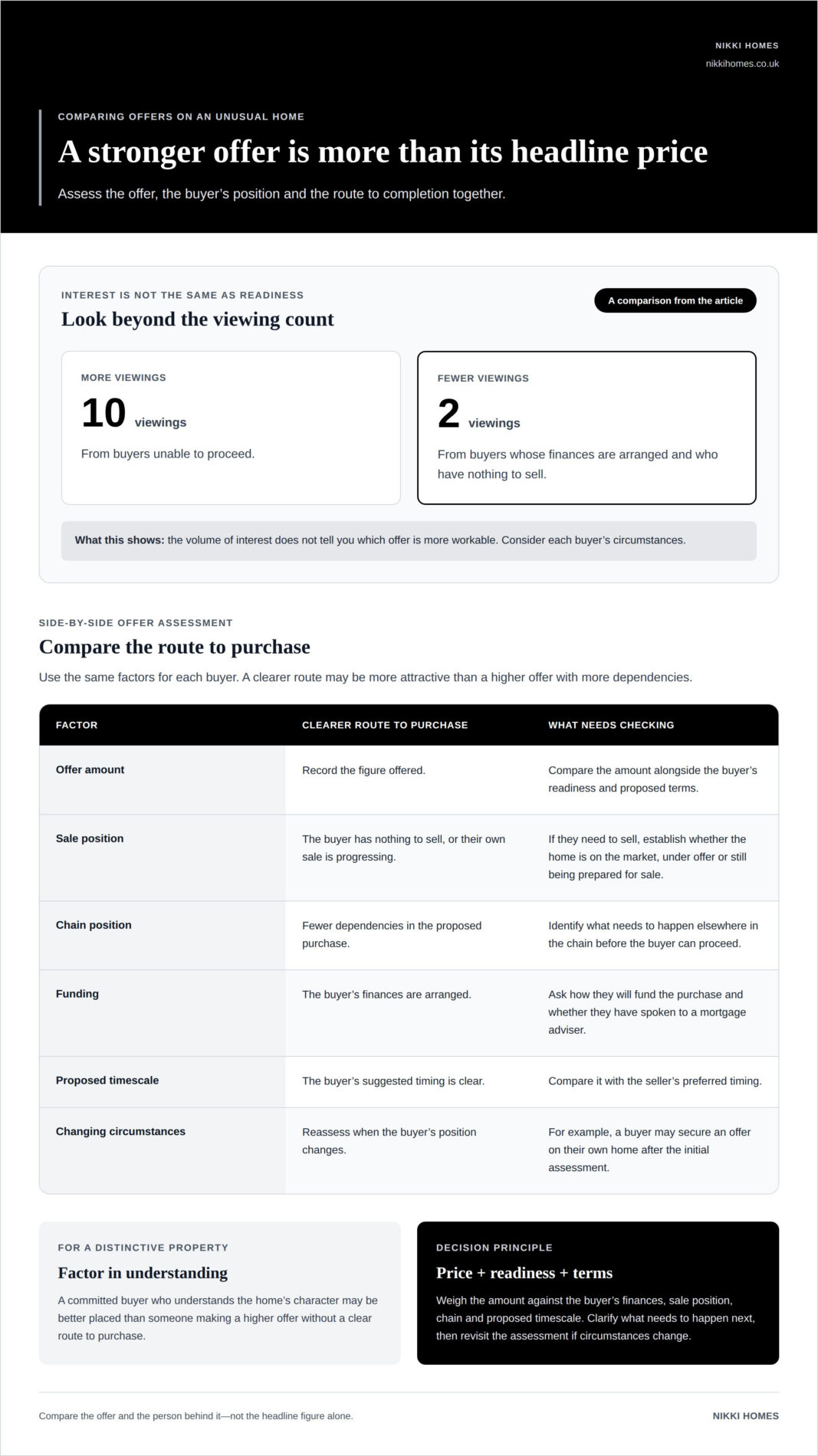
The highest offer isn’t automatically the strongest. Compare the amount with the buyer’s ability to proceed, their position in a property chain and the terms they propose. For a distinctive home, a committed buyer who understands its character may be better placed than someone making a higher offer without a clear route to purchase. Finding the right buyer for a quirky Warwickshire home means weighing readiness carefully.
Compare ten viewings from buyers unable to proceed with two from buyers whose finances are arranged and who have nothing to sell. The viewing count may look impressive, but it doesn’t show which offer is more workable. Focus on each buyer’s circumstances, not the volume of interest.
Start with the buyer’s sale position. If they need to sell another home, establish whether it’s on the market, under offer or still being prepared for sale. A buyer whose sale is progressing is in a different position from someone who has yet to list their property. Record the stage clearly and compare it with the seller’s preferred timing.
Next, establish whether the buyer has spoken to a mortgage adviser and how they’ll fund the purchase. This helps clarify their readiness and identify questions that could affect progress. For example, someone interested in a character property near Stratford may need time to consider its layout, but their sale position and financial preparation still matter when assessing the offer.
Compare the full terms side by side: offer amount, chain position, funding arrangements and proposed timescale. An offer with fewer dependencies may be more attractive than a higher figure tied to a sale that hasn’t started. Finding the right buyer for a quirky Warwickshire home also means revisiting your assessment if circumstances change, such as a buyer securing an offer on their own home.
Negotiation should test commitment without assuming the outcome. Clarify what needs to happen next, communicate the seller’s priorities and return to the strongest workable proposal. This grounds the decision in evidence about both the offer and the person making it, rather than the headline price alone.
Finding a buyer for an unusual home
The strongest campaign makes a home’s individuality easy to understand and gives suitable buyers a reason to act. In Warwickshire, that means matching the property’s character with buyers’ priorities, from distinctive architecture to transport connections.
Likely buyers for quirky homes
Likely buyers include people who value character, unconventional layouts or a setting rarely found in standard listings. A converted building may appeal to someone seeking flexible living space, while a period home can attract buyers drawn to original details. The useful question isn’t simply who likes unusual homes, but which features suit a buyer’s plans.
Location helps sharpen that picture. Warwick has a railway station with regular direct services to London and Birmingham, and the town is close to the M40. Royal Leamington Spa station has direct services to London Marylebone and Birmingham, among other destinations. For some buyers, those connections make a distinctive home practical as well as appealing.
Build the buyer profile around real trade-offs. A rural property may suit someone prioritising privacy and space, while a town-centre home may better serve someone who wants shops and transport close by. Clear details about access, layout and defining features help distinguish genuine interest from passing curiosity.
Typical selling times in Warwickshire
There’s no dependable timeframe that applies to every unusual home. The time it takes to secure a buyer depends on how the asking price compares with relevant properties, how clearly the listing explains the home, and whether its features match current buyer priorities. A distinctive property may attract fewer suitable viewers, but a strong match can matter more than raw enquiry numbers.
After an offer, the buyer’s position also affects progress. Someone with a sale to complete or finance to arrange faces different steps from a buyer whose finances are ready and who has no property to sell. Track both the search period and the buyer’s progress rather than treating an accepted offer as the finish line.
Make the campaign specific: foreground the features that set the home apart, explain practical considerations plainly, and connect its location to buyers’ needs. Discuss a tailored Warwickshire property campaign when you’re ready to put that approach into action.
Nikki Homes
Nikki Homes can help you turn a clear understanding of your property into a considered next step. For a distinctive home, that means discussing its character, likely audience and buyer circumstances together, rather than treating it like a standard listing. Its consultancy-led approach supports residential property sales, with property sourcing, lettings and auctions also available to suit your plans.
Turn to Nikki Homes when you’re deciding how to position an unusual property, preparing to sell or weighing which route suits your circumstances. The focus is practical advice and a campaign shaped around the home, not a one-size-fits-all pitch.
If you’re ready to discuss your Warwickshire property, contact Nikki Homes.
Set your next move with confidence
Your home doesn’t need to appeal to everyone. Decide which qualities matter most to the person who will live there, then consider how the campaign can make them clear without glossing over practical considerations. That focus gives you a firmer basis for discussing price, presentation and the kind of buyer you want to attract.
Finding the right buyer for a quirky Warwickshire home is about fit as well as the offer. The right person should understand the property’s character and be prepared to proceed. A clear conversation about your priorities can turn that principle into a practical plan for your home.
Contact Nikki Homes about your property to discuss your next step. Your home’s individuality can be the start of a more focused sale, not an obstacle.
Frequently Asked Questions
What makes a home quirky or unusual in Warwickshire?
A home may be considered unusual because of its architecture, history, layout or combination of features. In Warwickshire, that might mean a converted former commercial building, a cottage with an unexpected room arrangement or a property combining a main house with separate outbuildings. The label isn’t a formal category. What matters is describing the home’s distinctive features accurately and showing how they shape everyday use.
Which estate agents specialise in unusual or character properties in Warwickshire?
Nikki Homes is an independent estate agency based in Stratford-upon-Avon, Warwickshire, with residential sales that include character properties. When selling a home with unusual features, you need clear descriptions and an understanding of how those details affect the sale. Nikki Homes helps sellers present character properties to prospective buyers, with advice grounded in the local market.
How can a professional market a quirky Warwickshire property to the right buyers?
Build the campaign around the property’s strongest features, using photography and digital marketing to bring its character to life. Images can show how a converted space connects to the main home, while the description explains its layout in plain language. Social media campaigns and AI-enabled marketing tools can support the wider presentation and help prospective buyers understand what makes the property distinctive.
What are the risks of pricing or marketing a quirky home too narrowly?
Pricing too narrowly around one feature can overlook comparable homes or buyers who value the property for different reasons. Targeting too tightly can also mean missing someone who appreciates its location, layout or potential. Presenting a converted barn only as a rural retreat, for example, could overlook buyers seeking flexible space. Strong positioning highlights what makes the home distinctive without needlessly limiting its audience.