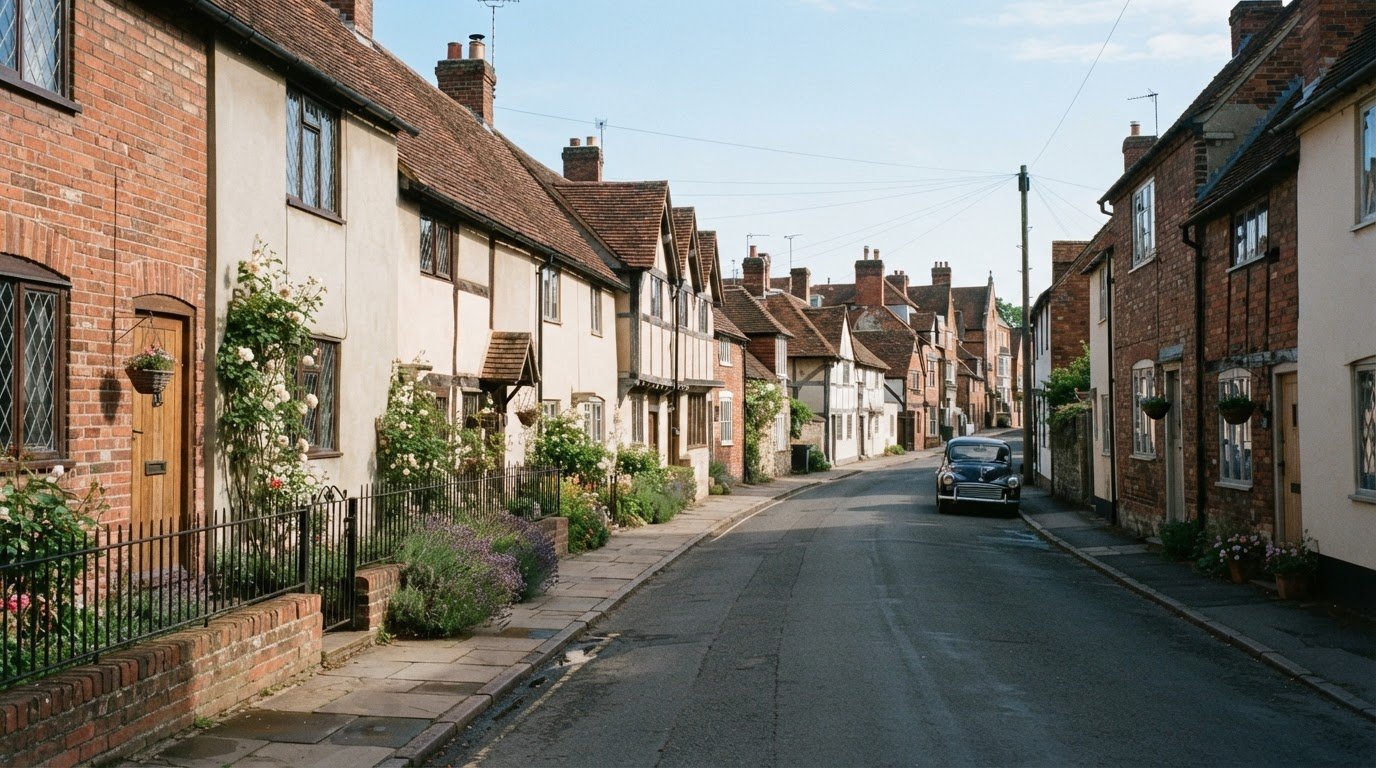
You don’t have to move far from Stratford-upon-Avon’s centre to find a quieter setting. For quiet residential streets in Stratford-upon-Avon, West Street in the Old Town is described as residential and peaceful, while Shottery and neighbourhoods south of town have a more village-like character.
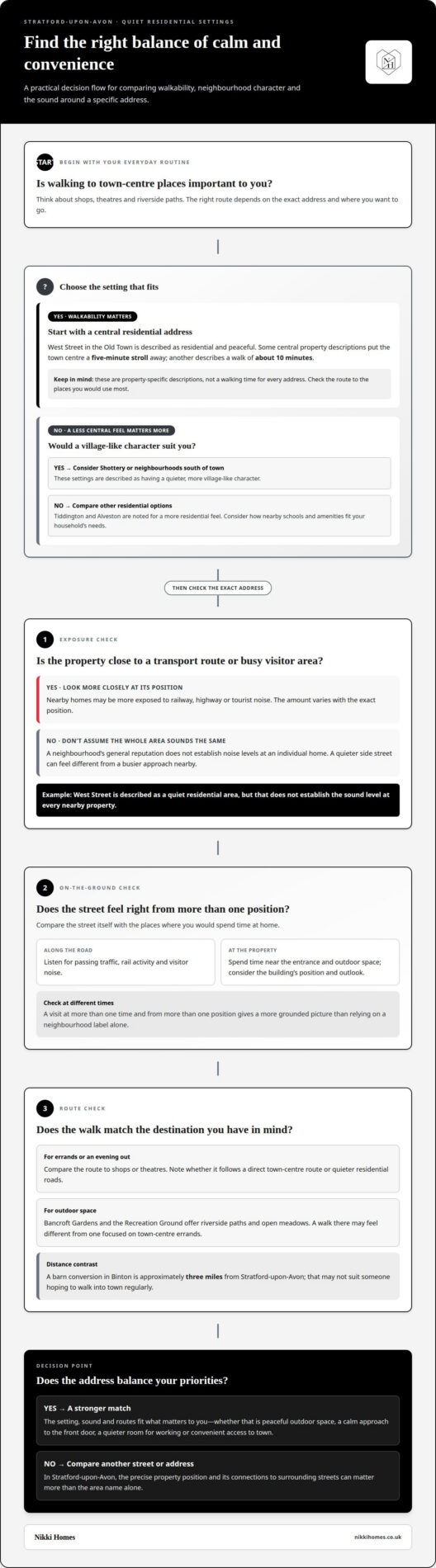
It makes sense to want a calm home without giving up easy access to shops, theatres and riverside walks. Some central property descriptions put the town centre a five-minute stroll away; others describe a walk of about ten minutes. The exact address makes the difference.
This guide compares quieter settings by their character and access to the centre, from central streets to more village-like neighbourhoods. You’ll get a clearer sense of which areas may suit your routine, whether you value walkability, a settled residential atmosphere or a balance of both.
Key Takeaways
- Compare central residential pockets with village-like settings such as Shottery and areas south of town to see which atmosphere suits your daily routine.
- Judge town-centre access by the specific address: quieter surroundings can still be close to everyday shops, theatres and riverside paths.
- Explore Tiddington and Alveston for a more residential feel, and consider how nearby schools and amenities fit your household’s needs.
- Use the balance between calm, community feel and convenience to narrow your property search, whether you’re buying or renting.
Residential neighbourhoods and quieter settings
Stratford-upon-Avon offers different kinds of calm, from residential streets to village-like settings. Shottery and neighbourhoods south of town have a quieter, more village-like character.
Railway, highway and tourist noise
Railway, highway and tourist noise comes from transport routes and visitor activity, and can affect nearby homes. Streets closest to a route or busy visitor area are more exposed, though noise varies with the exact position. West Street in the Old Town is described as a quiet residential area, but that doesn’t establish noise levels at every nearby property. Compare the setting around each address.
When looking for quiet residential streets in Stratford-upon-Avon, look beyond a neighbourhood’s general reputation. Shottery’s village-like feel may appeal if you want a less central atmosphere, while West Street is a named example in the Old Town. Neither description tells you exactly what you’ll hear inside a particular home. Nearby roads, the building’s position and its outlook all matter.
Checking street traffic and noise levels
To assess traffic and noise on a Stratford-upon-Avon street, consider the address at different times and from more than one position. Walk along the road, then spend time near the property’s entrance and outdoor space. Listen for passing traffic, rail activity and visitor noise. This gives you a more grounded picture than relying on a neighbourhood label alone.
Look, too, at how the street connects to nearby roads and town-centre routes. A home on a quieter side street may feel different from one facing a busier approach, even within the same area. In Shottery, consider how the specific property sits within its village-like surroundings. For a West Street address, assess the immediate street instead of assuming the whole Old Town has the same sound profile.
Use what you notice to assess your priorities: peaceful outdoor space, a calm approach to the front door or a quieter room for working. Stratford-upon-Avon’s residential settings vary, so compare the precise address and its surroundings before deciding which balance feels right.
Walking distance to Stratford-upon-Avon town centre
Central Stratford can put shops, theatres and riverside paths within walking reach, while quieter streets sit beyond the busiest routes. One townhouse description places central Stratford a five-minute stroll away; another listing describes its walk to the town centre as about 10 minutes. These are property-specific descriptions, not a reliable walking time for every address.
That difference matters. A short walk can make everyday errands and evening visits easier, but the route depends on the property’s location and destination. Period cottages, townhouses and apartments in Stratford’s historic centre are within walking distance of theatres, shops and riverside paths. A barn conversion in Binton, by contrast, is approximately three miles from Stratford-upon-Avon, which may not suit someone hoping to walk into town regularly.
To compare addresses, map the route to the places you’d use most, such as shops, theatres or the River Avon. Then consider whether it follows a direct town-centre route or quieter residential roads. Bancroft Gardens and the Recreation Ground offer riverside paths and open meadows, so a walk there may feel different from one focused on town-centre errands. The destination matters as much as the distance.
Planning and road-traffic changes could alter street layouts, movement and the feel of nearby routes. Stratford-on-Avon District Council adopted its District Design Guide as supplementary planning guidance on 18 September 2000. It recommends using the geometry and arrangement of existing local roads, streets, lanes and open spaces as the starting point for new designs, rather than standard dimensions.
For a proposed development, the guide advises early consultation with a District Council Planning Officer and County Council Highways Officer about transport and highway design. This makes the local street pattern relevant: changes designed around existing lanes may affect access differently from a layout based on standard dimensions. When weighing a home, consider both its current walk to central Stratford and its connections to surrounding streets.
Community atmosphere and residential areas
A quiet street and a strong community atmosphere aren’t the same thing. In Stratford-upon-Avon, compare the character of the immediate street with nearby places where people gather, walk or run errands. The River Avon, Bancroft Gardens and the Recreation Ground offer public riverside paths and open meadows. They provide outdoor space for nearby residents, but the feel of each street still depends on its homes and surroundings.
Stratford’s historic centre brings period cottages, townhouses and apartments together with theatres, shops and riverside paths. This can mean everyday activity close to home, alongside visitors drawn by the town’s Shakespeare connections. If you prefer a more settled residential feel, consider how far a specific address is from visitor routes and busy destinations. A central location offers convenience, but street-by-street character matters more than the area’s name alone.
Architecture also shapes a neighbourhood’s character. Stratford-upon-Avon has timber-framed buildings alongside Georgian and Victorian houses, creating visibly different streetscapes. Compare the immediate surroundings: how homes are arranged, whether there is open space and how the street connects to local routes. These details help you judge whether an area feels enclosed, open, historic or more suburban, without assuming that one style guarantees a particular community atmosphere.
For a practical comparison, picture a weekday routine in each location. Stratford town centre has shops, services and markets for day-to-day needs; riverside paths offer another local destination. Consider whether you want errands, outdoor recreation or a quieter residential setting close at hand. Then assess the specific street, not just its broader neighbourhood. A calm road near useful destinations may suit you better than a quieter-feeling address with less convenient access.
Are there quiet residential areas in Stratford-upon-Avon with good schools and amenities?
Yes. Tiddington and Alveston have a more residential feel, with family houses and larger detached homes. Stratford-upon-Avon also has primary and secondary schools serving established residential areas. These neighbourhoods are worth considering if you want a residential setting with local schools in the wider town. A quieter atmosphere, however, doesn’t tell you how convenient a particular home will be for your daily routine.
School choice is another part of the decision. Stratford-upon-Avon has selective schools, including King Edward VI School and Stratford Girls Grammar School, as well as primary and secondary provision across established residential areas. Think about which school stage matters to your household, then consider how a home’s location fits your routine. An area’s residential character alone doesn’t tell you which school is suitable or how easy the journey will be.
Amenities are an important counterweight to a quieter street. Stratford’s town centre has shops, services and markets for day-to-day needs. If you’re considering Tiddington or Alveston, look at how the address connects with the places you use regularly, rather than judging convenience by the neighbourhood name. Access depends on the specific home and your destinations, such as shops, school or other services.
For a useful comparison, list your household priorities: school stage, access to everyday services and the atmosphere you want at home. Then assess each address against them. A family house in Tiddington may suit one routine, while a larger detached home in Alveston may suit another. Stratford’s mix of central amenities and residential neighbourhoods means there isn’t one answer for every household.
If you’re weighing up homes around Stratford-upon-Avon, explore properties that fit your priorities for location, schools and everyday amenities.
Nikki Homes: Residential Property Sales
Nikki Homes provides residential property sales for owners preparing to sell in Stratford-upon-Avon. If you’re searching for a home that balances a quieter setting with access to town, its property sourcing service can help you find suitable opportunities. The right service depends on your needs: selling a property, finding one to buy, letting or considering an auction.
Set your priorities before moving forward. Your preferred neighbourhood, everyday access and the feel of the immediate street can help focus a property search or sale. Nikki Homes also provides lettings services and property auctions, supporting different property decisions.
For a straightforward conversation about your next move, contact Nikki Homes.
Turn your priorities into a clear next move
Choosing among the quiet residential streets in Stratford-upon-Avon is ultimately about how you want everyday life to feel, not just which address looks appealing. Settle on the trade-offs that matter most: atmosphere, convenience, property type or room for changing plans. A clear order of priorities makes it easier to recognise a genuine fit.
Before taking the next step, put your preferences into a concise brief. Separate essentials from nice-to-haves, and be honest about what you’re willing to compromise on. This gives your property search direction and helps you decide based on your life, not pressure or guesswork.
For thoughtful local guidance as you consider your next move, get in touch with Nikki Homes. A clear starting point can make the right home easier to recognise.
Frequently Asked Questions
Which residential streets in Stratford-upon-Avon are considered quiet?
West Street in the Old Town is described as a quiet residential area, while Shottery and neighbourhoods south of town have a more village-like character. These descriptions are useful starting points, not a promise that every home feels the same. Compare the property’s exact position, outlook and nearby routes, since the atmosphere can change from one part of a neighbourhood to another.
What are the quietest neighbourhoods in Stratford-upon-Avon for families?
Tiddington and Alveston are worth considering for their residential feel, family houses and larger detached homes. Stratford-upon-Avon has primary and secondary schools serving established residential areas, as well as selective schools such as King Edward VI School and Stratford Girls Grammar School. Families should weigh the relevant school stage and everyday destinations against the specific street and property, rather than choosing by neighbourhood name alone.
Which Stratford-upon-Avon streets have the least traffic and road noise?
There’s no verified street-by-street ranking identifying the least traffic or road noise in Stratford-upon-Avon. West Street is described as a quiet residential area, but that description isn’t a traffic measurement. For a particular home, consider whether it faces a main route or sits on a residential side street. Assess the immediate surroundings instead of treating an area-wide label as decisive.
How do noise levels vary across Stratford-upon-Avon neighbourhoods?
Noise varies with a home’s proximity to roads, railway activity and visitor destinations. A property close to a busy route may sound different from one set back within a residential neighbourhood. The room or outdoor space you use matters too: assess the relevant part of the property, not just the street. Stratford’s mix of central and village-like settings makes comparing exact addresses useful.
Which quiet residential streets are close to Stratford-upon-Avon town centre?
West Street in the Old Town is a named residential example near central Stratford. The exact walk depends on the property and your destination, so distinguish the street’s location from the route from a particular home. When viewing a property, consider the journey to the shops, theatres or riverside paths you’d use most. This helps you judge whether the location suits your everyday routine.
Which Stratford-upon-Avon streets are affected by railway, highway, or tourist noise?
Noise is more likely on streets closest to transport routes or busy visitor areas, but it varies with the exact position. Check the specific address and listen near the entrance and outdoor space at different times.