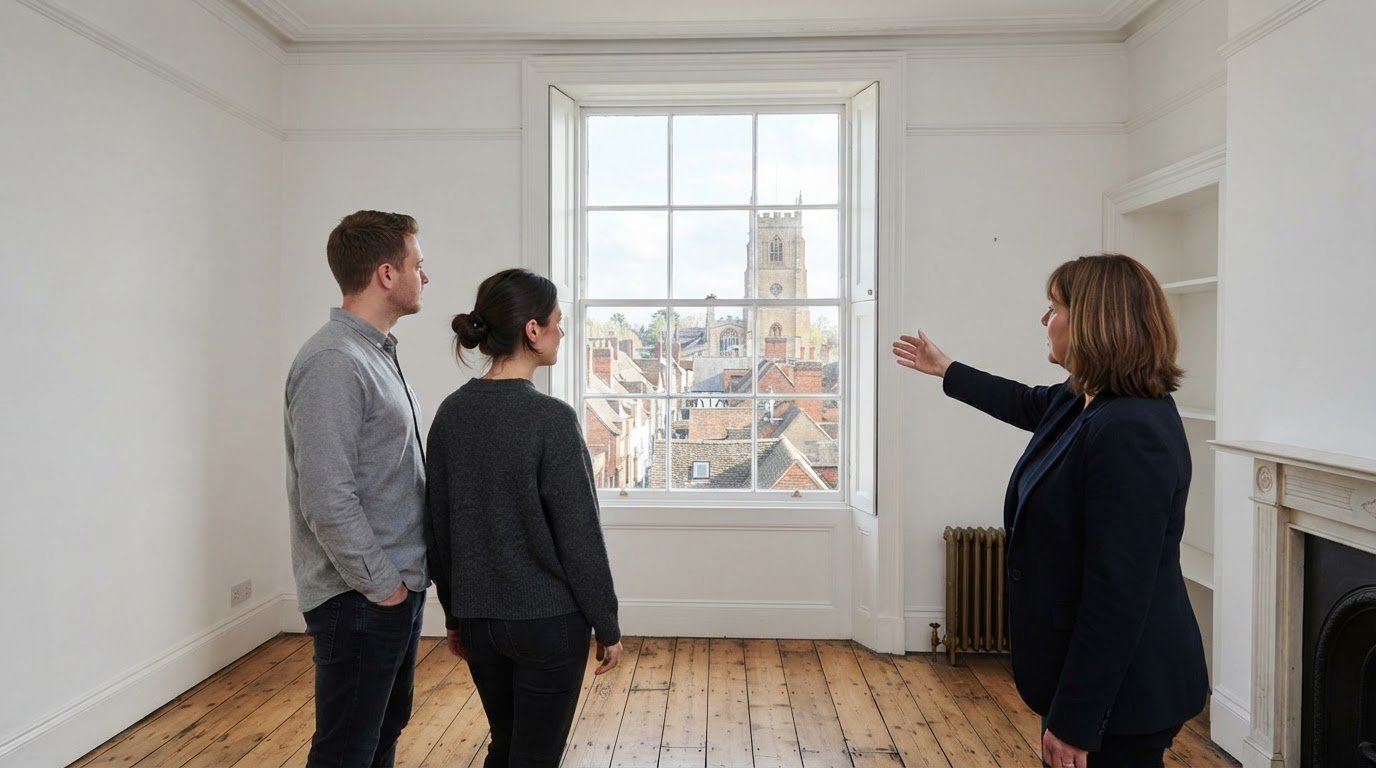
Stratford-upon-Avon offers more than one kind of move. Relocating to Stratford-upon-Avon property means choosing between period cottages, town-centre apartments and larger family homes in Tiddington or Alveston. Rail services connect the town with Birmingham and onward destinations, while the River Avon and its riverside paths give everyday life a distinctive setting.
Choosing well means looking beyond the house itself. Your commute, preferred neighbourhood, property style and appetite for town-centre bustle or riverside walks all shape which homes make sense. If you’re relocating to Stratford-upon-Avon, property decisions should reflect how you want to live, not just what catches your eye at a viewing. The town’s timber-framed, Georgian and Victorian buildings sit alongside later development, so its character varies between areas.
This guide explores how transport links, neighbourhoods and housing types can shape your move, including what to consider around the historic centre and riverside. You’ll get a clearer picture of where to focus your search, what to look for at viewings and how to match a property to your plans. For anyone relocating to Stratford-upon-Avon, property choices are easier to assess when the practical details are clear.
Key Takeaways
- Compare neighbourhoods by housing character and daily needs, then walk them to see which setting feels right for you.
- Look beyond the appeal of riverside and historic homes: their location and age can shape the practical details of ownership.
- Use current asking prices and available homes as context, but compare like with like by property type and area.
- Clarify your priorities before viewing, so you can focus on homes that fit your budget, commute and preferred way of living.
Stratford-upon-Avon neighbourhoods and housing types
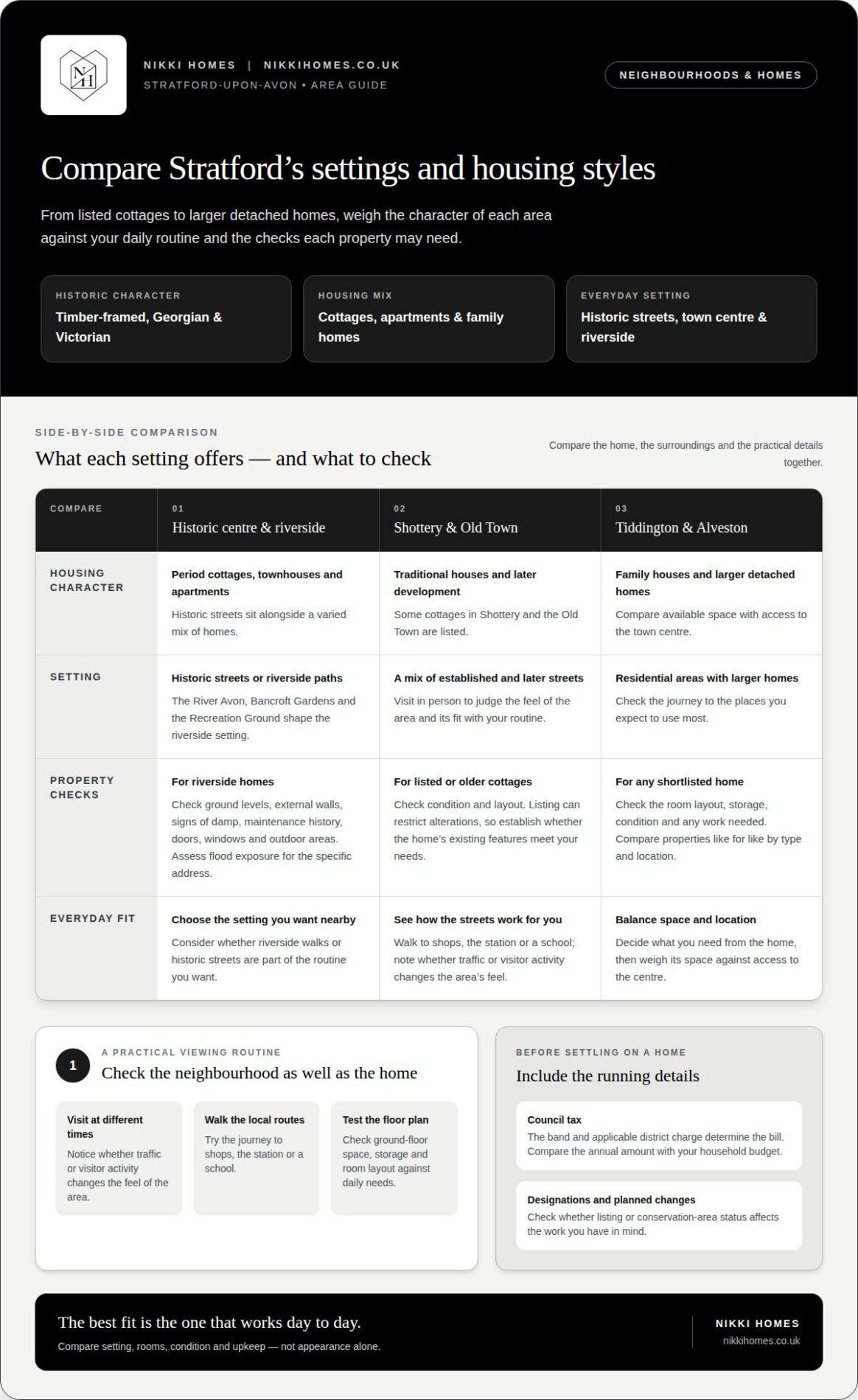
Stratford-upon-Avon combines historic streets, established residential areas and later development. Choose according to the home and daily routine you want.
In Stratford-on-Avon, the population increased by 11.8%, from around 120,500 in 2011 to 134,700 in 2021, according to the Office for National Statistics.
Assessing neighbourhoods through visits
Visit your shortlist at different times, then walk the streets rather than judging homes by photographs alone. Note the journey to shops, the station or a school, and whether traffic or visitor activity changes the feel of the area. Stratford’s town centre has shops, services and markets; seeing them in person helps you judge how they fit your routine.
Shottery and southern neighbourhoods
Shottery has traditional houses as well as later twentieth-century development, giving buyers different styles to consider. Some cottages in Shottery and the Old Town are listed, which can restrict alterations. Look closely at each property’s condition and layout, and consider whether its existing features meet your needs before planning changes.
Stratford neighbourhoods
Tiddington and Alveston have family houses and larger detached homes, while Stratford’s wider mix ranges from timber-framed buildings to Georgian and Victorian properties. Compare these with apartments and homes on later estates, weighing space against access to the town centre. The right fit depends on the home you need and the surroundings you want.
Primary and secondary schools serve Stratford’s residential areas, including selective schools King Edward VI School and Stratford Girls Grammar School. Stratford Hospital is in the town, and the centre’s shops and markets make everyday errands convenient. Check the journey from each shortlisted home to the places you expect to use most.
Council tax depends on a property’s band and the applicable district charge. Before settling on a home, compare its council tax band and annual bill with your household budget.
Historic centre and riverside homes
Stratford-upon-Avon’s historic centre offers period cottages, townhouses and apartments, each with a different relationship to the town’s streets. The River Avon adds another dimension, with paths and open meadows around Bancroft Gardens and the Recreation Ground. A home near these spaces may suit you if riverside walks are part of your routine, while a central address puts historic streets close at hand. Start by deciding which setting you want to step into each morning.
Look beyond the front elevation. At a viewing, walk from the property towards Bancroft Gardens and the Recreation Ground, noting the route, entrances and connection between the riverside and town centre. Then check the home’s ground floor, storage and room layout against your everyday needs. Period features can define a cottage or townhouse, but the practical question is whether the rooms work for how you live.
A riverside address calls for careful, property-specific consideration. Check the ground around the home, the condition of external walls and any visible signs of damp. Ask about the property’s maintenance history and examine the condition of doors, windows and outdoor areas. These checks help you assess the individual building, rather than assuming every home beside the River Avon has the same advantages or drawbacks.
Compare several options in person. A town-centre apartment, period cottage and riverside townhouse can have very different layouts, outlooks and amounts of outdoor space. Note what you gain and what you would compromise on in each. If a listed cottage or older property appeals, include its condition and the scope for changes in your decision. The strongest choice is not simply the most picturesque; it is the one whose setting, rooms and upkeep fit your plans.
Properties for sale in Stratford-upon-Avon
Available homes range from town-centre apartments to detached houses in Tiddington and Shottery. Compare like-for-like properties, not just asking prices.
Comparing property prices
That puts the town’s average above the national figure, but a town-wide average can hide sharp differences between property types and streets. Compare nearby towns with the same care: look at similar homes, condition and location rather than treating different markets as interchangeable.
For a practical benchmark, set your budget first, then compare recent asking prices for homes that match your requirements. Check whether a listing has a guide price or a fixed asking price, and factor in any work the property needs.
Average house prices
Current listings show the range behind the averages.
These examples are asking prices, not sale prices. Compare floor space, condition, tenure and location before deciding whether a home represents value. Houses in Tiddington and central streets may have very different settings and layouts, even when their asking prices appear similar.
Flood risks and property restrictions
Assess flood exposure for the specific address, particularly when considering a home near the River Avon. Check the ground level, visible signs of water damage and any available history of flooding. Don’t assume every riverside home carries the same risk.
Listed cottages in Shottery or the Old Town may face restrictions on alterations. For any property, establish whether conservation-area status or listing affects your plans before committing to major changes. Both the building’s designation and the work you propose matter.
Buying typically involves agreeing terms, arranging conveyancing and surveys, then progressing towards completion. Costs can include legal work, surveys, mortgage-related charges and removals. Renting involves agreeing the tenancy and budgeting for rent, a deposit, bills and moving costs. Either way, compare the full upfront and ongoing commitment, not just the advertised price.
Average house price in Stratford-upon-Avon in 2026?
That town-wide figure is a starting point, not a price tag for every home. If you’re relocating to Stratford-upon-Avon, compare the figure for the type of property you’re considering before setting your budget.
Asking prices tell a different story from completed sales. These are advertised prices, not final sale prices, so don’t treat them as interchangeable with sold-price averages.
The postcode and sales period matter too. When relocating to Stratford-upon-Avon, property prices are useful context, but compare the location, property type and timeframe behind each figure.
Use the numbers to narrow your search, then assess individual listings. Compare like-for-like homes by condition, size and location, and distinguish a guide price from an asking price. For a detached home, the local detached average is more relevant than the overall town figure. For an apartment, compare against apartment values instead. Your deposit, borrowing capacity and ongoing costs also shape the budget you can comfortably work with. For tailored support with the financial side of a purchase, talk through your property plans.
Nikki Homes: Residential Property Sales
Nikki Homes can help you turn your Stratford-upon-Avon search into a clear property decision. If you’re buying, property sourcing and auction management can support your search, alongside residential sales. If your move starts with renting, Nikki Homes also provides letting services.
Bring your priorities into focus: neighbourhood, property type, budget and timing. A clear brief helps you compare suitable options against your real needs, rather than getting distracted by a home that looks right on paper but doesn’t fit your plans.
To discuss your move, contact Nikki Homes or visit nikkihomes.co.uk.
Make your next move with a clear plan
Your next step is to turn preferences into a practical brief. Decide what matters most in your day-to-day life, where you’re willing to compromise and which property details are non-negotiable. If you’re relocating to Stratford-upon-Avon, that clarity can help you assess each opportunity on its merits rather than being swept along by first impressions.
Keep your priorities visible as you view homes and weigh up your options. A good decision is not simply about finding a property you admire; it’s about choosing one that supports the life you’re building and feels right beyond the viewing itself. Take the time to decide deliberately.
When you’re ready to take the next step, discuss your move with Nikki Homes. A considered start can make the road ahead feel clearer, and your next chapter in Stratford-upon-Avon more confidently yours.
Frequently Asked Questions
Which neighbourhoods in Stratford-upon-Avon are best for families, commuters and retirees?
Tiddington and Alveston may suit families seeking larger homes, while commuters may prioritise access to the station and main roads. Retirees could compare apartments and smaller homes by layout, access to everyday services and ongoing charges. Some retirement apartments have age restrictions, event fees and service charges, so understand those terms before deciding. The best fit depends on your household’s routines, preferred home type and transport needs.
What are current rental prices and the availability of properties in Stratford-upon-Avon?
Rental availability varies by property type and area, so a town-wide figure won’t show what’s available for your move date. Set your preferred areas and bedroom needs first, then compare suitable listings and tenancy terms as they appear.
What are the best transport links from Stratford-upon-Avon to Birmingham, London and nearby cities?
Rail connects Stratford-upon-Avon with Birmingham, with the journey described as taking fifty minutes; London takes around two hours by train. Road links connect to the M40 for travel towards Birmingham, Oxford and London. Rural bus services around Stratford are limited, and village living can make a second car necessary. If commuting, test the journey at your intended start time before choosing an address.
What should people know about moving to Stratford-upon-Avon, including local lifestyle and cost of living?
Stratford’s Shakespeare heritage and riverside setting shape local life, while visitor activity can affect town-centre parking in summer.