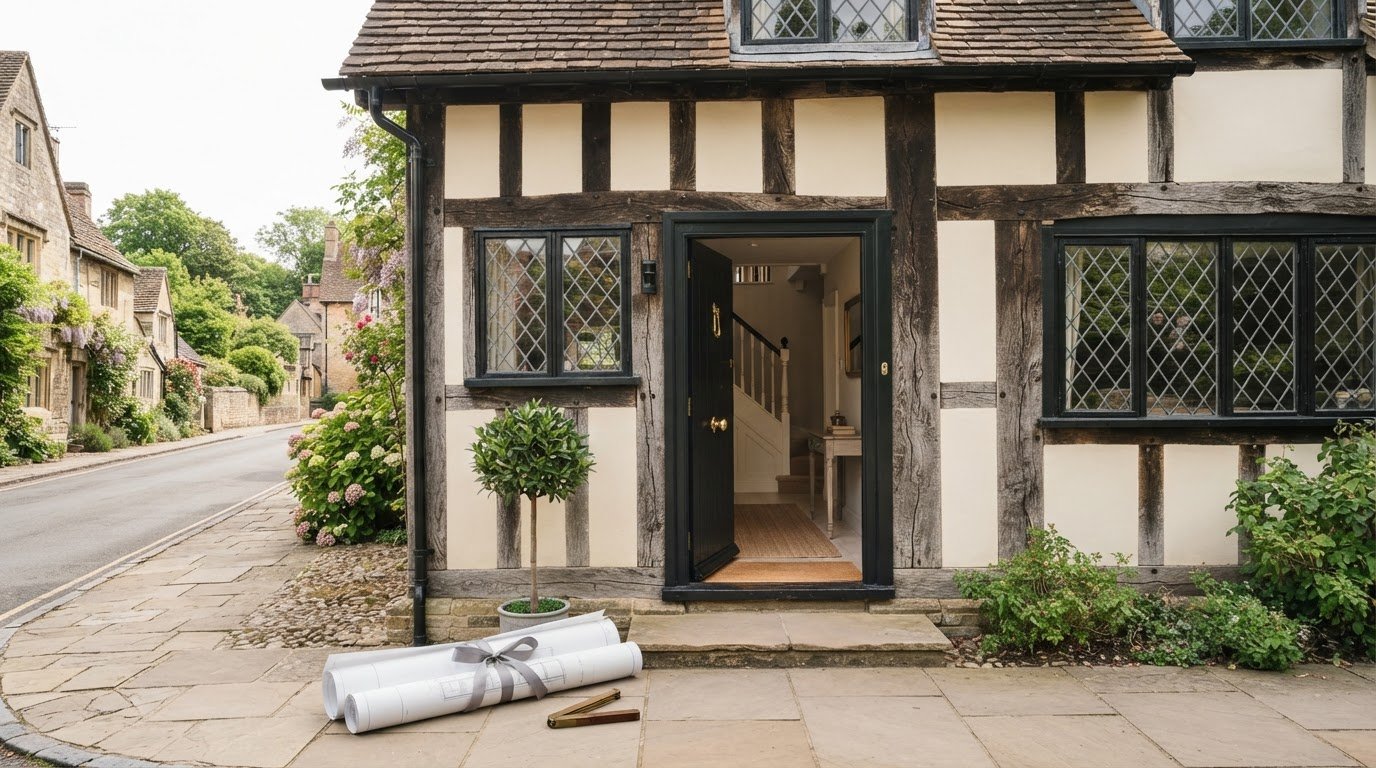
Selling a period property in Warwickshire takes 3 to 12 weeks on average across the region, while well-presented homes in desirable areas can sell in under 30 days. The right price and presentation can make a real difference to how quickly a buyer is ready to act.
It’s natural to want a clear timescale when selling a period property in Warwickshire, especially when your home has character, history and details that deserve more than a rushed listing. But period features alone don’t determine how quickly it sells: location, condition, presentation and asking price all shape buyer interest.
This guide explains what can affect selling time, how to prepare and present your home, and what matters when setting a realistic valuation. You’ll also learn how to highlight the features buyers value while addressing the practical details that can influence a sale.
Key Takeaways
- Local demand varies, so assess your property in the context of its specific Warwickshire location and the buyers it is likely to attract.
- Prepare the home before launch: thoughtful presentation helps buyers notice its character rather than distractions.
- Showcase architectural details and craftsmanship clearly, while being straightforward about condition and practical considerations.
- Build a realistic valuation around location, condition, period features and comparable homes, not emotion or a headline asking price.
1. Local Warwickshire market conditions
Warwickshire’s period-property market is highly local, not uniform. Stratford-upon-Avon, Rugby, Warwick and Shipston-on-Stour attract buyers with different priorities. Village homes may appeal to those seeking space, heritage and quieter surroundings, while town properties can suit buyers who value walkability, amenities and transport connections. That context shapes demand as much as a home’s age or architectural character.
Current guide prices show the market’s broad range. These are asking guides, not proof of completed sale values. Compare location, condition, plot and accommodation before drawing conclusions. Warwickshire-to-London train journeys typically take around 1 to 1.5 hours, adding appeal for some commuters.
The season can shape your launch, too. Spring and early autumn are often suggested as good times to present a Warwickshire home to buyers. A village setting, original features and outdoor space may strengthen its appeal, but buyers also consider upkeep and everyday practicality. Make the property’s strongest local advantages clear rather than relying on period charm alone.
A Grade II listing does not prevent a sale, but it can affect alterations. Work that changes a listed building’s special character may require listed building consent. Give buyers accurate details about the listing and any relevant alteration records.
Choose an estate agent with direct knowledge of your town or village, and ask how they assess comparable homes. When selling a period property in Warwickshire, a valuation should consider recent local evidence, condition, distinctive features and buyer demand. Ask for a clear marketing plan: how will the agent present the property’s character, reach likely buyers and respond to viewing feedback? Strong local knowledge means explaining both the appeal and the practical questions buyers may raise. That clarity helps you set expectations before launch.
2. Preparing and presenting a home for sale
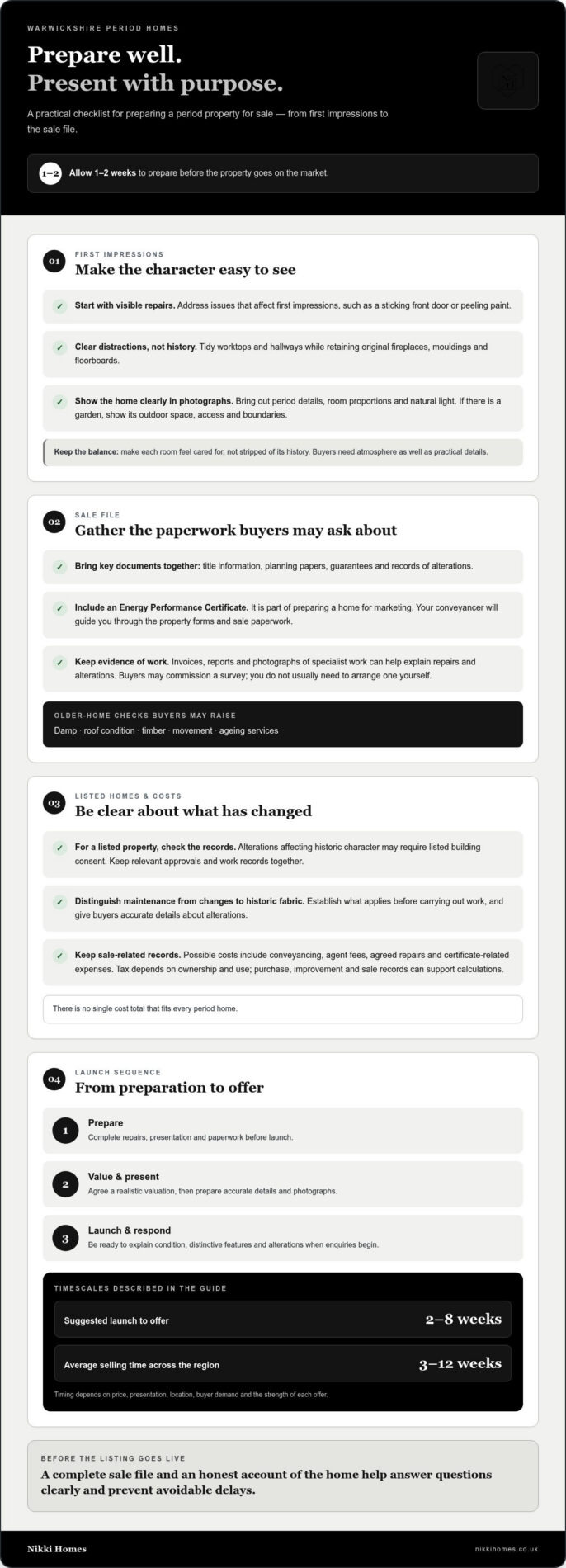
Allow 1-2 weeks to prepare before the property goes on the market. Start with repairs that affect first impressions, such as a sticking front door or peeling paint. Clear worktops and hallways, but retain original fireplaces, mouldings and floorboards. In photographs, show these features clearly, alongside room proportions and natural light. A Warwickshire cottage with a garden should show its outdoor space, access and boundaries. Buyers need atmosphere, but they also need practical details. Make each room feel cared for, not stripped of its history.
For the sale file, gather title information, planning papers, guarantees and records of alterations. Your conveyancer will guide you through the property forms and paperwork needed for the sale. An Energy Performance Certificate is also part of preparing a home for marketing. Buyers may commission a survey, but you don’t usually need to arrange one yourself. Common issues in older Warwickshire homes can include damp, roof condition, timber, movement and ageing services. Keep any available invoices and reports to help answer enquiries clearly.
For a listed property, alterations affecting its historic character may require listed building consent. Keep relevant approvals and work records together. Routine maintenance and changes to historic fabric are not the same, so establish what applies before carrying out work. Selling costs can include conveyancing, agent fees, agreed repairs and certificate-related expenses. Tax depends on ownership and use; keep purchase, improvement and sale records to support your calculations. There is no single cost total that fits every period home.
To sell, prepare documents, agree a realistic valuation, present the property well, then launch with accurate details and photographs. Buyers will want a clear account of condition, distinctive features and alterations. Sale timing depends on price, presentation, location, buyer demand and the strength of each offer. Across the region, the average selling time is described as 3 to 12 weeks; the suggested period from launch to offer is 2-8 weeks. A complete sale file helps prevent avoidable delays when enquiries begin.
3. Architectural charm and craftsmanship
Period character is part of the structure, not just the decoration. In a Warwickshire cottage, exposed oak beams, deep window reveals and uneven floors can show how the building developed. A Georgian townhouse may instead stand out for its sash windows, balanced proportions and formal entrance. These details help buyers understand what makes the home distinctive. Describe what is original, what has been repaired and what has changed. Clear, accurate descriptions let buyers appreciate the craftsmanship without presenting every age-related feature as a flaw.
Look closely at the materials. Local stone, handmade bricks, lime plaster, timber framing and traditional roof tiles each have their own texture and signs of age. A repaired beam can still tell a story, provided its condition is described honestly. Keep evidence of specialist work, such as invoices or photographs, where available. This helps buyers distinguish careful conservation from cosmetic cover-ups. In older Warwickshire homes, the way materials meet matters, too: a stone wall, timber lintel and plaster finish may reveal different building phases.
Original fittings can make a strong visual impression. Think of a working fireplace with a stone surround, panelled doors with historic ironmongery, or a staircase showing hand-finished woodwork. Resist replacing distinctive details just to make rooms look newer. Instead, remove distractions and explain a feature’s use or history where you know it. If it has been altered, say so plainly. Buyers value character, but trust depends on an honest account of its condition.
Show how architectural details shape everyday living. A window seat may frame a garden view; thick walls can create deep, practical window ledges; a central hall can give rooms a clear flow. Explain these qualities in the property description and during viewings. Don’t rely on a generic label such as “charming”. Name the materials, proportions and workmanship buyers can actually see. Specific details help a period home stand apart while giving prospective owners a grounded sense of the building they’re considering.
4. Pricing and accurate valuation
A period home’s value depends on more than age or attractive details. Location, condition, accommodation, plot, access and buyer demand all matter, as do layout and the quality of alterations. A timber-framed cottage in a village cannot be valued like a townhouse near Stratford-upon-Avon simply because both have historic character. Comparable local properties help show how buyers respond to similar homes. Asking prices offer context, but they are not evidence of completed sale prices.
Warwickshire guide prices illustrate the spread. These examples are in different locations and may vary in size, condition and land. They are not direct valuations of another home. Compare like with like, then account for the features that make your property distinctive.
Be precise about condition. A recently repaired roof, documented improvements or well-maintained period features can support buyer confidence. Visible maintenance needs, on the other hand, may affect the offer buyers feel able to make. A valuation should reflect evidence, not sentimental memories or ambitious renovation plans. Ask how the figure accounts for location, comparable homes, condition and likely buyer demand. A clear explanation is more useful than an impressive number without reasoning.
Price also shapes the launch. A figure set too high can narrow early interest; a grounded asking price gives buyers a clearer reason to view. Warwickshire properties with realistic pricing and quality marketing can achieve asking price or more, although this is not a promise for every home. Review viewing feedback and offer levels against the original valuation, rather than reacting to one comment. For a considered Warwickshire valuation, request a property valuation before setting your asking price.
Nikki Homes: Residential Property Sales
Nikki Homes provides residential property sales for owners preparing to bring a period home to market in Stratford-upon-Avon and the surrounding Warwickshire area. Speak with the agency when you need a clear view of positioning, presentation and the steps involved in launching your sale. Its consultancy-led approach gives you room to discuss your property’s character and practical selling considerations before deciding how to proceed.
For a distinctive home, the details matter: a considered valuation, accurate property information and a presentation that shows its craftsmanship without disguising its condition. Nikki Homes can support you through the residential sale, with onward negotiation also available as part of its wider property support.
If you’re ready to discuss selling your Stratford-upon-Avon property, contact Nikki Homes or visit nikkihomes.co.uk.
Make your next move with confidence
Selling a period property in Warwickshire is about more than preparing a building for viewings. It’s a decision about timing, priorities and your next chapter. Before moving ahead, consider what you need from the sale: a straightforward move, a particular onward plan, or time to weigh your options. Being clear about this helps keep decisions focused as conversations with buyers progress.
Nikki Homes provides residential property sales, lettings services and property sourcing. If your plans change, these services may support your next property decision. The right next step is a direct conversation about your priorities and the home you’re preparing to sell.
Contact Nikki Homes to discuss your sale and take the next step on your terms.
Frequently Asked Questions
What’s the average time to sell?
Across Warwickshire, average selling time is described as 3 to 12 weeks, from launch to sale agreed. The offer stage is suggested at 2-8 weeks; conveyancing then adds time, with completion expected 8-12 weeks after acceptance. Treat these as separate milestones, not one total. A chain, mortgage arrangements, survey findings and enquiries can affect the journey from accepted offer to completion.
What is the average price of period homes in Warwickshire?
Warwickshire period homes span a broad price range, so one average would be a blunt guide. These are asking guides, not completed sale prices. Size, location, plot, condition and accommodation all shape what a particular home may be worth.
How do Warwickshire period property prices vary by town and village?
Prices vary with location, property size, land and condition. These examples show why county-wide averages can mislead. Compare nearby homes with similar accommodation and grounds, then account for differences such as upkeep, access and setting.
Which estate agents specialise in period properties in Warwickshire?
Based in Stratford-upon-Avon, Nikki Homes provides residential property sales through a consultancy-led approach and handles homes including character cottages. It’s a local agency to speak with if you want support presenting a distinctive Warwickshire property to buyers. Discuss how the home’s architectural features, condition and location will be represented, and how viewing feedback can inform the sale strategy.
How can I value a listed or historic property in Warwickshire?
Assess comparable local sales alongside condition, layout, land and distinctive features. Listed status alone doesn’t set a property’s value; its effect depends on the home and buyer demand. For a Grade II property, organise alteration approvals and relevant work records. Clear evidence helps explain the home’s history and condition, while a valuation based on nearby properties puts its character in market context.
How can I make a period property more appealing to buyers without harming its character?
Make rooms easy to understand without stripping away their identity. Open curtains, use warm lighting, clear routes between rooms and remove excess furniture so buyers can see the proportions. Clean original ironmongery, fireplaces and timber rather than covering them with modern finishes. At viewings, share a concise note about features’ age or restoration history, where known, so buyers can connect character with care.