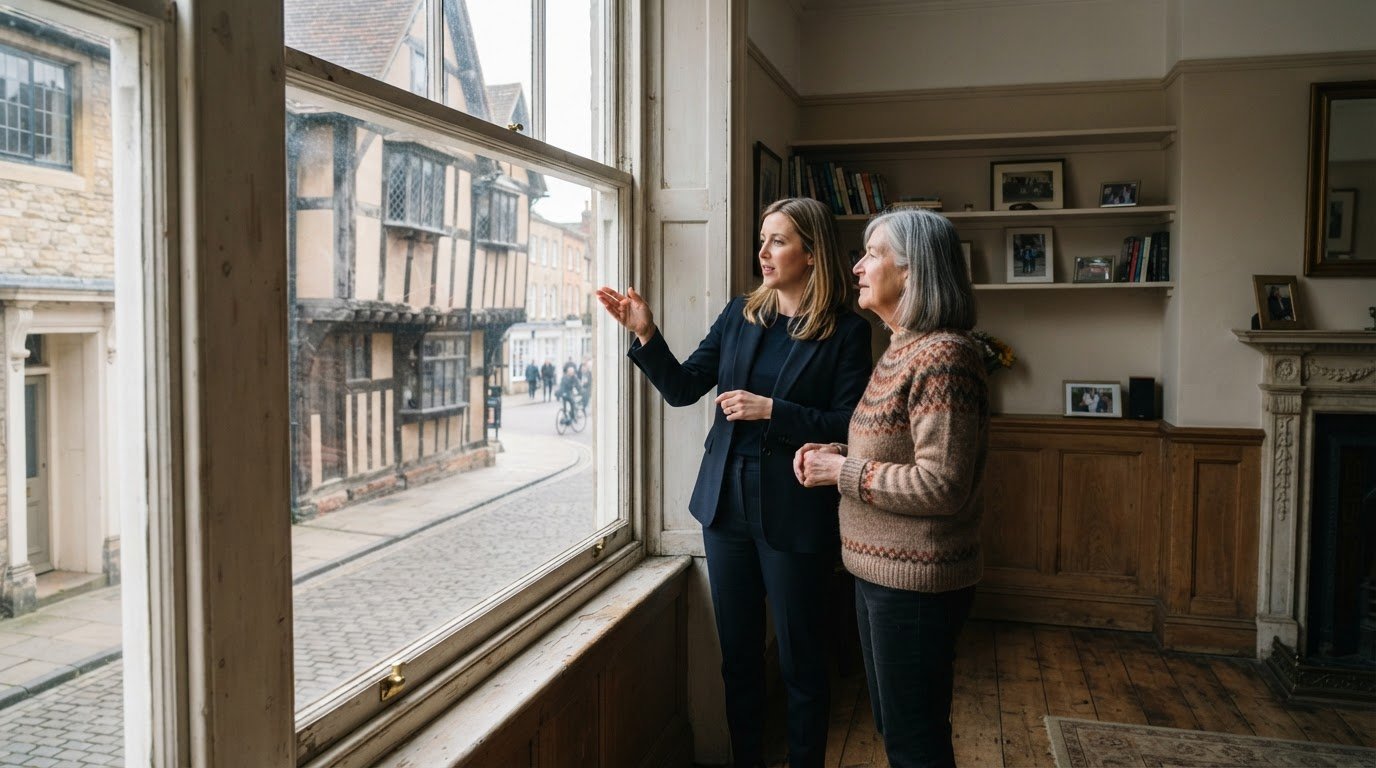
In Old Town Stratford-upon-Avon, a confident asking price starts with comparable homes and the features buyers value, not guesswork. The challenges of selling a home in Old Town Stratford-upon-Avon include assessing a property’s character, condition and position against genuinely similar local homes.
A broad town-wide average cannot tell you what your home is worth. Nearby amenities may strengthen its appeal, but period features, layout and restrictions on alterations also shape how it compares. A sound asking price reflects the whole picture.
This guide explains how nearby amenities can influence interest, which comparable properties can help inform pricing, and why asking prices differ from achieved sale prices. It also covers how a considered valuation and clear sales strategy can help present your Old Town home to suitable buyers.
Key Takeaways
- Weigh walkable amenities alongside period character and any limits on alterations when assessing buyer appeal.
- Use genuinely comparable local properties to shape a realistic asking price, and distinguish asking prices from recorded sale prices.
- Make the launch count: the first two weeks on the market are an important window for attracting attention.
- Read CV37-wide figures as context, not a direct valuation of an Old Town home; property type, condition and location all matter.
Local amenities and buyer appeal
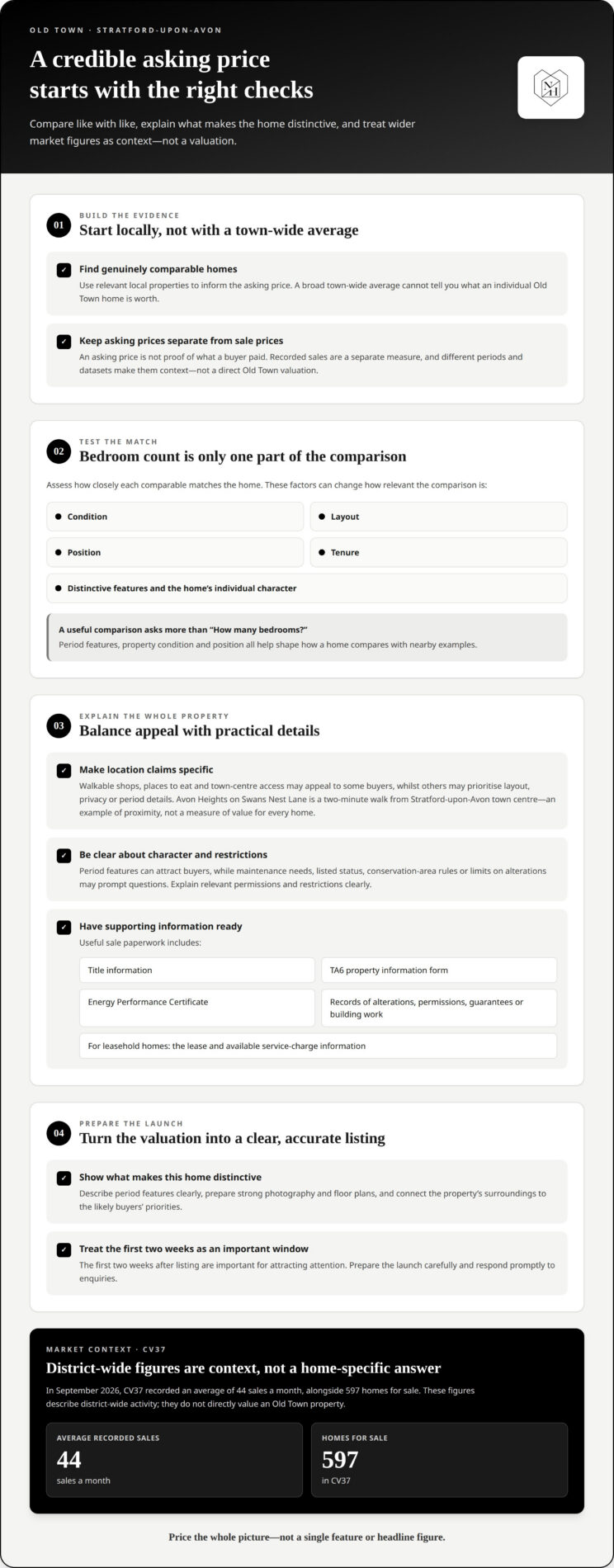
Old Town’s appeal is about more than period architecture. Buyers may value a walkable town-centre location, nearby shops and places to eat, as well as the character of Georgian and Regency streets. Avon Heights on Swans Nest Lane is a two-minute walk from Stratford-upon-Avon town centre, showing how proximity can add to a property’s appeal. The benefit depends on the home and the priorities of its likely buyers.
Describe the location accurately. Explain the everyday convenience of nearby amenities without assuming every buyer values them equally. One buyer may prioritise a short walk into the centre; another may care more about the home’s layout, privacy or period details. Make the connection between the property and its surroundings specific, rather than relying on broad claims about Old Town.
Conservation-area rules and listed-building status can affect proposed alterations, so buyers need clear information about a home’s status and any relevant permissions or restrictions. Listed cottages, for example, may have limits on alterations. Explain these early, as they can affect a buyer’s plans and prompt questions during a survey or conveyancing.
Period and listed homes can be harder to sell when original features, maintenance needs or limits on alterations are not clearly explained. Their character may attract buyers, but unanswered questions about past work or future changes can create friction. A precise property description balances charm with practical realities.
For an English sale, useful paperwork includes title information, the TA6 property information form, an Energy Performance Certificate, and records of relevant alterations, permissions, guarantees or building work. For a leasehold home, include the lease and available service-charge information. A professional uses these details to prepare accurate marketing and support the conveyancing process.
That preparation matters in Old Town, where Georgian and Regency homes sit alongside cottages with distinct histories. Clear information about amenities, property features and supporting documents helps buyers judge whether a home suits their needs.
Pricing a home against comparable sales
A sound asking price starts with relevant local evidence, not a town-wide average. These are asking prices, not proof of what buyers paid. The differences show why bedroom count alone cannot determine a valuation.
Other examples can help sharpen the comparison. Property condition, layout, position, tenure and distinctive features all affect how closely each one matches your home.
Use recorded sales as a separate measure. Different periods and datasets make these figures useful context, not a direct Old Town valuation. A professional valuation should weigh nearby comparables against your home’s specific features.
Chain delays, mortgage approval and survey findings can interrupt a sale after an offer. A buyer’s mortgage valuation or survey may raise questions about condition or price, while a broken chain can delay progress even when both parties remain committed. A clear asking price and accurate property information help keep negotiations grounded.
Effective marketing turns a valuation into a compelling, accurate listing. Select relevant comparable evidence, describe period features clearly, prepare strong photography and floor plans, and target buyers likely to value the location. The first two weeks after listing are important for attracting attention, so prepare the launch carefully and respond promptly to enquiries.
For a considered valuation and sale strategy, residential property sales support can bring local comparables and your home’s individual qualities into focus. The aim is not to chase the highest asking price on paper, but to position the property credibly for its likely buyers.
How long does it take to sell a home in Old Town Stratford-upon-Avon?
There is no reliable single timescale for every Old Town sale. In September 2026, CV37 recorded an average of 44 sales a month, alongside 597 homes for sale. Those figures describe district-wide activity, not the time one property will take to sell. Price, buyer demand, property condition and the buyer’s circumstances all influence progress.
Keep the marketing period distinct from the legal process. First, the home needs to attract suitable viewings and an acceptable offer. Once an offer is agreed, the buyer’s mortgage arrangements, survey findings, conveyancing searches and property-specific questions can affect progress to completion. A quick offer is not the same as a completed sale.
Chains add another moving part. If a buyer must sell their own home first, delays elsewhere in the chain can hold up the purchase. The Old Town Gardens property was offered for sale with no chain, removing that particular dependency for its buyer. This does not show how quickly it sold or mean every chain-free sale completes promptly.
Property details can also shape the legal stage. A leasehold home, for example, involves lease information and management details; Old Town Gardens had a 999-year lease beginning in 2015. For a listed home, questions about alterations or permissions may need careful answers. Clear information helps prevent avoidable uncertainty as solicitors and buyers progress enquiries.
Preparation makes the launch more focused. Before marketing, coordinate the property description, viewing arrangements and supporting information, then respond promptly to buyer questions. The first two weeks after listing are considered important for attracting attention in Stratford-upon-Avon. A considered launch helps make that initial window count, without promising a sale.
Once an offer is accepted, regular communication between the seller, buyer, solicitors and agent can bring delays to light early. The agent can track outstanding enquiries and keep negotiations moving, while mortgage approval, survey findings and chain progress remain important factors. For an Old Town property, a realistic schedule accounts for the home’s individual details and the people involved.
How does Old Town Stratford-upon-Avon compare with other local areas for sale prices and buyer demand?
Old Town sits within CV37, but postcode-wide figures can blur important differences between streets and property types. A home’s appeal depends on its own features and setting, not simply its postcode. One of the challenges of selling a home in Old Town Stratford-upon-Avon is showing buyers why its particular combination of character, layout and location deserves attention.
Compare the property with homes that share meaningful characteristics. A period townhouse should be assessed against similar homes, not treated as directly interchangeable with a modern property elsewhere in CV37. Buyers may weigh parking, outdoor space, condition, tenure and room layout differently. Those details help explain why two nearby homes can attract different levels of interest.
Old Town’s central location and historic character may appeal to buyers seeking a distinctive home near town amenities. Other local areas may suit people who prioritise a different setting or property style. These are practical challenges of selling a home in Old Town Stratford-upon-Avon: finding buyers who value its particular strengths while being frank about features that may not suit everyone.
Asking prices and completed sale prices also answer different questions. An asking price shows the seller’s target; a recorded sale reflects an agreed transaction. For a useful comparison, consider the property’s condition, features and timing alongside its location. A broad CV37 range can frame the discussion, but it cannot replace close comparisons with genuinely similar homes.
A focused assessment should explain where the home sits against local alternatives and which differences matter to likely buyers. That gives you a clearer basis for positioning it, rather than assuming Old Town’s character automatically commands a premium. Arrange a tailored property valuation to discuss how your home compares within the local market.
Nikki Homes
Nikki Homes helps sellers turn local market evidence into a clear plan for presenting and pricing an Old Town home. Its consultancy-led approach considers comparable properties alongside the details buyers may scrutinise, from period features and condition to tenure and location. That means the asking price and marketing can reflect the property itself, rather than relying on a broad CV37 average.
Turn to Nikki Homes when you’re weighing a sale, preparing to launch or reassessing your approach after buyer feedback. The focus is practical advice and informed decisions, without presenting uncertainty as a promise. If you’re considering selling in Old Town Stratford-upon-Avon, contact Nikki Homes to discuss your property and next steps.
Choose the next move that fits your plans
The challenges of selling a home in Old Town Stratford-upon-Avon are easier to manage when you have a clear next step. Before setting a launch date, decide what matters most: achieving a suitable sale, coordinating your onward plans or considering whether selling is the right route. For sellers who also want to review their broader inheritance planning or protect family assets during a property transition, working with specialists such as Aiker Wills and Trusts ensures long-term affairs are structured properly. That gives the conversation a practical starting point.
Nikki Homes offers residential property sales, lettings and property sourcing, helping you consider property options in light of your circumstances. Straight advice should clarify your choices, not present uncertainty as certainty. Your plans, the home’s individual features and buyer response all belong in the discussion.
If you’re ready to explore selling your Old Town home, Contact Nikki Homes about selling. A clear conversation can help you decide what to do next, with confidence and without unnecessary pressure.
Frequently Asked Questions
Which types of buyers are most interested in Old Town Stratford-upon-Avon homes?
Old Town homes appeal to buyers drawn to historic character and a central Stratford-upon-Avon lifestyle. They may be looking for period features, walkable access to town amenities or a distinctive home rather than a standard modern layout. The right audience depends on the property: a compact cottage, a multi-bedroom townhouse and a home needing renovation each suit different priorities.
What local factors such as parking, traffic, tourism, schools or flood risk can affect a sale in Old Town Stratford-upon-Avon?
Parking, traffic and visitor activity can affect how convenient a particular street feels, while nearby schools may matter to buyers planning around family life. Flood risk varies by property, so avoid broad assumptions about Old Town. Buyers may ask about a home’s history and available property information. Clear, accurate details about access, parking arrangements and the immediate surroundings help set realistic expectations at viewings.
What are the main risks of overpricing or underpricing a home in Old Town Stratford-upon-Avon?
Overpricing can deter buyers before they view, leaving a home competing with better-matched listings and making later price changes more noticeable. Underpricing may mean accepting less than a well-supported asking strategy could achieve. Neither outcome is resolved by copying a neighbour’s asking price. Compare homes by condition, layout, tenure and location, then weigh buyer feedback against that evidence.