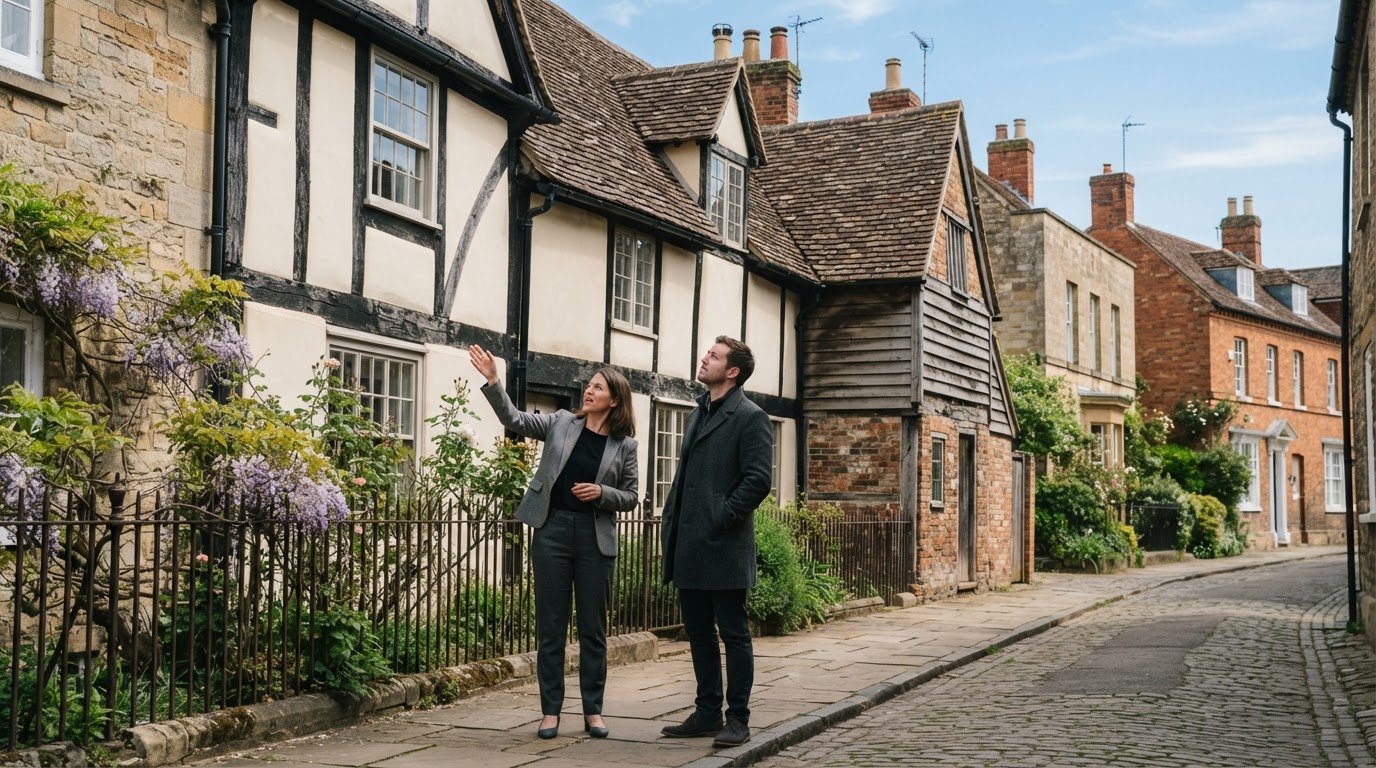
Conservation area status can redraw the line between routine changes and work needing planning permission. When buying a house in a Stratford-upon-Avon conservation area, don’t assume standard permitted development rights cover every alteration: demolishing a building of more than 115 cubic metres requires permission, and an Article 4 direction can restrict further changes.
It’s easy to confuse a conservation area with listed status, or to assume a local search will make every restriction obvious. The distinction matters: the designation affects the area’s character, while listed building status brings separate controls for the building itself. Stratford-on-Avon District has 75 designated conservation areas, so the property’s exact location matters.
This guide explains how conservation area status can affect permitted development, alterations, extensions and listed buildings, and what local searches can reveal. You’ll also see why checking the designation and any Article 4 direction early can help you understand the limits before committing to a purchase.
Key Takeaways
- Check whether an Article 4 direction affects the property, as it can restrict alterations that might otherwise fall under permitted development.
- Separate conservation area controls from listed building rules: the two designations affect properties in different ways.
- Assess proposed alterations and extensions against planning controls before assuming they can proceed without permission.
- Use local searches to establish the property’s designation, and look beyond standard search results for relevant restrictions.
How Are Permitted Development Rights Reduced?
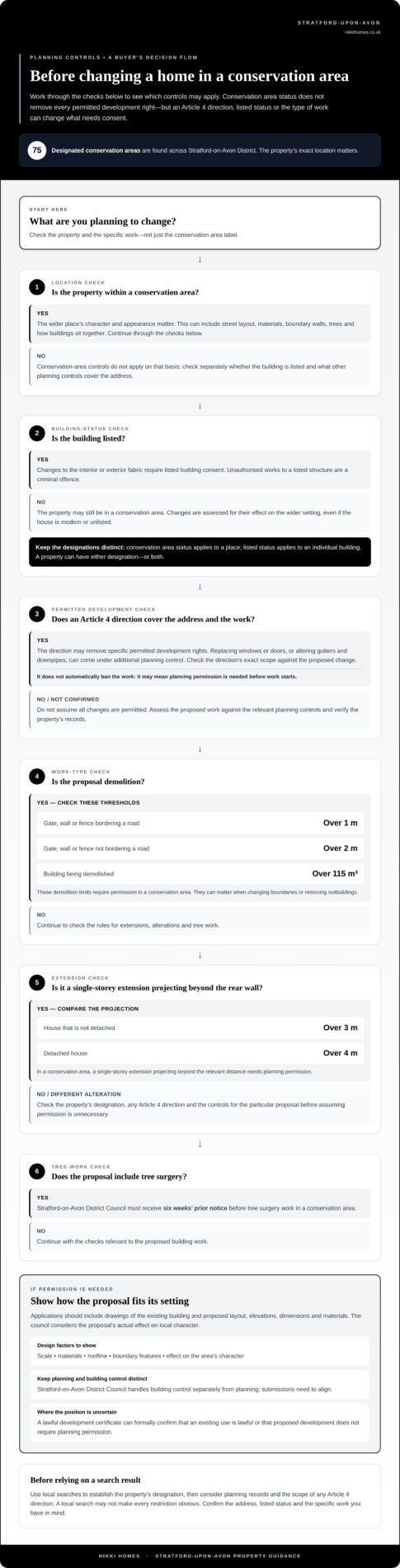
Conservation area status does not remove every permitted development right, but it can narrow what you may change without planning permission. Before you plan to extend or alter a house, establish whether an Article 4 direction applies. It can bring works such as replacing windows or doors, or altering gutters and downpipes, under additional planning control. The exact restrictions depend on the direction covering that property.
That distinction matters when a familiar change could alter the area’s character. Replacing a front door or changing a visible window may need permission where an Article 4 direction removes the relevant permitted development right. The direction does not automatically ban the work; it means you need to follow the planning process before starting. Check its scope against the specific alteration, not just the property’s conservation area status.
Demolition also has defined thresholds. In a UK conservation area, demolishing a gate, wall or fence over 1 metre high requires permission if it borders the road, according to UK Government. If it does not border the road, demolishing a gate, wall or fence higher than 2 metres requires permission, according to UK Government. Demolishing a building of more than 115 cubic metres also requires permission. These limits matter when considering boundary changes or removing outbuildings.
Trees are subject to separate controls. Stratford-on-Avon District Council must receive six weeks’ prior notice before tree surgery work in a conservation area. A lawful development certificate can formally confirm that an existing use is lawful or that proposed development does not require planning permission.
Where permission is needed, design matters. A proposal should respond to the building’s scale, materials, roofline and boundary features, while preserving the area’s character. For example, a rear extension that respects the original proportions may fit more comfortably than a bulky addition that dominates the house. The council assesses the proposal’s actual effect, so drawings and material choices should show how the development fits its setting.
Is a Conservation Area the Same as a Listed Building?
No. A conservation area is a designated place, while listed status applies to an individual building. The statutory definition of a conservation area is set out in the Planning (Listed Buildings and Conservation Areas) Act 1990, according to UK Government. The distinction matters: a property can sit within a conservation area without being listed, or carry both designations.
Conservation areas protect the character and appearance of a wider place, not only its oldest buildings. That character may come from a street’s layout, building materials, boundary walls, trees and the way buildings sit together. A modern house within the boundary is still part of the protected setting, even if it is not listed. Proposed changes are assessed for their effect on that wider character.
Listed status brings a separate layer of control. Changes to the interior or exterior fabric of a listed building require listed building consent. Replacing historic windows, removing internal features or altering original materials can therefore raise different issues from changes to an unlisted neighbouring property. Unauthorised works to a listed structure are a criminal offence. The distinction is that conservation area controls consider the wider place, while listed building controls focus on the individual structure.
Article 4 directions can impose local restrictions on Stratford-upon-Avon properties. Their effect depends on the address and the specific permitted development rights removed, so the designation alone doesn’t tell you which changes are controlled. A property’s local search and planning records should be considered alongside its conservation area and listed status.
For buyers, the practical question is how each designation affects the home and any changes you may want to make. A listed cottage and an unlisted modern house on the same street can face different requirements. Before committing to alterations, establish whether the building is listed, whether it sits within a conservation area, and whether an Article 4 direction applies. For guidance on a purchase, explore residential property sales with Nikki Homes.
Planning controls for alterations and extensions
In Stratford-upon-Avon conservation areas, permitted development rights can be restricted, so an extension or alteration may require planning permission. The property’s designation, listed status and proposed work determine which controls apply.
Applications and supporting drawings
A planning application asks the council to assess proposed development, supported by drawings showing what will change. In a conservation area, a single-storey extension needs permission if it projects more than 3 metres beyond a house’s rear wall, or more than 4 metres for a detached house. Plans should clearly show the existing building and proposed layout, elevations, dimensions and materials. That detail lets the council assess scale, appearance and impact on local character. Stratford-on-Avon District Council handles building control separately from planning, and the submissions need to align.
Advice on planning restrictions
Planning advice identifies which controls apply to the address and proposal before you commit to a design. A buyer considering a Georgian, Victorian or Edwardian house should commission a RICS Level 3 Building Survey; a newer house in good condition may suit a RICS Level 2 HomeBuyer Survey. These surveys assess the building, not planning permission, so keep those questions distinct. Unauthorised work in a conservation area can carry a maximum prison sentence of two years under Section 74 of the Planning (Listed Buildings and Conservation Areas) Act 1990, according to UK Government.
Renovations and energy-efficiency upgrades
Conservation rules can affect visible renovations and energy improvements, including changes to roofs, windows and external materials. Solar panels projecting more than 150 mm from the roof require permission in a conservation area. For other upgrades, the design and visibility of the work matter: roof panels facing a prominent street may raise different character concerns from less visible installations. Listed buildings have separate consent controls for changes to their fabric. Before planning works, establish the property’s status and match the proposed design to the applicable controls.
Checking conservation area designation and local searches
Stratford-on-Avon District has 75 designated conservation areas, but boundaries are specific. A property’s street or appearance alone cannot establish its status.
How a property professional checks conservation area designation
A property professional checks the address against conservation area boundaries and relevant planning records. This matters because a boundary can run through a neighbourhood, leaving nearby homes subject to different controls. Stratford-on-Avon District Council has published 21 conservation area review documents as booklets, which can help explain the architectural character of designated places. A local authority search should establish whether the property is designated and whether an Article 4 direction applies.
A search result may not provide the full picture, so check designation through other available records. The GOV.UK planning data map can show whether land is designated in England, while the council’s planning authority can clarify a boundary if the address is close to its edge. Bring these records together rather than treating one search result as the full picture.
Risks to check before buying
Check listed-building status separately from conservation area designation, because the two bring different controls. Then consider flood risk and the property’s physical condition. For a Georgian, Victorian or Edwardian house, a RICS Level 3 Building Survey is recommended; a newer home in good condition may suit a RICS Level 2 HomeBuyer Survey. A survey can identify structural concerns that a street view cannot reveal.
Historic details deserve close attention. Altered windows, roof changes or signs of movement, for example, may affect repair plans as well as the home’s character. Unauthorised work to a listed structure is a criminal offence, so records of past alterations matter. Reviewing the designation, searches and survey findings carefully gives you a firmer basis for assessing the property and its future upkeep.
For a property search shaped around your priorities, discuss your buying plans.
Nikki Homes: In house mortgage and financial advice
Nikki Homes brings property decisions and in-house mortgage and financial advice into the same conversation. This can help when weighing the purchase of a conservation area home against its likely maintenance needs or planned changes. Planning controls still apply separately, so financial advice does not replace planning or legal advice.
If you’re still looking, Nikki Homes also offers residential property sales and property sourcing. Share the kind of home you’re considering and what matters to you, so the conversation can focus on a suitable next step.
Contact Nikki Homes to discuss your property plans.
Choose your next move with confidence
Make your next step a clear decision about the home you want, the changes you may hope to make and the responsibilities you’re prepared to take on. For anyone buying a house in a Stratford-upon-Avon conservation area, that balance matters: the right property should suit your plans as well as your current needs.
Nikki Homes offers residential property sales, lettings services and property sourcing. Whether you’re buying, letting or still searching, a focused conversation can help shape a practical direction for your move. Be clear about what matters most, from the kind of home you want to how you expect to use it.
Contact Nikki Homes about your move and take the next step with a clearer sense of what you’re looking for.
Frequently Asked Questions
How Can a Property Professional Check if a House Is in a Conservation Area?
A property professional can compare the address with conservation area boundaries and planning records, then consider relevant local restrictions. For someone buying a house in a Stratford-upon-Avon conservation area, a street name or nearby historic homes aren’t enough to establish the property’s status. Boundaries can pass through a neighbourhood, so the exact plot matters. This check helps clarify whether proposed changes need closer planning scrutiny before you commit.
How Do the Rules Affect Repairs and Costs?
The rules can affect which materials and designs are suitable for visible repairs, so replacing original windows like-for-like may not be the only consideration. The property’s listed status and any local direction matter too. Costs depend on the building’s condition, repair specification and work required; conservation area status alone does not set a standard repair bill. Proposed changes may also need separate planning or specialist advice.
How can a property professional confirm whether a property is in a conservation area?
A professional can use the address to review the local authority search, mapped designation boundaries and Stratford-on-Avon District Council planning records. Standard searches may not flag conservation area status, so relying on one result can leave a gap. If a home sits close to a boundary, the planning authority can clarify whether its land is included. The same review can identify whether an Article 4 direction applies.
How does living in a conservation area affect my home’s value?
It may influence value through the home’s setting, architectural character and limits on future alterations, but it doesn’t determine an individual sale price. A 2012 study by the London School of Economics and Historic England found an average 9% premium for houses in conservation areas. That’s a historical average, not a valuation for a particular Stratford-upon-Avon property; condition, location and buyer demand still matter.
I want to demolish my unlisted property (or part of it) – do I need any special permission?
Possibly. In a conservation area, demolishing a building of more than 115 cubic metres requires permission, and removing a large part of a building can also need planning permission. The building being unlisted doesn’t remove those controls. Demolition of a boundary wall, gate or fence can have separate thresholds, depending on its height and whether it borders a road.
Do buyers need permission for extensions, replacement windows, roof changes or demolition in a conservation area?
When buying a house in a Stratford-upon-Avon conservation area, assess each planned change separately. A single-storey rear extension beyond the applicable permitted development limit needs permission; an Article 4 direction can restrict some window or door changes. Solar panel installation may need closer planning consideration in a conservation area. Demolition has separate rules. Distinguish planning permission from listed building consent, which applies to listed buildings.