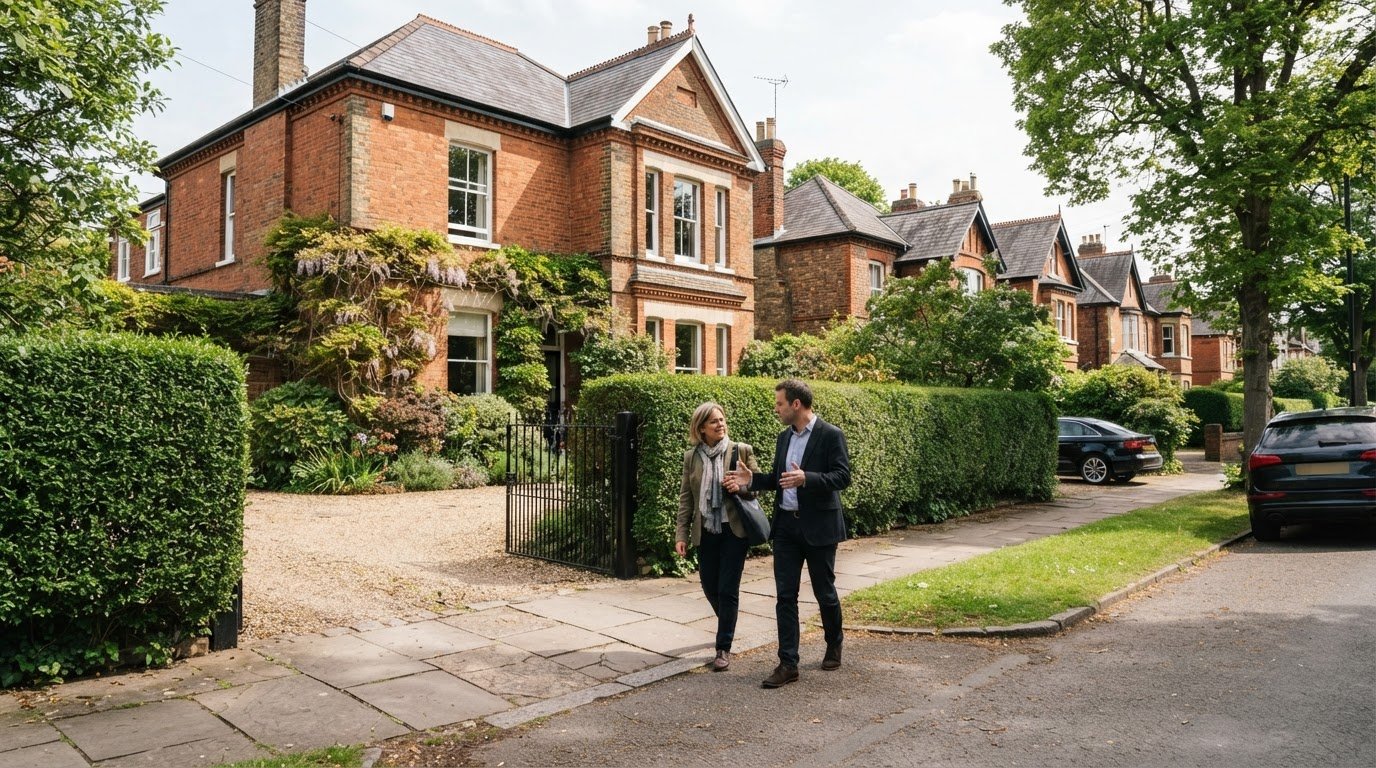
A prestigious address is only part of what makes a street sought-after. The most expensive streets in Stratford-upon-Avon are best understood through their setting, access to the town centre and connections to nearby places, not just their names on a map.
Stratford is compact: walking from one side of town to the other takes fewer than 15 minutes. Yet its reach extends well beyond the centre. Warwick is a 25-minute train ride away, while Birmingham Airport is about 28 miles (45 kilometres) from town, with a taxi journey to the centre taking around 30 minutes.
If you’re weighing up where to buy, sell or let, those details help put a street’s appeal into perspective. This article explores how Stratford-upon-Avon’s location, transport links and nearby towns relate to its most expensive streets, so you can see the wider picture behind a sought-after address.
Key Takeaways
- See how average sold prices vary between Stratford-upon-Avon’s sought-after streets, and what those figures can tell you.
- Understand why a standout sale price is not the same as the typical value of homes nearby.
- Put premium street prices into context by comparing them with the wider town market.
- Learn which property types and features can influence a home’s appeal and value.
3. What are the latest average sold prices on Stratford-upon-Avon’s most expensive streets?
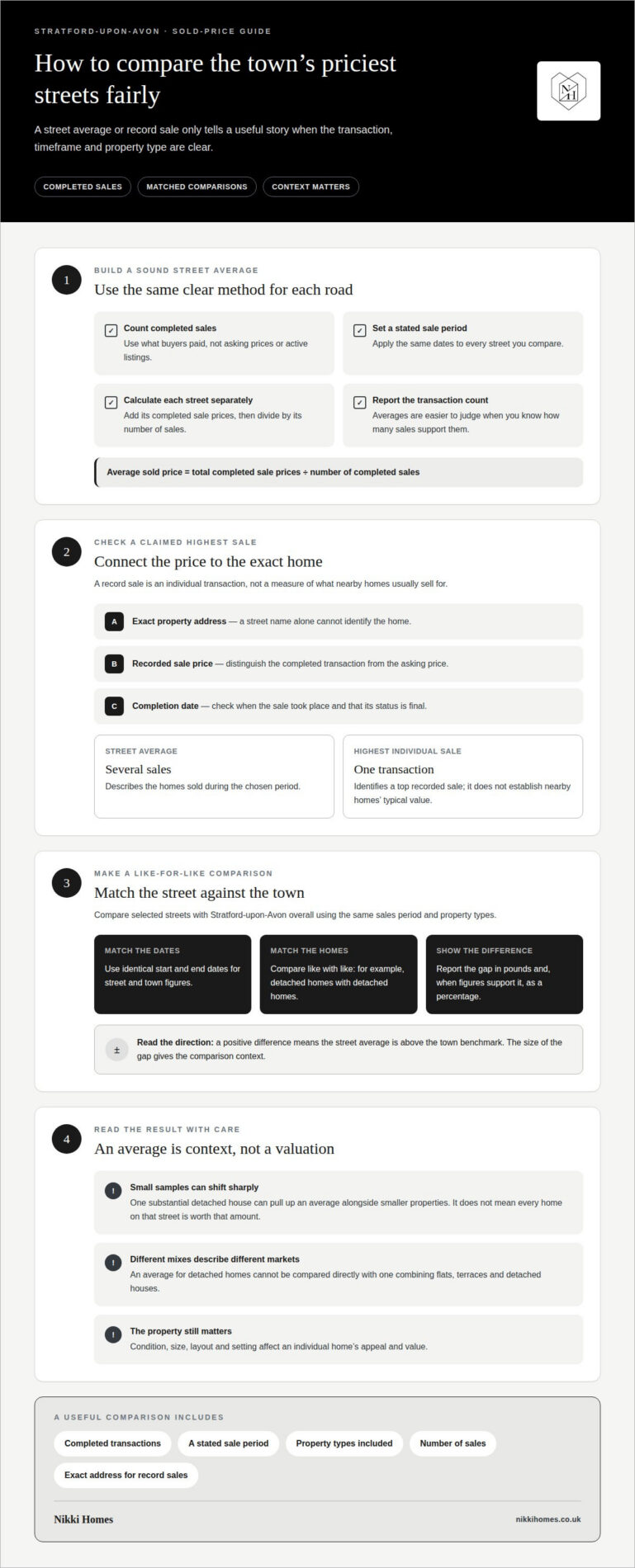
A reliable street average requires completed sale prices, a defined date range and a consistent method. Without street-level prices and a stated period, naming figures would risk presenting invented numbers as recent sales.
The calculation is straightforward: add the completed sale prices of homes on one street, then divide by the number of sales. Calculate each street separately. Leave asking prices out, because they show what sellers hope to achieve, not what buyers paid.
A street average can shift sharply when there are few transactions. One substantial detached house, for example, can pull up the average alongside smaller properties. That does not mean every home on the street is worth that amount. The average reflects the particular homes sold during the period chosen.
For a fair comparison, use the same period and property types. An average for detached homes alone cannot be compared directly with one that combines flats, terraces and detached houses. Likewise, a year-long average needs context if set against a shorter period.
A useful Stratford-upon-Avon street comparison would name each road, state the sales period and report the number of completed transactions. This helps you judge whether an average reflects several sales or a single outlier. Apply the same method to nearby areas, where a different mix of homes may affect the results.
Until those transaction details are available, treat any unqualified “latest average” cautiously. Check the sale period, the property types included and the number of transactions behind each figure. These details show whether a headline average offers a sound comparison or a precise-looking figure without enough context.
4. Which individual homes have sold for the highest prices in Stratford-upon-Avon, and where?
Identify the top individual sales by ranking completed transactions, not asking prices. Each result needs a property address, recorded sale price and completion date. Without all three, a “highest sale” claim cannot be reliably matched to a home in Stratford-upon-Avon.
Start with the address. A street name alone is not enough: properties on the same road can differ in size, layout, condition and setting. Compare a named home only when its recorded transaction belongs to that exact property, not a nearby home with a similar address.
Then distinguish an individual record from a street average. One exceptional sale may top the town’s transaction list, but it does not establish the typical value of nearby homes. An expensive road may also have several strong sales without recording the single highest-priced property. These rankings answer different questions.
Check the sale date and transaction status before treating a figure as final. A marketing price reflects the seller’s asking position; a completed sale records an agreed transaction. Keeping them separate prevents a listing from being mistaken for a record-breaking sale.
For a useful comparison, rank verified sales by price and map each address to its street. Consider the property type and sale date alongside the amount. This helps show whether the highest result reflects a distinctive house, a sought-after location or both.
Naming individual record homes in Stratford-upon-Avon responsibly depends on property-level transaction details. A price without an address offers little insight, while a street without a dated sale does not show when the transaction occurred. Treat a claimed “highest sale” as meaningful only when the home, location and completed transaction are clearly connected.
3. How do house prices on Stratford-upon-Avon’s most expensive streets compare with the town average?
A fair comparison needs two matched sets of completed sales: selected streets and Stratford-upon-Avon overall. Use the same sale period and property types for both. Otherwise, any gap may reflect different homes or dates, rather than a genuine street-level premium.
Start with the town-wide average, then compare each street with it. Show the difference in pounds and, when the figures support it, as a percentage. A positive difference means the street average is above the town benchmark. The size of the gap makes the comparison meaningful.
Property mix matters. If sales on one street are mostly larger detached homes, while the town-wide figure includes flats and terraces, the averages describe different markets. Compare like with like: detached homes with detached homes, or all property types with all property types. This makes the result more useful to buyers and sellers.
Timing matters too. Do not compare a town average for one period with a street average for another. Use matching start and end dates, and show how many completed sales support each figure. A small number of transactions can be shaped by one unusually high or low sale.
Keep asking prices out of sold-price comparisons. A seller’s asking price is not evidence of the amount paid. For example, an ambitious listing on a premium Stratford-upon-Avon road should not affect the street’s average until the sale completes.
For buyers, a comparison provides context, not a valuation of an individual home. The property’s condition, size, layout and setting still matter. For sellers, the town average can frame the wider market, while comparable street sales can help position a home more precisely. These are different reference points, and neither should stand alone.
When assessing affordability, consider your purchase budget alongside likely borrowing and other financial commitments. Nikki Homes’ in-house mortgage and financial advice can help buyers understand how these factors fit together, rather than treating a street average as a personal spending limit.
Compare completed sales on each street with Stratford-upon-Avon’s average for the same period and property types. The difference in pounds or percentage shows whether a street’s average is above or below the town benchmark.
4. Which property types and features drive high prices on Stratford-upon-Avon’s priciest streets
Property type shapes comparisons across Stratford-upon-Avon’s premium streets. A detached family home offers a different proposition from a flat or terrace. Its size, privacy and outdoor space may appeal to buyers looking for more room. That does not make every detached house more valuable; condition, layout and location still count.
Space adds appeal when it works well. A house with a practical kitchen, comfortable reception rooms and a usable garden, for example, may suit family life. A large footprint alone tells only part of the story. Awkward rooms, poor upkeep or limited natural light can weaken the overall impression.
Period character can distinguish a Stratford-upon-Avon home from newer properties nearby. Original details, such as fireplaces or sash windows, can give rooms character, but their value depends on the home’s overall condition and how well they suit modern living. A carefully updated interior can balance charm with everyday practicality.
Outdoor space and parking can also influence a buyer’s decision. A private garden offers room to dine or relax, while off-street parking can make daily routines easier. On any particular street, access, outlook and neighbouring properties affect how those features feel. Buyers judge the whole setting, not a checklist in isolation.
For sellers, the useful step is to assess the property’s strongest features alongside its limitations. A well-presented detached house, a characterful period home and a modern property with easy maintenance each appeal for different reasons. Accurate marketing should bring forward the features buyers can experience, rather than relying on a premium street name alone. If you’re preparing a home for sale, explore residential property sales for support presenting its qualities clearly.
Nikki Homes
Nikki Homes can help turn street-level comparisons into a clearer property decision. Whether you’re considering a move, preparing to sell or exploring local opportunities, its residential sales, lettings, property sourcing and auction services can support different plans. A headline street average is only part of the picture; the property itself and your next move matter too.
Use the information in this guide as a starting point, then consider what you need from the market. If you’re ready to discuss your plans, contact Nikki Homes.
Make your next move with clarity
Choosing among the most expensive streets in Stratford-upon-Avon is only one part of a property decision. First, define what matters most: the type of home, its setting and how the move fits your plans. A clear brief helps focus your search or shape a considered sale or letting strategy.
Nikki Homes supports your next move through residential property sales, lettings services and property sourcing. Whether you’re preparing to sell, looking for a rental or seeking a home that fits specific priorities, start by defining what you need from the property and the process.
There’s no need to make the decision on a street name alone. Set your priorities, consider the options, and take the next step when you’re ready. Contact Nikki Homes today to discuss your plans.
Frequently Asked Questions
Which streets in Stratford-upon-Avon have the highest average house prices?
A reliable street ranking needs comparable completed sales for each road, using the same period and property types. Without street names or transaction figures to support a ranking, naming particular roads would risk misleading you. For a useful comparison, group recorded sales by street, then review the number and type of homes sold before treating an average as representative.
What are the most expensive streets in Stratford-upon-Avon based on recent Land Registry sales?
A Land Registry-based answer should rank completed transactions by street and state the period covered. The sales information here does not identify the roads or individual recorded prices, so it cannot support a street-by-street list. A single high-value transaction can affect a street’s average, so consider the number and mix of sales when interpreting any ranking.