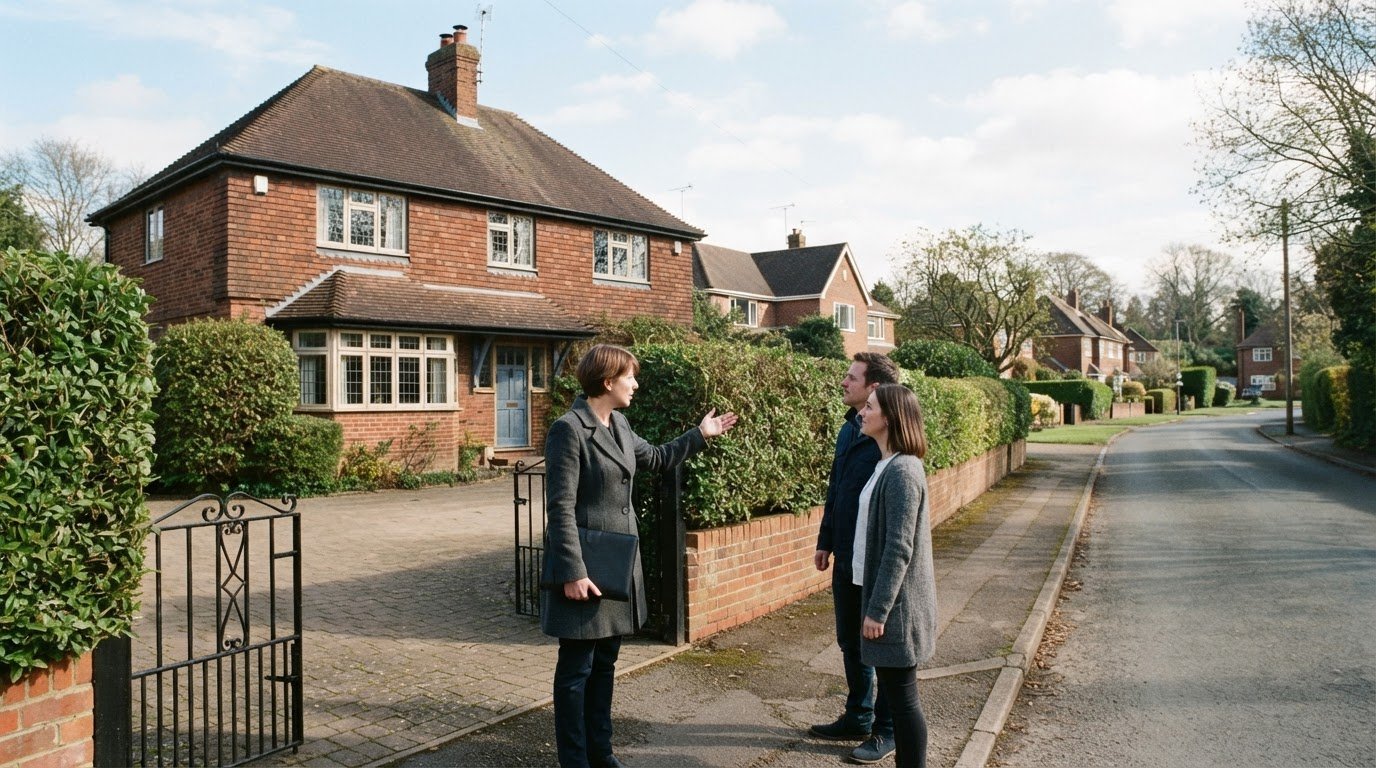
There isn’t one best family-friendly neighbourhood in Stratford-upon-Avon for every household. The town centre suits families who value walkable shops and riverside paths. Tiddington and Alveston offer residential settings with family houses and larger detached homes, while Shottery and the southern neighbourhoods have a quieter, more village-like character.
Choosing a home involves more than the property itself. School options, everyday services, cafés and the feel of local streets all shape family life, so weigh them alongside the kind of home you want.
This guide compares Stratford-upon-Avon neighbourhoods to help you narrow your search. It covers housing, local schools, shops, services and cafés, so you can focus on the trade-offs that matter to your family.
Key Takeaways
- Compare town-centre homes with the larger family houses found in Tiddington and Alveston, then weigh space against the setting that suits your daily life.
- Understand the range of local primary and secondary schools, including selective options, and consider how school choice shapes your property search.
- Use everyday shops, services and cafés as practical markers when deciding whether a neighbourhood will make family routines easier.
- Look beyond broad impressions of safety: the article explains how to assess neighbourhoods with your family’s day-to-day needs in mind.
2. Housing availability and property search
Stratford-upon-Avon offers families a choice between central living and more residential settings. Near the centre, historic cottages, townhouses and apartments are within walking distance of theatres, shops and riverside paths. This can suit households who value getting around on foot, though it may mean prioritising location over extra space. The best family-friendly neighbourhoods in Stratford-upon-Avon depend on which trade-offs work for your household.
Tiddington and Alveston have family houses and larger detached homes in residential surroundings near town. Shottery and the southern neighbourhoods offer a quieter, more village-like feel, with traditional homes and later twentieth-century development. Compare these areas by the home you need, the setting you prefer and the journeys your family makes most often.
Average prices provide useful context, not a promise about any individual property.
Make your search more focused by setting priorities before arranging viewings. Decide what matters for bedrooms, living space and outdoor space, then weigh those needs against location. A central home near a theatre or riverside walk may suit one family’s routine; another may prefer a larger house in a quieter area. The best family-friendly neighbourhoods in Stratford-upon-Avon are the ones that match your practical priorities.
Leisure options can help you assess the wider setting. Stratford-upon-Avon has a butterfly farm, a museum and outdoor spaces for family outings. Choose an area, then compare suitable homes nearby. This makes it easier to see how property style, space and location work together before narrowing your search.
3. Local primary and secondary schools
Stratford-upon-Avon has primary and secondary options, including state, selective and independent education. A school can influence where a family searches, but location alone doesn’t determine whether it is suitable. Start by listing your child’s age, current stage and preferred type of education. Compare schools against that shortlist, along with practical journeys from homes in the centre and surrounding neighbourhoods.
For younger children, The Croft Prep School welcomes children from age two in the academic year of their third birthday. Early-years provision is one factor families can compare when considering local schools. Stratford-upon-Avon Primary’s inspection in July 2026 recognised strong standards in achievement, early years, attendance and behaviour. Welford-on-Avon Primary was praised for achievement and inclusion in January 2026. These examples offer useful points for comparing provision, without making a school’s reputation the only factor.
At secondary level, Stratford-upon-Avon School is the town’s state secondary school and is rated Good. King Edward VI School and Stratford Girls’ Grammar School are selective options; both are rated Outstanding at their latest published inspections. Consider these differences when planning a move. Think about your child’s needs and the school type you’re seeking before narrowing down streets or property styles.
Factor the school journey into your property search. Map the route from each potential home, then consider how it fits morning routines, after-school commitments and the rest of your week. A beautiful house can still be a poor fit if its location complicates the school run. Restaurants and shops near the town centre may suit weekend plans, while Christmas events bring seasonal activity. Treat these as lifestyle considerations, not substitutes for comparing schools.
For a grounded decision, shortlist schools first, then compare homes around the routes and routines that matter. Stratford-upon-Avon’s range of primary and secondary schools offers families different options, while selective and non-selective settings involve distinct considerations. Keep your child’s stage, daily journey and preferred school environment at the centre of your search.

4. Everyday shops, services and cafés
Everyday convenience depends on the routes your family uses, not just a neighbourhood name. Town-centre homes in Stratford-upon-Avon put shops, theatres and riverside paths within walking distance. That can make errands and outings easier to combine, especially if you prefer walking to driving for short trips.
For nursery access, Broad Street Cygnets is rated Outstanding, while Alveston Cygnets is rated Good. For healthcare, consider the route from each prospective home to the services your household uses. A neighbourhood name alone won’t show how practical the journey is.
For quieter surroundings and a more village-like character, consider Shottery and the southern neighbourhoods. If walking to shops is a priority, town-centre homes have the advantage. Each setting involves a different trade-off: a peaceful location doesn’t automatically mean shops are close, while a central address may bring more activity along everyday routes.
Cafés, shops and services matter most when they fit your routine. Think about the places you visit regularly, such as a nursery, local shops or a café, and how each journey would work from a potential home. The Royal Shakespeare Theatre and Shakespeare’s Birthplace also contribute to the town centre’s visitor activity, alongside historic streets and buildings spanning more than one century.
Visitor activity brings energy to central locations, while Shottery offers a quieter contrast. Hotels and attractions are part of Stratford’s appeal, but family convenience comes down to everyday details: where you’ll pick up essentials, meet friends or spend time outdoors. Consider those routines at different times of day, rather than relying on a quick impression of one street.
A useful shortlist separates needs from nice-to-haves. Mark the nursery, healthcare journeys, shops and cafés that matter, then compare each home’s location against them. This gives you a practical view of convenience, whether you prefer a central setting or a quieter, village-like feel.
4. Safety and crime in Stratford-upon-Avon family areas
There’s no honest shortcut to ranking Stratford-upon-Avon neighbourhoods by safety. A useful comparison needs crime figures covering the same period, area boundaries and offence categories. Raw incident totals alone can mislead because they don’t account for differences in area size or population.
Compare the town centre with Tiddington, Alveston and Shottery using the same measures. Central streets near theatres and shops differ in character from quieter residential roads, but that doesn’t prove higher or lower crime. Consider the specific street, route home and times your family will use local paths.
Separate recorded crime from the practical details that shape how a place feels. During a viewing, walk the route between the property, nearby shops and any riverside paths you expect to use. Notice lighting, pavement condition, visibility at junctions and how easily children can get between home and everyday destinations. Check the same route in daylight and after dark; one daytime viewing offers only one perspective.
For a fair comparison, keep a simple record for each area. Note the date and boundary used for each crime figure, the offence types included and whether the figures are totals or rates. Assess the property’s immediate surroundings separately. A broad neighbourhood label cannot describe every street, entrance or walking route, so don’t treat an area-wide figure as a guarantee about an individual address.
For families considering the centre, riverside access may be part of daily life; in Alveston or Shottery, residential routes may matter more. Assess the exact home and journeys that fit your routine, rather than assuming quieter surroundings automatically mean lower crime. If location is narrowing your home search, discuss your Stratford-upon-Avon property search and focus on the streets that match your priorities.
Nikki Homes
Nikki Homes can help you turn your Stratford-upon-Avon neighbourhood priorities into a focused property search. Whether you’re buying, renting, looking for a particular kind of home or considering an auction, the right route depends on your circumstances and the property you want.
Bring together the factors that matter most: space, school journeys, nearby amenities and the character of the area. Nikki Homes offers residential property sales, lettings, property sourcing and property auctions, helping you find a suitable way forward without reducing the decision to a postcode alone.
Ready to discuss your Stratford-upon-Avon property search? Contact Nikki Homes to take the next step.
Choose a home that fits the years ahead
The right choice isn’t simply the home that looks best today. Consider how your family’s needs may change, which compromises feel manageable and what would make daily life easier over time. Clear priorities help you act decisively when a suitable property appears, rather than being pulled in different directions by every viewing.
When weighing the best family-friendly neighbourhoods in Stratford-upon-Avon, focus on what suits your household, not someone else’s checklist. Keep essential criteria firm, but stay open-minded about features that are preferences rather than necessities.
Nikki Homes can help you explore your next move with your priorities in view. Discuss your move with Nikki Homes, and take the next step towards a home that feels right for your family.
Frequently Asked Questions
Which Stratford-upon-Avon neighbourhoods are best for families?
The best fit depends on whether your family prioritises walkability, a quieter setting or more living space. Stratford-upon-Avon’s centre suits households seeking nearby shops and cultural attractions; Tiddington and Alveston offer residential settings, while Shottery and the southern neighbourhoods have a village-like feel. Compare specific streets and the daily journeys you expect to make before deciding which areas belong on your shortlist.
What are the best primary and secondary schools in Stratford-upon-Avon and their catchment areas?
Options include Stratford-upon-Avon Primary, Stratford-upon-Avon School, and selective schools King Edward VI and Stratford Girls’ Grammar. The Croft Prep School provides education from early years through age eleven. Catchment arrangements depend on the individual school and home address, so there isn’t one town-wide boundary to apply. Treat school preference and address as connected parts of your property search.
What are average house prices and rents in Stratford-upon-Avon neighbourhoods popular with families?
Rents vary with a home’s size, condition and location, so compare properties with similar features and access to neighbourhood amenities. A town-wide average won’t tell you the cost of a particular family home.
How do family-friendly areas in Stratford-upon-Avon compare for safety and crime rates?
The article does not support ranking areas by crime. Compare figures using the same period, boundaries and offence categories, and assess each home’s routes, lighting and surroundings separately. Quieter residential streets are not proof of lower crime.
How do transport links and commute times compare across Stratford-upon-Avon family neighbourhoods?
Town-centre homes put shops, theatres and riverside paths within walking distance. Tiddington and Alveston are residential areas near town, but the material gives no neighbourhood-by-neighbourhood commute times or transport comparison.
Which Stratford-upon-Avon neighbourhoods have the best parks, playgrounds and family activities?
Near the town centre, riverside paths and open meadows around Bancroft Gardens and the Recreation Ground offer space for walks and outdoor time. Stratford-upon-Avon also has a butterfly farm, a museum and other outdoor spaces for family outings.