A bidding war isn’t created by pressure; it’s earned through preparation. To understand how to create competition between buyers when selling a house, start with a price that reflects the market, present the property well and plan a launch that brings interested buyers through the door early. Strong interest can build naturally when a home is positioned carefully and viewings are managed well.
It makes sense to look beyond simply putting a property on the market and hoping offers follow. The first few weeks attract attention, so a rushed launch or an overambitious asking price can weaken early momentum. Preparation gives buyers a clear reason to act, while a well-managed process helps you compare the strength of each offer, not just the headline figure.
This guide explains how presentation, pricing and launch strategy can encourage buyer competition, what that may mean for your sale, and how to weigh an offer above asking price against its certainty and terms. A higher number can catch your eye, but the details decide whether it’s truly the stronger offer.
Key Takeaways
- Build early interest with a considered price, polished presentation and a launch designed to reach suitable buyers.
- Use buyer interest to support confident negotiations and encourage timely decisions, without manufacturing pressure.
- Assess an offer above asking price alongside the buyer’s readiness, terms and likelihood of a smooth sale.
- Plan the launch and manage competing interest carefully to strengthen your position at the negotiating table.
1. Buyer competition and preparation
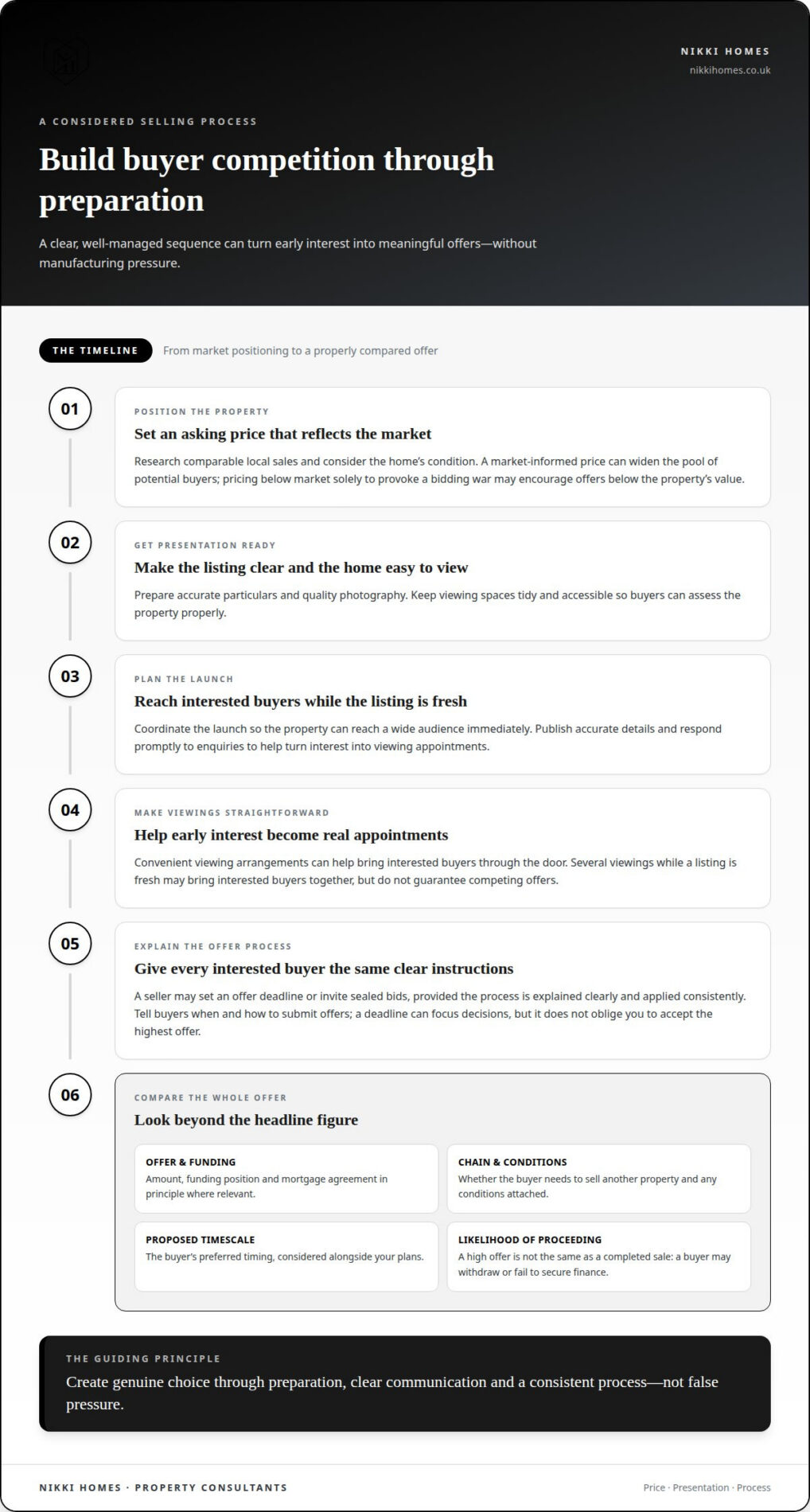
Buyer competition starts before the first viewing. If you’re considering how to create competition between buyers when selling a house, begin with an asking price that reflects the market. Prepare accurate particulars, quality photography and tidy, accessible viewing spaces. A well-priced home with a considered launch can attract early interest. Several viewings while a listing is fresh may bring interested buyers together.
In the UK, sellers can set an offer deadline or invite sealed bids, provided the process is explained clearly and applied consistently. Tell interested buyers when and how to submit offers. A deadline can focus decisions, but it doesn’t guarantee competing bids or mean you must accept the highest offer.
Don’t price below market value solely to provoke a bidding war. Positioning the asking price within the market range can widen the pool of potential buyers and generate more enquiries. Research comparable local sales and consider the home’s condition. A low asking price may attract attention, but it can also encourage offers below the property’s value.
Ask buyers to include their offer, funding position and proposed timescale. Where relevant, request a mortgage agreement in principle, along with details of any property they need to sell and conditions attached to the offer. This helps distinguish a workable proposal from a higher figure with unresolved financing or a longer chain.
In practice, how to create competition between buyers when selling a house means coordinating the launch and making viewings straightforward. Publish accurate details, use strong photographs and respond promptly to enquiries. A well-planned launch can reach a wide audience immediately, while convenient viewing arrangements help turn interest into appointments and, potentially, offers.
A bidding war carries risks. A buyer may withdraw or fail to secure finance, so a high offer isn’t the same as a completed sale. Overpricing can deter buyers and weaken early interest. Before deciding, compare each offer’s price with its funding, chain position, conditions and proposed moving timetable.
2. Benefits of buyer competition
Genuine interest from several buyers gives sellers options instead of leaving one offer as the only route forward. When buyers know others are considering the property, they may decide more quickly whether to proceed. That can help move discussions along, particularly when each buyer provides a clear offer and proposed timescale.
Competition can also strengthen the final sale price. If several people want the same home, they may improve their offers to make them more appealing. The highest figure isn’t automatically the best choice, but multiple proposals give you a stronger position for comparing terms and negotiating.
Consider two interested buyers: one offers more but needs to sell another property, while the other offers less and is ready to proceed. Their different circumstances give you room to discuss price, timing and certainty rather than accepting the first figure presented. Comparing the whole offer helps keep your decision grounded.
Several active buyers can give sellers greater negotiating power. You can ask whether a buyer can improve their terms or give other interested parties a fair opportunity to submit their best proposal. Keep communication accurate and consistent; clear updates support a competitive process without creating false pressure.
Competing interest can also reveal what buyers value about the property. One offer may reflect the home’s features, while another may depend on a preferred moving date. Use those details to guide discussions, then weigh the price alongside the buyer’s readiness and the likely smoothness of the transaction.
The advantage is not simply a higher number. Faster decisions, stronger negotiating power and the possibility of a better final price can all matter, but a sale still depends on a buyer proceeding. Treat competition as a way to create choice and assess offers carefully, not as a reason to rush into terms that don’t suit your plans.
3. Offering above the asking price
An offer above asking price can strengthen your sale, but the headline figure isn’t the whole deal. Compare each proposal across four points: price, mortgage position, chain and proposed completion date. For example, a slightly lower offer from a buyer with an agreement in principle and no related sale may be more workable than a higher offer with unresolved finance and a long chain.
Ask for the offer in writing, including the amount, funding method, mortgage agreement in principle where relevant, chain details and preferred timescale. Consider whether the buyer has a property to sell, whether their funds are arranged and whether their proposed date fits your move. These details help you assess the prospect of a smooth transaction, not just a possible increase in proceeds.
Selling and offer processes differ across England, Wales, Scotland and Northern Ireland. Don’t assume that a procedure used in one nation applies in another; your conveyancer can explain the relevant process for your sale. In every case, make your preferred terms and decision process clear before comparing offers.
Gazumping describes a seller accepting a higher offer after previously accepting another; gazundering describes a buyer reducing their offer later. These terms describe changes during negotiation, but don’t explain the full legal position. In England and Wales, the transaction stage matters, so discuss the position with your conveyancer before relying on an offer.
For best and final offers, communicate the same deadline and instructions to each interested buyer. Ask everyone to submit their strongest offer in writing, with funding, chain and timing details, rather than inviting vague promises. Once submissions arrive, compare them against the same criteria and decide consistently. An offer above asking price may be appealing, but a clear financial position and suitable terms can carry real weight. In-house mortgage and financial advice can help clarify questions about a buyer’s mortgage position.
Know your budget, mortgage position and intended offer before viewing a suitable home. Monitor new listings, price reductions and suitable homes outside your stated criteria. Recent sales of similar properties can help you assess local market value before making an offer.
Having your finances in order is essential for a strong offer. In Stratford-upon-Avon, a realistic price and a well-planned launch can help attract early interest from suitable buyers.
4. How can a UK seller create a bidding war when selling a house?
A bidding war begins with a launch that gives suitable buyers a reason to act. Before the property goes live, prepare accurate particulars, strong photography and clear viewing arrangements. Give prospective buyers the details they need to assess the home, including its condition and key features. A polished presentation helps turn attention into informed interest.
Next, make the launch a coordinated effort. Publish the listing across relevant channels at the same time, respond promptly to enquiries and offer viewing times that accommodate serious buyers. Someone who can only view after work should have a practical opportunity to see the property. Missed calls and limited access can mean missed interest.
Keep the asking price grounded in the property’s market range. A figure set too high can put buyers off before they book a viewing; a considered price gives more people a reason to look. Research comparable local sales and account for the home’s condition. The aim is genuine interest, not a low headline price that creates unrealistic expectations.
Once viewings begin, keep communication fair and organised. Record each buyer’s offer, funding position, chain and preferred moving timetable. If several buyers show serious interest, explain the next steps clearly and give each the same opportunity to make an offer. Multiple interested buyers can strengthen your negotiating position, but clarity matters more than manufactured urgency.
Choose the offer that best fits your priorities, not automatically the highest one. A strong price with uncertain funding or a complicated chain can create delays; another proposal may better match your preferred timescale. A buyer’s mortgage position, readiness and conditions all help show how workable the offer is. Discuss your sale strategy to plan a launch and manage buyer interest with care.
A brief, polite note explaining why a buyer likes the property may help their offer stand out to the seller. A mortgage agreement in principle can also show that the buyer is serious and ready to proceed if the offer is accepted.
Accommodating the seller’s preferred moving or completion timeline can make an offer more attractive without raising its price. When comparing proposals, consider certainty, serious intent and the prospect of a smooth transaction alongside the amount offered.
Nikki Homes: In house mortgage and financial advice
Nikki Homes offers in-house mortgage and financial advice to help you assess the financial considerations behind competing offers. Turn to this support when a buyer’s mortgage position or the funding behind an offer needs closer consideration. A higher offer deserves attention, but understanding the finances involved helps you compare it with the buyer’s readiness and proposed terms.
For sellers planning a launch, Nikki Homes also provides residential property sales, with guidance on positioning the home and managing buyer interest. Clear advice can help you make a considered decision without treating the biggest offer as an automatic winner.
Contact Nikki Homes to discuss your sale and the support that fits your next step.
Set your sale up for a confident next step
Knowing how to create competition between buyers when selling a house means building the right conditions for informed decisions, not trying to force a bidding war. Decide what matters most: achieving the right outcome, fitting your onward plans or keeping the process straightforward. Use those priorities to guide your choices as a seller.
Nikki Homes supports clients with residential property sales, lettings services and property sourcing. Whether you’re preparing to sell, considering renting out a property or looking for another home, connect your plans rather than treating each decision in isolation.
For a considered conversation about your next move, Contact Nikki Homes to discuss your sale. Take the next step with a clear view of what you want to achieve.