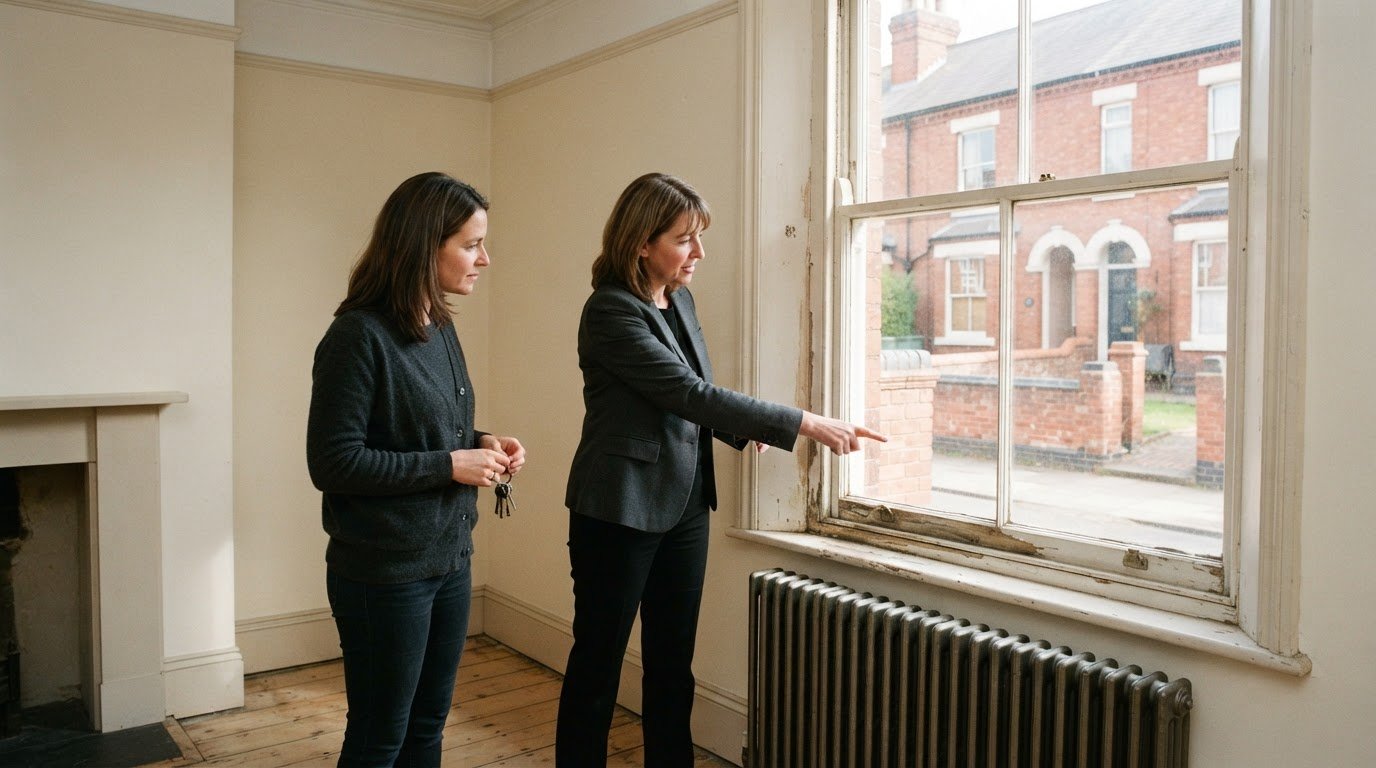
Set the guide price with the reserve in mind: UK auction guides are often 10% to 15% below the reserve, the minimum you’re willing to accept. Sound property auction advice in the UK starts with a realistic figure, not a headline designed to attract attention and leave you disappointed.
An auction can give a sale a defined timetable, but the fall of the hammer also creates a binding commitment for the buyer. That makes the pricing decision, legal pack and auction terms too important to rush.
This guide explains how to set a guide price and reserve, weigh the risks of selling at auction and prepare the legal pack. It also covers what to consider when choosing an auction house, so you can assess the advice you receive and make a confident decision about your property.
Key Takeaways
- Set a realistic guide price that attracts interest while keeping your minimum acceptable sale price clear.
- Understand the deposit and completion terms before choosing an auction method, so you can weigh speed against commitment.
- Have the legal pack, property checks and buyer considerations addressed before bidding begins.
- Assess an auction house on its approach to pricing, marketing and results, not on a bold promise alone.
1. What are the disadvantages of selling a property at auction?
Auction can create a firm sale quickly, but the seller accepts less time to reconsider. In a traditional UK property auction, the hammer falling binds the buyer to the purchase. The successful bidder usually pays a 10% deposit then, with the remaining 90% due at completion. A buyer who pulls out risks penalties, so a failed sale can leave you needing to relaunch.
Traditional auction completion usually takes place within 28 days. The buyer is responsible for insuring the property from the fall of the auctioneer’s gavel. That tight timetable can exclude buyers who need longer to arrange finance or sell another home. Modern auctions work differently: buyers generally have 28 days to exchange contracts and 56 days to complete. Read the auction terms; the method determines the deadlines.
There can also be charges beyond the winning bid. Under the modern method, a reservation fee can be 1-5% of the purchase price. Sellers should account for auction costs and any additional advertising charges when judging the likely net proceeds.
Scotland’s closing-date process differs from the usual England and Wales auction timetable. The auction contract and local legal process set the buyer’s obligations, so don’t assume the 28-day traditional completion period applies.
Other purchase costs include conveyancing and the property transaction tax that applies in the property’s UK nation, such as stamp duty in England. Include these costs, along with any buyer’s fee, in your budget before bidding.
Buying follows a clear sequence: register with the auction house, review the legal pack, arrange finance, set a limit and bid. If successful, meet the deposit, contract and completion deadlines.
To avoid overpaying, base your maximum bid on the property’s value and condition, then deduct fees, tax and the cost of necessary work. Stick to that limit, even if bidding continues.
If you need a mortgage, arrange it early and confirm that the property is mortgageable. A traditional auction may require a full mortgage offer before you bid, with funds ready by the completion deadline.
2. How do I set the guide price?
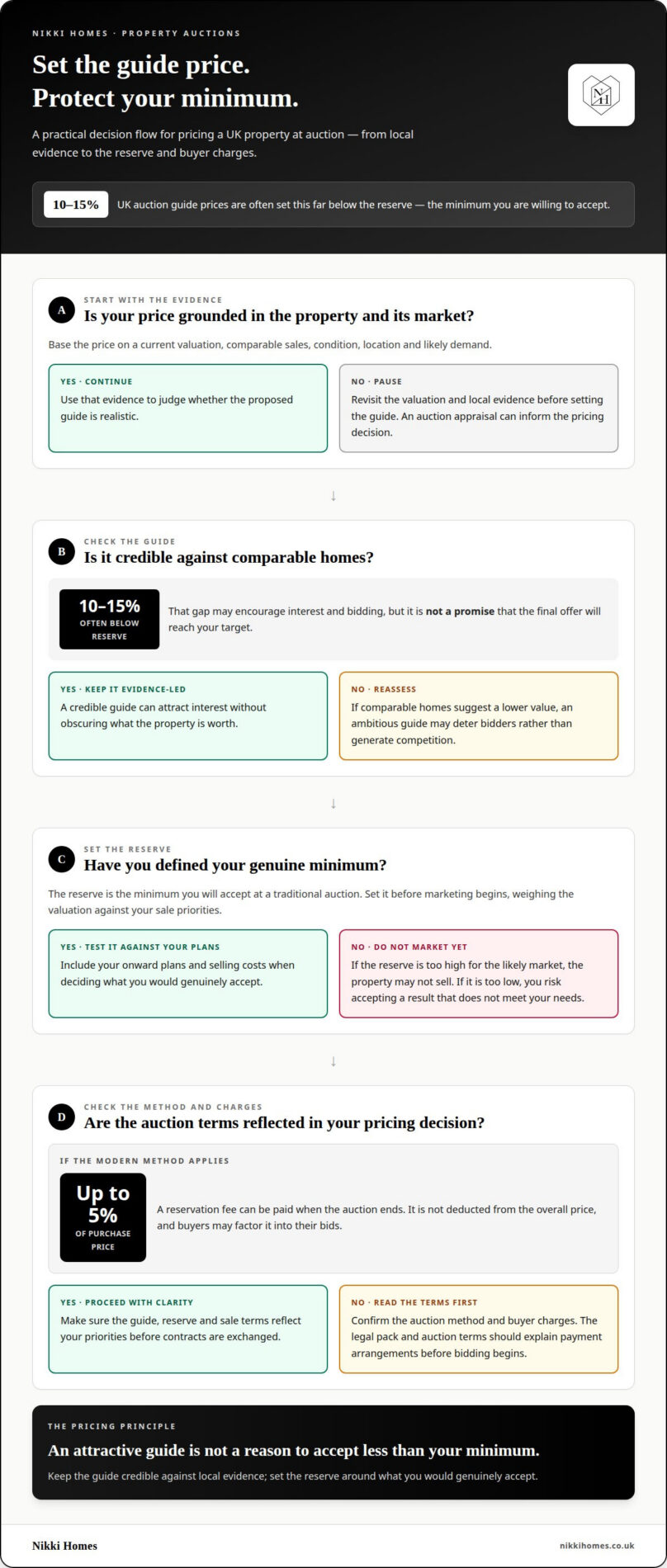
A guide price should attract bidders without obscuring what your property is worth. Set it using a current valuation, comparable sales, condition, location and likely demand. The seller also needs a clear reserve price: the minimum they will accept at a traditional auction. Sound property auction advice in the UK starts with understanding this distinction. An appealing guide price is no reason to accept less than your minimum.
UK auction guide prices are often set 10% to 15% below the reserve price. That gap can encourage interest and bidding, but it isn’t a promise that the final offer will reach your target. If comparable homes suggest a lower value than you hoped, an ambitious guide may deter bidders instead of generating competition. Keep the guide credible against the evidence.
Set the reserve before marketing begins, weighing the valuation against your priorities for the sale. Decide what you would genuinely accept, taking your onward plans and selling costs into account. If the reserve is too high for the likely market, the property may not sell. If it is too low, you risk accepting a result that does not meet your needs.
Be clear about the auction method and buyer charges. In the modern method, a reservation fee can be up to 5% of the purchase price. It’s paid when the auction ends and isn’t deducted from the overall price. Buyers factor this into their bids, which can affect what they’re prepared to offer. The legal pack and auction terms should explain the payment arrangements before bidding begins.
Before contracts are exchanged, make sure the guide price, reserve and sale terms reflect your priorities. A valuation based on local evidence can help you judge whether the proposed guide is realistic, rather than simply attractive on paper. Practical property auction advice in the UK includes considering how an auction appraisal can inform your pricing decision.
3. Reviewing legal packs and carrying out checks
The legal pack can reveal obligations that a property listing does not show. Before buying, appoint a solicitor to review it well ahead of the auction and explain any issues affecting your purchase. Complete your due diligence before bidding: once you win, deposit and contract deadlines leave little time to uncover problems.
Ask your solicitor to examine the title, searches, contract and special conditions of sale. These documents may reveal restrictions, access rights, outstanding costs or clauses that change your obligations as buyer. If anything is unclear, get advice before bidding, not after the hammer falls. The auction method matters because contract terms and completion timetables can differ.
Title, condition and planning issues can all affect a lot’s value or use. The legal pack may include title restrictions or planning documents, but it cannot reveal every physical defect. Arrange a survey before the auction and ask a surveyor to assess the building. You should also compare visible alterations with the planning information available for the property.
Check occupancy as carefully as ownership. An auction property may be subject to a lease, tenancy agreement or unlawful occupation, and the arrangement affects when you can take possession. A lease with fewer than 80 years remaining is a red flag: it can make mortgage finance harder and extension more expensive. If you need a mortgage, establish that the property is mortgageable before bidding.
For a traditional auction, the seller should have the full legal pack ready when advertising begins. Buyers can find listings in an auction house’s catalogue, then access the pack through the listing or request it from the auction house. Read the documents early enough for your solicitor to raise questions and advise you before bidding day.
Keep a written list of unresolved points. Ask your solicitor to explain how each could affect the contract, costs or possession, and resolve material issues before bidding. A legal review, survey and finance assessment answer different questions; none replaces the others.
4. Auction appraisal and choosing an auction house
An auction appraisal should explain the likely buyer pool, not just provide a guide price. Ask how the property’s condition, location, title and comparable sales inform the estimate. A surveyor or another property professional can also assess its condition and advise on value. For example, a home needing substantial work may attract buyers who can proceed without a standard mortgage.
Look beyond a headline success rate. Some UK auction houses report rates as high as 90%, whilst others are as low as 50%. The figures mean little without context: ask what was counted, over what period, and whether the rate covers properties like yours. Compare lots offered with those sold, not just successful sales.
Test the proposed guide against evidence. Ask the auction house to show how its valuation reflects recent comparable sales and the property’s specific features. A promise of 90-100% of market value deserves careful scrutiny; a confident sales pitch is not proof of likely bidding. The reserve must still protect your minimum acceptable price.
Before appointing an auction house, compare its marketing plan, buyer reach, auction format and communication. Ask how it will present the property, when the legal pack will be ready and how it will report registered bidder interest. For the modern method, clarify the reservation and completion terms. At a traditional auction, understand what happens when the hammer falls.
Fees matter, but judge them against the net result and service. A higher-fee auction house could achieve an extra 5% on the sale price in the example provided. That is not a forecast for your home. Compare the written terms and likely proceeds, including advertising charges, before deciding.
Choose the house that gives you a clear appraisal, credible evidence and a sale method suited to your priorities. To discuss an appraisal and auction route for your property, explore property auction support.
Nikki Homes: Property Auctions
Nikki Homes manages property auctions for sellers considering an auction sale. The team can help you assess the property appraisal, guide and reserve prices, auction method and preparation, so you understand the decisions before choosing a route. If a conventional sale better suits your priorities, residential property sales offer another option to consider.
For buyers, Nikki Homes’ in-house mortgage and financial advice can help you assess funding against the auction timetable, particularly when a successful bid means moving quickly. The right support depends on your aims, whether you’re selling, buying or comparing options.
If you’re considering an auction or want to discuss the next step for your property, contact Nikki Homes in Stratford-upon-Avon.
Make your next property move with a clear plan
An auction decision does not stand alone. Consider what you want the sale to make possible next, whether that is moving on, keeping the property as a rental or finding another home. Matching the sale route to your next step can help you make a considered decision, rather than choosing an auction simply because it seems faster.
Nikki Homes also offers lettings services and property sourcing, which may suit plans to rent a property or find one to buy. The conversation starts with your priorities and the outcome you want, not a sales pitch. If you’re weighing up an auction, property auction advice in the UK can help turn uncertainty into a practical plan.
Contact Nikki Homes for auction advice and discuss your next step. You can make a confident decision with a clear sense of what matters to you.
Frequently Asked Questions
How do I set the guide price?
Base the guide price on a property valuation, comparable local sales and the home’s condition. In Stratford-upon-Avon, a period property and a home needing substantial work may attract different bidders, even if they share a postcode. Decide the minimum proceeds you would accept, then discuss a guide that reflects buyer interest without treating it as a promised sale price.
Should I accept offers in advance of the auction?
You can accept a pre-auction offer if it meets your aims and the auction terms allow the sale to proceed that way. Weigh it against the reserve, marketing already undertaken and the possibility of further bidding. Before agreeing, establish how acceptance affects the auction listing and whether contracts will exchange immediately or another process applies.
Why sell your house at auction?
An auction may suit a seller who values a defined timetable or has a property that could be difficult to sell through standard marketing. For example, a home needing extensive renovation may appeal to buyers prepared to assess its condition and act quickly. The trade-off is less flexibility once the hammer falls, so consider your minimum acceptable outcome first.
Can a seller change their mind after the exchange?
No, not simply because they have changed their mind. At a traditional auction, the fall of the hammer creates a binding exchange of contracts, committing the seller and successful buyer to the sale. With a modern auction, the contract stage follows the stated process for that method. If a serious issue arises, the seller should seek advice from their solicitor before acting.
How do I register to bid before the auction?
Register with the auction house using its stated process before bidding opens. Read the conditions of sale and complete the required identity and anti-money laundering checks; online platforms conduct mandatory checks under the Money Laundering Regulations 2017. Allow time for registration approval, and make sure you understand the bidding rules and payment arrangements before the auction starts.
How quickly will the sale proceed after auction?
For a traditional auction, completion usually takes place within 28 days, so the buyer and seller need to be ready to act promptly. Under the modern method, the buyer generally has 28 days to exchange contracts and 56 days to complete. The auction conditions set the applicable timetable; plan removal, access and onward arrangements around those deadlines.