
Your first tenancy is shaped long before a tenant collects the keys. Getting the order right matters, and good first time landlord advice Warwickshire starts with preparation, not a quick advert and crossed fingers.
If you’re unsure which legal duties come first, how much to set aside for repairs and empty periods, or whether to manage the tenancy yourself, you’re asking the right questions. Letting can be rewarding, but the costs and responsibilities need a clear-eyed plan. This guide sets out practical steps from deciding to let through to managing your first tenancy.
The rules have changed, too. The Renters’ Rights Act came into force on 1 May 2026, and Warwickshire landlords are included in the first rollout of the national landlord register, launching on 15 December 2026. We’ll cover how to assess your property and likely rent, prepare it and meet key requirements, budget for running costs and void periods, then weigh up self-management against professional lettings support.
Key Takeaways
- Test whether expected rent can cover running costs, tax, mortgage payments and periods without a tenant before committing.
- Use a compliance checklist to organise safety measures, documents and local licensing checks before advertising.
- Compare similar homes by location, condition, size and features, then use current local evidence to set realistic rent expectations.
- Plan how you’ll record the property’s condition, collect rent, handle repairs and communicate with tenants throughout the tenancy.
- Use this first time landlord advice Warwickshire guide to map your next steps and decide whether hands-on management or lettings support suits you.
First-time landlord advice in Warwickshire: decide whether letting suits you
Letting a property can bring in income, but it also puts you in charge of ongoing decisions, costs and legal responsibilities. Before committing, assess whether the property and the landlord role fit your finances, available time and tolerance for problems that may not arrive on a convenient schedule.
Start with realistic rent expectations. Compare properties in the same area with a similar size, type, condition and set of features. An advertised figure shows what a landlord hopes to achieve, not necessarily the rent agreed with a tenant. Use a local rental assessment to inform your plans, but don’t build your budget around the most optimistic listing.
What should you assess before letting a Warwickshire property?
Compare similar homes, then consider whether yours is ready to compete. Note its condition, layout, location and what is included. Think about which tenants the property could suit without assuming demand or a particular rental outcome. Review your mortgage conditions, insurer’s requirements and any restrictions on letting, as these can affect whether your plan is workable.
Property standards matter beyond first impressions. The Landlord and Tenant Act 1985 provides background on landlord and tenant responsibilities concerning repairs and property standards. Factor the home’s condition into your decision rather than leaving essential work until a tenant is waiting.
Can you afford the responsibilities of your first let?
Separate gross rent from what may remain after the costs of running the property. Build a budget that accounts for:
- Mortgage payments and any conditions attached to letting
- Routine maintenance, repairs and one-off preparation
- Suitable insurance and tax on rental income
- Periods without rental income, including time between tenancies
A rent figure alone does not show a property’s net return. Set aside cash for work needed before the first let and unexpected repairs later. Tax treatment depends on your circumstances, so use current HMRC guidance when working out what rental income could mean for you.
Be honest about the commitment, too. Can you respond to maintenance issues, keep records and make time for tenant communication? Do you have reserves if the property is empty or needs urgent attention? Are you prepared to maintain the home and handle difficult conversations? If the answers give you pause, that’s useful information, not a reason to rush. Sound first time landlord advice Warwickshire starts with deciding whether the figures and responsibilities suit you.
Prepare a Warwickshire rental property: compliance before advertising
Don’t advertise first and untangle the paperwork later. Landlord requirements are set nationally for England, with some local licensing rules layered on top. In 2026, the Renters’ Rights Act has also changed the tenancy framework, so use current government and council guidance rather than relying on an old checklist. Get the property, documents and local checks in order before marketing.
Which safety checks and documents need attention?
Work through the essentials in sequence. Requirements can depend on the property and its features, so check the latest England guidance if an exemption or unusual setup may apply.
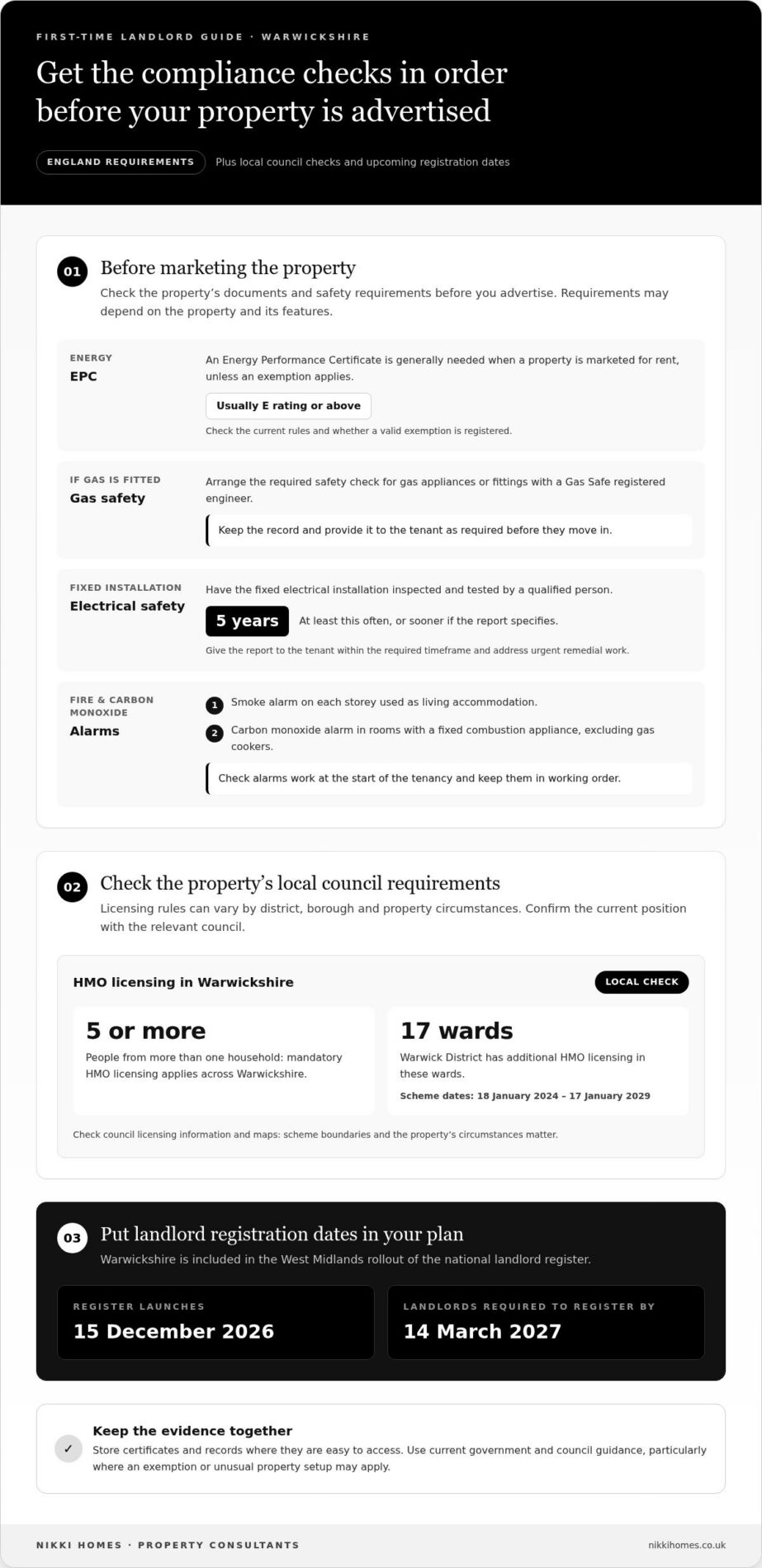
- Energy Performance Certificate (EPC): An EPC is generally needed when a property is marketed for rent, unless an exemption applies. Privately rented homes usually need an E rating or above, unless a valid exemption is registered. Check the current rules and any exemption before advertising.
- Gas safety: If the property has gas appliances or fittings, arrange the required safety check by a Gas Safe registered engineer. Keep the record and provide it to the tenant as required before they move in.
- Electrical safety: Have the fixed electrical installation inspected and tested by a qualified person at least every five years, or sooner if the report specifies. Give the report to the tenant within the required timeframe and address any urgent remedial work.
- Alarms: England’s rules require smoke alarms on each storey used as living accommodation, and carbon monoxide alarms in rooms with a fixed combustion appliance, excluding gas cookers. Check that the alarms work at the start of the tenancy and keep them in working order.
Keep certificates and records together so they’re easy to access. The National Residential Landlords Association also provides landlord guidance on practical responsibilities and legal changes.
What must you check locally before marketing?
Identify which district or borough council covers the property, then check its current licensing information and maps. Mandatory HMO licensing applies across Warwickshire to properties occupied by five or more people from more than one household. Warwick District also has additional HMO licensing in 17 wards, running from 18 January 2024 to 17 January 2029. Scheme boundaries and property circumstances matter, so check the current position with the relevant council before advertising.
A national landlord register is due to launch on 15 December 2026. Warwickshire is in the West Midlands rollout, with landlords required to register by 14 March 2027. Add that deadline to your compliance plan.
Check safety, documents and local licensing before advertising. For a local perspective on preparing a property for rent, explore Warwickshire lettings support.
Set rent and choose tenants: make your first Warwickshire let workable
A sound asking rent and a fair selection process go together. Price too high and you may lengthen the marketing period; rush the checks and you risk missing important information. Set expectations using comparable local evidence, then assess every applicant consistently and lawfully.
How do you set a realistic rent for a first let?
Compare properties that genuinely resemble yours: nearby location, similar size and condition, furnished or unfurnished, and comparable features such as parking or outdoor space. Check the tenancy terms, too. An advertised rent is an asking figure, not proof of the rent ultimately agreed. Weigh current local evidence against your property’s strengths and drawbacks. A headline figure that ignores competing homes may mean a longer wait for a suitable tenant.
For grounded first time landlord advice Warwickshire, use a rental assessment to inform your budget, not to assume a guaranteed result. If the evidence points below your preferred figure, revisit the costs and viability rather than relying on an optimistic estimate.
What should tenant checks and tenancy paperwork cover?
Use the same fair process for each applicant. With their consent, assess affordability against the rent and their circumstances, take up references and verify identity. Right to Rent checks apply to all prospective adult tenants in England and must be carried out consistently to avoid discrimination. Current guidance places greater emphasis on the Home Office online checking service and approved Identity Service Providers where applicable. Complete checks before the tenancy begins and keep appropriate records.
If you take a tenancy deposit, protect it in a government-approved scheme within 30 days and give the tenant the required prescribed information within that period. The deposit is generally capped at five weeks’ rent where annual rent is below £50,000. Don’t charge tenants for referencing or administration: the Tenant Fees Act limits what landlords and agents may require them to pay.
The Renters’ Rights Act came into force on 1 May 2026. Tenancies are now periodic, so don’t rely on an old fixed-term template. Make sure the agreement, notices and information you provide reflect the current rules and any transition requirements. Check the latest government guidance before issuing paperwork.
| Approach | What you take on | Trade-off to weigh |
|---|---|---|
| Self-marketing | You organise the advert, enquiries, viewings, checks and paperwork. | More direct control, with more time and compliance tasks on your shoulders. |
| Agent-led marketing | An agent can handle agreed marketing and tenant-finding tasks. | Less administration for you, in return for an agent’s fee and decisions made in line with your instructions. |
Choose the approach that fits your time, confidence and appetite for detail. Either way, clear rent expectations and consistent checks give the tenancy a stronger foundation.
Manage your first tenancy in Warwickshire without letting tasks pile up
A tenancy needs steady attention after the keys change hands. Small tasks are easy to overlook until a repair becomes urgent or a payment is missed. A simple routine and clear records help you respond calmly and keep expectations clear for you and your tenant.
What should your landlord management routine include?
At move-in, record the property’s condition with a detailed inventory and dated photographs, note meter readings, and give the tenant relevant contact details and instructions. Keep signed tenancy documents, deposit records and safety paperwork together. Set reminders for rent dates, agreed inspections, certificate renewals and tenancy milestones. Follow the agreement and current rules when arranging visits, including giving appropriate notice.
Make repair reporting straightforward. Agree how tenants should raise an issue, then record when it was reported, what action you took and when it was resolved. A leaking tap may be routine; a fault affecting safety or essential services needs faster attention. Prompt, documented updates show the tenant the issue is being handled and give you a reliable record if questions arise later.
- Track rent received and follow up promptly if a payment is late.
- Log maintenance reports, decisions, appointments and completed work.
- Keep communication factual, courteous and in writing where practical.
- Review the tenancy ahead of key dates and plan any next steps in good time.
Consistent administration beats relying on memory. That’s the practical core of first time landlord advice Warwickshire: build a process you can sustain instead of a pile of tasks to catch up on later.
Should a first-time landlord use a letting agent?
Self-management gives you direct oversight, but you handle enquiries and ongoing communication yourself. Tenant-find support typically focuses on marketing and securing a tenant, whilst full management may include recurring tasks such as rent collection, maintenance coordination and tenancy administration. Understand the scope of the service before deciding.
Consider your available time, confidence with paperwork and repairs, and how close you live to the property. If you’re nearby and organised, managing it yourself may feel practical. If work, distance or the volume of responsibilities makes a consistent response difficult, professional lettings support can take some of the workload off your hands. It’s a choice about the time and oversight you want to retain, not a test of whether you’re capable.
For a closer look at the considerations involved, read our guide to letting agents in Stratford-upon-Avon. Nikki Homes provides residential lettings support to help landlords with their Warwickshire properties.
Your next step as a first-time landlord in Warwickshire
Turn what you’ve learned into a plan: assess whether the figures and responsibilities work for you, check the rules that apply, prepare the property, agree realistic rent and tenancy terms, then decide how you’ll manage the tenancy. Take it one step at a time. Advertising before settling those earlier decisions can create avoidable pressure.
What should you have ready before your first landlord consultation?
A short preparation list will make a planning conversation more useful. Gather what you have and note what you still need to find out.
- Property details, including its location, size, condition and whether it will be furnished.
- Mortgage information and any conditions that affect letting.
- Existing certificates and records, such as the EPC and relevant gas or electrical documents.
- Your preferred timing, likely preparation work and any constraints on access to the property.
- Your questions about achievable rent, tenant checks, paperwork and ongoing management.
Be clear about your priorities, too. Do you want a particular level of involvement, or would you rather hand over some day-to-day administration? Are you comfortable responding to repairs and tenant queries yourself? Sharing your goals and concerns helps shape advice around your property and circumstances rather than a generic landlord checklist.
How can local letting support make the first let clearer?
Local insight can help you test assumptions about rent, property presentation and next steps before committing to a marketing plan. Nikki Homes is an independent, consultancy-led estate agency based in Stratford-upon-Avon, providing residential lettings support informed by local knowledge of Warwickshire. A property valuation or rental discussion can help you plan with better context, though it can’t guarantee a particular rent or how quickly a tenant will be found.
Use the conversation to pin down practical decisions: what needs attention before advertising, which requirements apply to your property, what tenancy support you want and which tasks you’ll keep responsibility for. A good plan should reflect both the home and the landlord you intend to be.
Good first time landlord advice Warwickshire isn’t about rushing you into a let. It’s about making informed decisions in the right order, with a clear view of the work involved.
Ready to discuss your property and possible next steps? Speak with Nikki Homes about residential lettings support.
Make your first Warwickshire let a considered decision
A confident first let starts with a clear sequence: check the figures and responsibilities, get the property and required documents ready, set rent using relevant local evidence, then decide how you’ll manage the tenancy. Keep a realistic reserve for upkeep and empty periods, and don’t mistake advertised rent for guaranteed income.
Good first time landlord advice Warwickshire should help you see both the opportunity and the work involved. Local, practical guidance can help you assess your property, understand your options and choose a level of involvement that suits your circumstances.
Nikki Homes is an independent estate agency based in Stratford-upon-Avon, with more than 55 years of combined team experience and consultancy-led residential lettings support. Talk through your property and plans with a team that understands the local market. Talk to Nikki Homes about your first Warwickshire let.
Take the next step when you’re ready. With a realistic plan in place, you can approach your first tenancy with greater clarity and confidence.
Frequently Asked Questions
What should I do first as a first-time landlord in Warwickshire?
Start by checking whether letting is financially and practically workable before advertising. Estimate realistic rent from comparable properties, then account for your mortgage, repairs, insurance, tax and possible gaps between tenancies. Review mortgage and insurance conditions, assess the property’s condition and identify which legal and local requirements apply. This first time landlord advice Warwickshire checklist helps you decide what to do next, whether that’s preparing the home or discussing local rental expectations in Stratford-upon-Avon.
Do I need a licence to rent out a property in Warwickshire?
Not every rental property needs a licence, but some do. Mandatory HMO licensing applies across Warwickshire to houses in multiple occupation with five or more residents forming more than one household. Warwick District also has an additional HMO licensing scheme covering 17 wards. Requirements depend on the property’s use and location, so identify its district or borough and check the council’s current rules and scheme boundaries before letting. Landlord registration is a separate requirement, not a property licence.
What certificates does a landlord need before renting a property in England?
Requirements depend on the property. You’ll generally need a valid Energy Performance Certificate before marketing, with a minimum E rating for most privately rented homes unless an exemption applies. If the property has gas appliances or fittings, arrange the required gas safety check and give the tenant the record. Fixed electrical installations must be inspected and tested at least every five years, or sooner if the report requires it. Check current England guidance for exemptions and alarm duties.
How do I decide what rent to charge for my first rental property?
Compare similar properties in the same area, considering location, size, condition, furnishings and included features. Use current local evidence, including recently agreed rents where available, rather than treating advertised prices as achieved rents. For a home in or near Stratford-upon-Avon, a local rental assessment can help put the property in context. Pricing solely to maximise the headline figure may mean a longer marketing period if applicants consider comparable homes better value.
Do landlords in England have to protect a tenant’s deposit?
If you take a tenancy deposit, you must protect it in a government-approved tenancy deposit scheme within 30 days of receiving it. You must also give the tenant the prescribed information within that period. The deposit is generally capped at five weeks’ rent where annual rent is below £50,000. Check the current rules for your tenancy, particularly as the Renters’ Rights Act changed England’s tenancy framework in 2026.
Is it better to manage my first rental property myself or use a letting agent?
It depends on your time, confidence, location and how much oversight you want. Self-management gives you direct control, but you’ll handle tenant communication, rent records, repairs and ongoing responsibilities. Tenant-find support can focus on marketing and securing a tenant, whilst a management service may cover recurring tasks. If you live far from the property or have limited time, professional lettings support can help with the workload. Compare the service scope with the tasks you’re prepared to retain.
What happens if my rental property is empty between tenants?
You won’t receive rent during a void period, but property costs can continue. Plan for mortgage payments, maintenance, insurance and council tax, which landlords are generally responsible for between tenancies. Council tax premiums may apply to some empty or second properties, depending on the council’s current rules and the property’s circumstances. Keep the home secure and maintained, review your insurance conditions, and use the gap to address repairs or prepare for marketing to prospective tenants.