
A new build isn’t automatically a safer or better buy. The plot, paperwork and evidence matter more than the show-home finish. New build homes can offer modern layouts and energy-efficient features, but the sales pitch won’t tell you everything about running costs, build quality or future resale.
If you’re considering a new home, ask what the warranty covers, what happens if completion is delayed and how any snagging issues will be handled. Compare the asking price with suitable resale properties too, so you can judge whether any incentives add real value.
This guide separates common myths from details you can check. It covers questions to ask the developer, reservation and warranty documents to review, and why the consumer code that applies may depend on when you reserved. You’ll also find practical checks for the plot, specification, inspections and completion dates. The aim is to help you compare a new home with other options based on your priorities, not pressure or promises.
Key Takeaways
- Compare the show home with the written specification and plot details for the property you’re buying. Get any agreed changes confirmed in writing.
- New build homes may suit some buyers, but assess the specific property against resale homes using your own priorities, not broad claims about quality or value.
- Before reserving, understand the deadlines, refund terms and exchange requirements. Keep a written record of the developer’s answers.
- Consider the property’s fit, location, timing and paperwork alongside your financial readiness before deciding whether to proceed.
- Use the evidence you gather to identify what still needs checking, rather than treating either option as the obvious choice.
New build homes: what buyers should expect, beyond the show home
A new build home is a recently constructed property sold as a new dwelling. It may be complete and ready to occupy, or still under construction when you agree to buy. If you’re buying off-plan, you may be choosing from plans, drawings and a written specification rather than inspecting the finished home. A broad overview of the Home construction process can explain how a property takes shape, but your purchase documents are what set out what the developer has agreed to provide.
A show home helps you picture how a finished space might look, but it may not match your plot. Furniture, lighting, flooring, kitchen fittings and other finishes could be different, upgraded or excluded. Compare the display with the written specification for your property. Ask the developer to identify which features are included, which are optional and whether any choices are still available.
A new home may need less immediate repair work than an older property, but new doesn’t mean flawless. There may be defects or unfinished details to report, and the quality of your experience depends on the specific home and the evidence available. Look beyond the interior: check the plot, specification and purchase terms as well.
Myth: Every new home has the same finish, fittings and standard of work.
Reality: Details can vary by developer, plot and specification. Check what applies to the home you’re buying rather than assuming the show-home version is included.
Myth: every new build is finished to the same standard
“New” doesn’t mean “identical”. Homes on the same development may have different layouts, fittings or finishes. Compare the show home with the specification for your plot, then check that specification against the reservation materials. If a sales discussion includes a promised fitting, alteration or other change, ask for it to be recorded in writing before relying on it.
Reality: the plot and specification matter as much as the label
Look at the actual plot, not just the staged interior. Check its orientation and outlook, how you’ll reach the property, where parking is located and whether building work nearby could affect your day-to-day experience. A show home may feel bright and private, while another plot could face a road, overlook neighbouring homes or be close to ongoing construction. Ask what is planned around your plot and review the plans and documents available to you.
A “new build” label describes the property’s age, not proof of its quality. Judge the home by its specification, its setting and the information you can verify.
New build home myths about quality, warranties and resale value
Three expectations often come together: that a new home will be fault-free, that its warranty will sort out any problem and that it will hold its value. None is automatic. A new property may have defects to identify, warranty cover has limits, and future resale depends on more than the age of the home.
| Myth | Reality |
|---|---|
| A new home needs no inspection. | Snagging can identify incomplete work or defects. Record concerns and raise them through the appropriate process. |
| The warranty covers every problem. | Cover depends on the provider, wording, dates, exclusions and claims process. |
| A new-build label guarantees resale value. | Location, condition, local supply and market conditions all matter. |
Myth: a new home needs no inspection or snagging
Snagging means identifying incomplete work or defects so they can be raised with the appropriate party. It doesn’t mean every new home has serious problems, and a snagging list can’t guarantee a particular repair or outcome. Inspect carefully at handover, describe each issue clearly and keep a dated record of what you report and any response.
Myth: a warranty covers every problem automatically
It doesn’t. Ask for the warranty provider and documents, then check the coverage period, exclusions, claims process and any dates or conditions that could affect a claim. Clarify separately what the developer says it will address. Don’t assume the warranty and the developer’s responsibilities are identical. Which?’s guide to new-build warranties can help you identify questions to ask, but rely on the actual terms for your property.
NHBC, the New Homes Quality Code and the New Homes Ombudsman Service may be relevant to a purchase, but their scope and current requirements can depend on the circumstances. Confirm which arrangements apply to your home and reservation by checking current guidance and the documents provided. Don’t rely on a scheme name alone.
Resale value is not guaranteed either. A home’s future appeal can be shaped by its location, condition, the number of similar properties available and wider market conditions. A new-build premium today doesn’t prove that the same premium will remain when you sell. Compare local evidence and the specific property, rather than relying on a blanket claim about new build homes.
If you’d like another perspective on how a property fits your plans, you can explore local property and financial advice from Nikki Homes. Check the evidence behind each claim, read the terms and keep a clear record.
New build homes versus resale properties: compare the evidence, not the hype
There’s no universal winner. A new home may offer a specification and setting that suit you; a resale property may let you see the finished home and established surroundings before you buy. Compare the details that affect your life, not the labels.
| Factor | New build | Resale property |
|---|---|---|
| Specification | Usually set out in a written specification. Check what is included for your plot and whether choices are still available. | Inspect the existing fittings and finishes in person. Consider whether they suit you or need updating. |
| Immediate condition | A recently completed home may need less immediate updating, but inspect it and understand how to report defects. | You can see the current condition, but age and appearance alone won’t reveal every repair or improvement required. |
| Personalisation | Some choices may be offered, depending on the build stage, developer terms and written confirmation. | You can assess the home as it stands. Changes after purchase are your decision and may involve work. |
| Completion timing | A completed property and an off-plan purchase have different timing considerations. If the home is still being built, ask what completion depends on and what happens if dates change. | The home already exists, but your move still depends on the purchase progressing and the agreed arrangements. |
| Surrounding setting | The development may still be changing. Check plans for nearby building work, as well as the plot’s outlook and access. | You can assess the established surroundings, while remembering that local conditions can change. |
When a new build may suit your priorities
A modern specification, a newly created living environment or the chance to select available finishes may appeal if those features match your plans. Choice is not guaranteed, however. It can depend on how far construction has progressed and what the developer offers. Confirm any selection, upgrade or variation in writing, and assess the actual plot rather than assuming every home on the development is alike.
Don’t assume a new home will always cost less to maintain or use less energy. Check the specific fittings, heating arrangements and property information, then decide whether they meet your needs. To explore examples of active housing opportunities and see how different homes compare, read more.
When a resale home may be the stronger fit
A resale property may suit you better if you value an established neighbourhood, an existing garden or the chance to inspect the completed home before committing. You can see the current layout and setting, but an older home may need repairs, improvements or further investigation. Include those uncertainties in your comparison rather than treating age as proof of either quality or poor condition.
Your intended move date, lifestyle and comfort with uncertainty should carry real weight. Buyers looking for a rural home or facilities for horses have additional priorities to assess; the equestrian property buying guide explores those considerations. Whether you’re looking in Stratford-upon-Avon or elsewhere, compare the available evidence with what matters most to you. That’s a more useful test than assuming new build homes or resale properties are automatically the better choice.
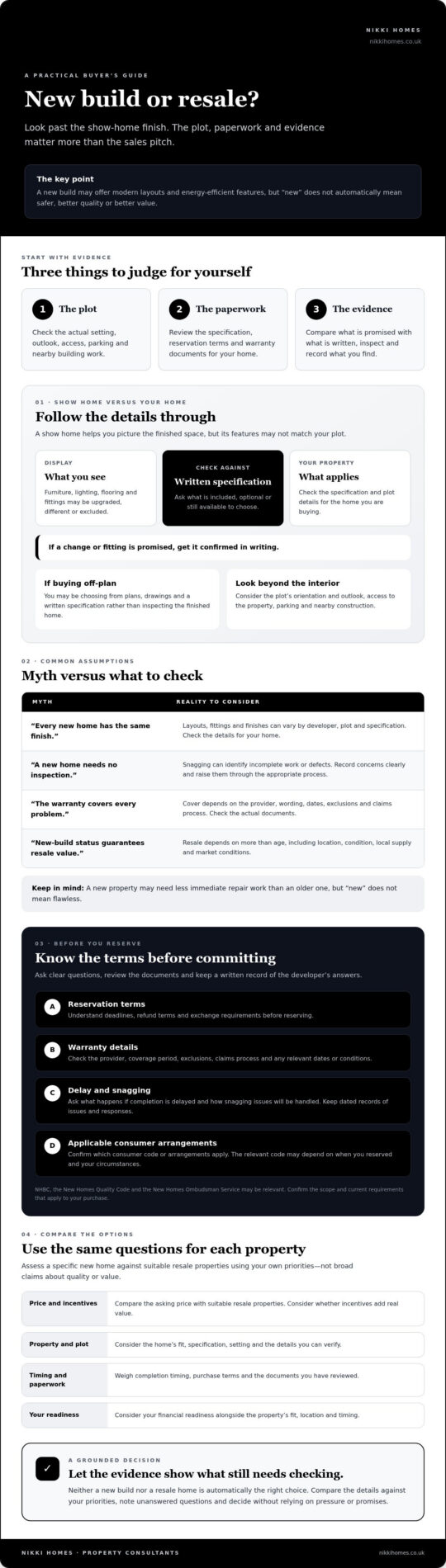
What to check before reserving a new build home
A reservation can feel like a small step before the bigger legal decisions, but don’t treat it as a formality. Before paying or signing, understand the deadlines, what can be refunded and what must happen before exchange. Use this checklist to turn sales assurances into specific questions and documents.
- 1. Inspect the plot. Check its position, orientation, outlook, access and parking. Ask about nearby construction and review development plans for anything that could affect the setting.
- 2. Get the full specification. Ask what is included in your particular home, what is optional and what may change. Check fixtures, finishes, appliances and agreed alterations against the documents.
- 3. Read the reservation terms. Identify the reservation deadline, refund conditions, exchange requirements and what happens if you miss a stated date. Don’t pay until you understand the terms.
- 4. Check your finances and timing. Make sure your mortgage arrangements and budget fit the purchase, including the proposed completion process. If the home is still being built, ask what could affect timing and what happens if the anticipated date changes.
- 5. Record every question and answer. Keep dated notes and ask for important assurances to be confirmed in writing, especially those about substitutions, parking, boundaries, communal areas and any estate or service arrangements.
Questions to ask the developer before committing
Ask specific questions. What exactly is included, and can the specification change? If an item is substituted or completion is delayed, how will you be told, and what options or consequences apply? Ask how completion will be arranged, not just for a target date. Get written details about parking, plot boundaries, shared spaces and any arrangements that may carry ongoing responsibilities.
If you’re considering a property in Stratford-upon-Avon or elsewhere in Warwickshire, check the relevant local authority, local plan and current planning information for that site. A development brochure is not a substitute for checking what has been approved or what may be planned nearby. Building standards and consumer protections can also depend on the property, dates and applicable scheme. Confirm current requirements and scope through authoritative sources rather than assuming one set of rules applies everywhere.
Documents and checks to review before exchange
Read the reservation agreement, contract, final specification, warranty documents and any relevant management information. Ask an independent solicitor to explain deadlines, title matters, obligations and risks specific to your purchase. Check that promised fittings, changes or incentives appear in the paperwork, and ask how any discrepancy will be handled.
Rely on written terms, not verbal assurances alone. If you’re comparing a new purchase with other options, tailored property and financial advice can help you consider the decision against your circumstances. Discuss your property options with Nikki Homes.
How to decide whether a new build home is right for you
The decision isn’t about choosing the newest property. It’s about whether this home, on this plot, works for your life and finances. Apply the same test to every option, then compare what you can verify with what remains uncertain. A resale home isn’t automatically the safer choice, and new build homes aren’t automatically better value.
A practical decision test for your shortlist
- Fit: Does the actual plot and written specification meet your essential needs, not just look appealing in a show home?
- Location: Does the setting suit your daily life, and have you checked the immediate surroundings and relevant plans?
- Paperwork: Have you read the reservation terms, contract, specification and warranty documents, and do you understand the obligations?
- Timing: Does the anticipated completion or move date work for you? Consider whether the home is complete or still being built.
- Financial readiness: Have you checked that your mortgage arrangements, budget and contractual commitments fit your circumstances?
Write down anything you still can’t confirm. An unanswered question about a boundary, fitting or completion date is a reason to seek clarity, not to assume the best. Sales urgency is not evidence that a property is right for you. If the answers don’t resolve your key concerns, pause and compare the home with other options.
Get independent advice before the commitment becomes binding
Ask a solicitor to explain the legal documents, deadlines and risks specific to your purchase. Mortgage advice should reflect your finances and the transaction, particularly if completion timing is uncertain. Nikki Homes is an independent, consultancy-led estate agency, not the developer. Its property and in-house mortgage and financial advice can help you weigh your options without implying that it represents the developer.
If a completed property is being sold at auction, the buying process has its own considerations. Read the Warwickshire property auctions guide before deciding whether that route suits you.
There’s no need to force a quick yes or no. Set your priorities, check the evidence and be honest about the risks you’re prepared to accept. If you’d like to talk through your next move, you can discuss your property plans with Nikki Homes.
Make your next move with confidence
A new build can be the right home, but the label alone won’t tell you whether it’s worth the premium. Check the actual plot and written specification, understand what the warranty covers, and compare the property with resale options against your priorities, timing and finances.
Before committing, make sure the paperwork answers your questions. Reservation terms, completion expectations and any promised fittings should be clear, not left to verbal assurances. If something remains uncertain, pause and get advice suited to your circumstances.
Nikki Homes is an independent boutique agency with over 55 years of combined team experience. Its support includes free, honest valuations and in-house mortgage and financial advice, helping you weigh your property options against what matters to you.
Talk through your property plans with Nikki Homes. Check the evidence, then move forward when the decision feels right for you.
Frequently Asked Questions
Are new build homes worth the premium?
New build homes are worth the premium only if the specific property’s benefits justify its price for you. Consider the plot, written specification, likely timing, surrounding development and any incentives, then compare those details with suitable resale homes. A modern finish or the chance to choose certain fittings may matter to you; another buyer may value an established setting more. Neither option is automatically better, so base your decision on evidence and your priorities.
Do new build homes lose value when you buy them?
Not automatically. A new home’s future resale value depends on factors such as location, condition, local supply and wider market conditions, not simply its new-build status. If the original price includes a premium, that doesn’t guarantee the same premium when you sell. Compare similar properties in the area and consider how many comparable homes may be available. In Stratford-upon-Avon, focus on the specific location and relevant local market evidence rather than general claims.
What should I check before reserving a new build home?
Before reserving, inspect the actual plot and obtain its written specification. Read the reservation terms carefully, including deadlines, refund conditions and what must happen before exchange. Ask what is included, what may change, and how completion dates, parking, boundaries and communal areas are handled. Check that your finances and intended move date are realistic, and record the answers to your questions. Ask an independent solicitor to explain the documents and risks specific to the purchase.
Can you negotiate on the price of a new build home?
You can ask whether the developer will consider a different price or other incentives, but there’s no guarantee they’ll agree. Compare the asking price with similar properties and assess any offer by its practical value to you, not just its headline appeal. Ask for all agreed incentives or changes to be documented. In Stratford-upon-Avon, compare homes with similar locations and specifications where possible, and consider tailored property advice before deciding what represents fair value.
Do new build homes come with a warranty?
Many new homes are sold with a warranty, but the provider, coverage, period, exclusions and claims process can vary. Ask for the actual warranty documents and check what protection applies to your home, including relevant dates and conditions. Don’t assume it covers every defect or replaces the developer’s responsibilities. Confirm which consumer code or protection scheme, if any, applies to your reservation, and check its current scope and guidance before relying on it.
Is a survey worth getting on a new build home?
A survey or inspection may be useful, even on a newly built property, but the right type depends on whether the home is complete and what you want checked. A snagging inspection focuses on incomplete work or defects; it isn’t necessarily the same as a broader property survey. Ask an independent surveyor what is suitable for your purchase and stage of construction. Record concerns in writing and raise them through the appropriate process, without assuming an inspection guarantees a particular outcome.
What happens if a new build home is delayed?
If completion is delayed, the next steps depend on your contract and the reason for the change. Check the contract for the anticipated timing, how updates will be given and what rights or options may apply. Ask your solicitor to explain the relevant clauses before you commit, and contact your mortgage provider if the delay could affect your arrangements. Avoid making fixed moving or accommodation plans based only on an informal estimate; seek written confirmation of updates and decisions.